


Should a Beginner Rent a Yamaha U1 or U3?
A practical comparison of rental fees, security deposits, size, sound, touch, room requirements, and long-term value
Short answer
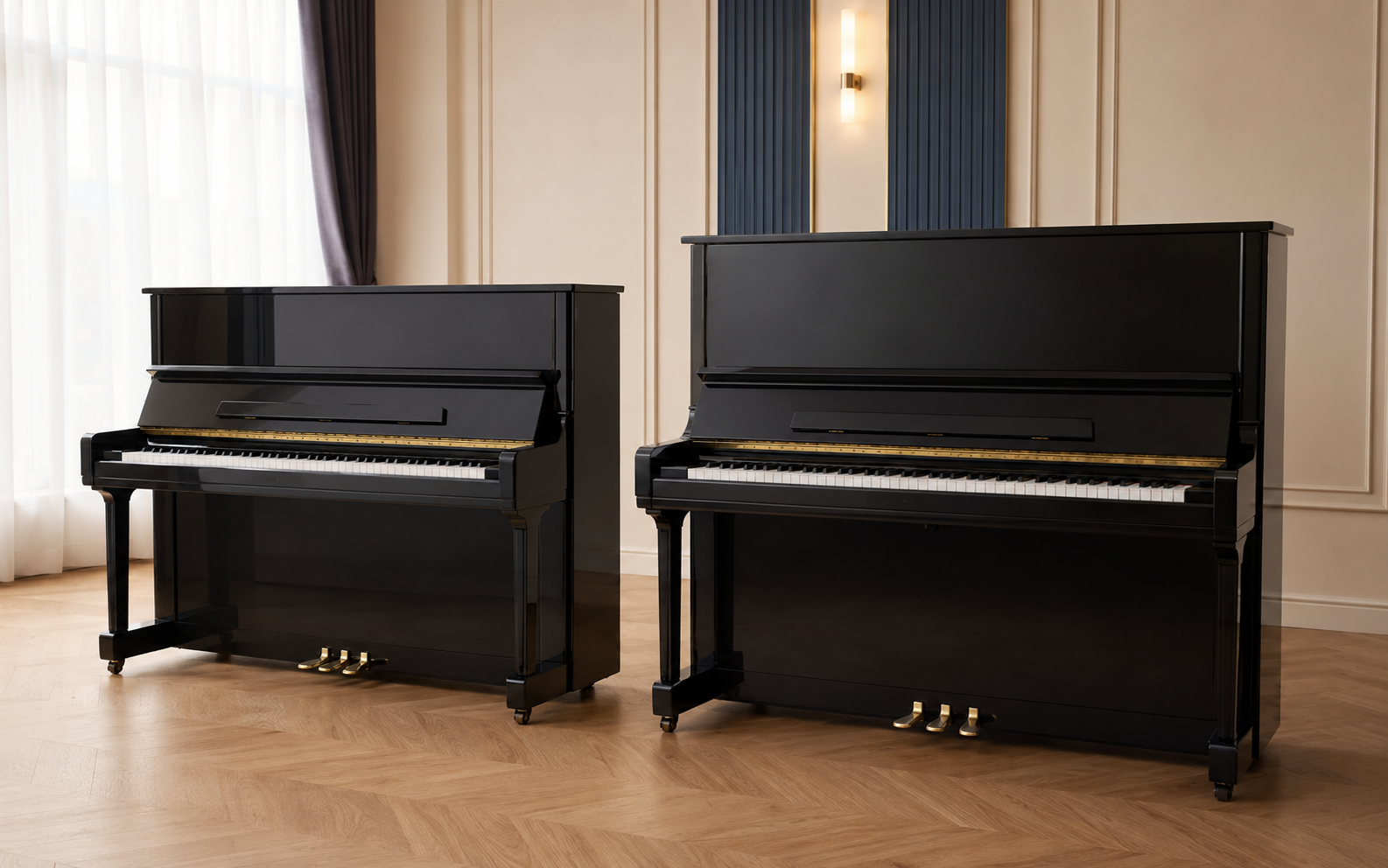
If you want to manage your budget or have limited space, the Yamaha U1 is a balanced choice and is sufficient for many beginners. If the room and budget allow and the student is likely to continue, the Yamaha U3 may offer better long-term value because its taller cabinet provides greater sound and expressive potential.
Yamaha U1 vs U3 at a glance
| Item | Yamaha U1 | Yamaha U3 |
|---|---|---|
| Current-model dimensions | 153 × 62 × 121 cm | 153 × 65 × 131 cm |
| Approximate weight | 228 kg | 246 kg |
| Monthly rent | THB 2,500 | THB 3,500 |
| Security deposit | THB 35,000 | THB 45,000 |
| Two-way transport and one tuning | THB 2,500 | THB 2,500 |
| General sound character | Balanced, clear, easy to control | Fuller and deeper, with a wider dynamic range |
| Best suited to | Beginners, moderate budgets, small–medium rooms | Continuing students, long-term use, suitable rooms |
The key count is not the difference
Both are 88-key acoustic upright pianos. Their differences come from cabinet structure, string length, sound-producing area, action response, and each instrument’s preparation. With a rental piano, its actual condition, regulation, voicing, and tuning matter as much as the model name.
Who should choose each model?
Choose a Yamaha U1 if…
- You want a genuine acoustic piano for home practice.
- You want to keep monthly rent and the initial payment lower.
- Your room is small to medium-sized.
- You are not yet sure about long-term study.
- The student is familiar with a U1 at school.
A well-maintained and properly prepared U1 is not limited to beginners; it can support several stages of study.
Choose a Yamaha U3 if…
- The student is likely to continue and use it long term.
- You want room for development beyond the beginner level.
- The student needs greater control of touch, dynamics, action, and pedal.
- The room and acoustics are suitable.
- The student uses a U3 at school or in exam rooms.
In a very small room with hard surfaces, a U3 may feel too loud or reflective, so the room should also be assessed.
How much more does a U3 cost to rent?
| Item | Yamaha U1 | Yamaha U3 | Difference |
|---|---|---|---|
| Monthly rent | THB 2,500 | THB 3,500 | THB 1,000/month |
| Security deposit | THB 35,000 | THB 45,000 | THB 10,000 |
| Two-way transport and tuning | THB 2,500 | THB 2,500 | Same |
| Initial first-month amount* | THB 40,000 | THB 51,000 | THB 11,000 |
| Total rent for six months | THB 15,000 | THB 21,000 | THB 6,000 |
The security deposit is not a permanent cost. It is refundable under the contract terms, or it may be applied toward the piano price when an eligible purchase is made. Deposits paid by cash or bank transfer earn 5% annual interest under company terms; credit-card deposits do not earn interest.
How does room size affect the choice?
| Room or access condition | What to consider |
|---|---|
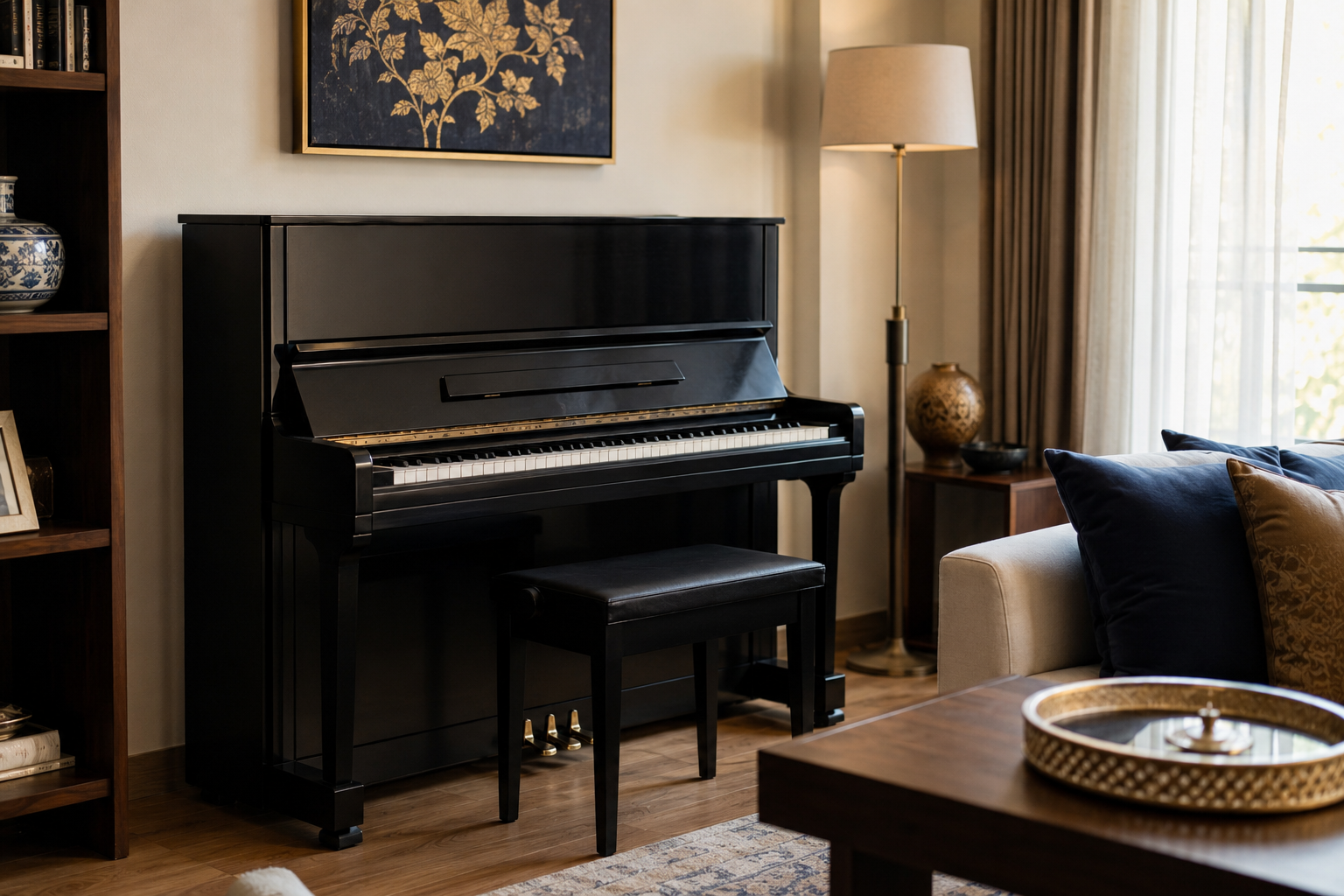
| Small room or many hard surfaces | A U1 is often easier to control, but the actual room still matters. |
| Medium room with curtains, rugs, or furniture | Either model may work, depending on budget and preference. |
| Large room or open area | A U3 has greater potential to fill the space. |
| Stairs or restricted access | Ask the team to assess access and any extra handling charges before signing. |
Before delivery, provide the door, corridor, stairway, proposed position, and floor details so the team can assess placement and moving access.
Should the home piano match the school’s model?
Using a similar model can reduce differences in sound, touch, and response between lessons and practice, but an exact match is not always necessary. More importantly, the home piano should be properly prepared, consistently responsive, suitably tuned, and available for regular practice. Ask the teacher whether the student’s level or repertoire creates any specific requirement.
If you plan to buy later, should you rent a U3 first?
A practical decision rule
If the budget and room allow and the student is likely to continue, consider a U3 from the beginning. If continuity, space, or the initial payment is still uncertain, a U1 is the more balanced starting point.
Renting a U3 lets the student test its sound, touch, and suitability in the actual room before buying. Starting with a U1 does not prevent a later U3 purchase, provided the purchased piano is equally or more expensive than the rented model and company terms are met.
| Item | U1 after 6 months | U3 after 6 months |
|---|---|---|
| Rent potentially eligible as a discount | 2,500 × 6 = THB 15,000 | 3,500 × 6 = THB 21,000 |
| Security deposit | THB 35,000 | THB 45,000 |
| Six-month deposit interest** | THB 875 | THB 1,125 |
Six checks before renting
- How likely is the student to continue?
- Does the teacher recommend a U1 or U3?
- Can the room and access route support the size and weight?
- Are the rent, deposit, and initial payment within budget?
- Do you want to test before buying within six months or rent long term?
- Have you compared the actual sound and touch?
Conclusion: U1 or U3 for a beginner?
The Yamaha U1 is a balanced, manageable option for a small to medium room and a controlled budget. The Yamaha U3 is often better suited to long-term development when space and budget allow. Its monthly rent is THB 1,000 higher and its security deposit is THB 10,000 higher.
The best decision comes from trying the actual pianos, comparing them within the same budget, consulting the teacher, and having the delivery team assess the room.
