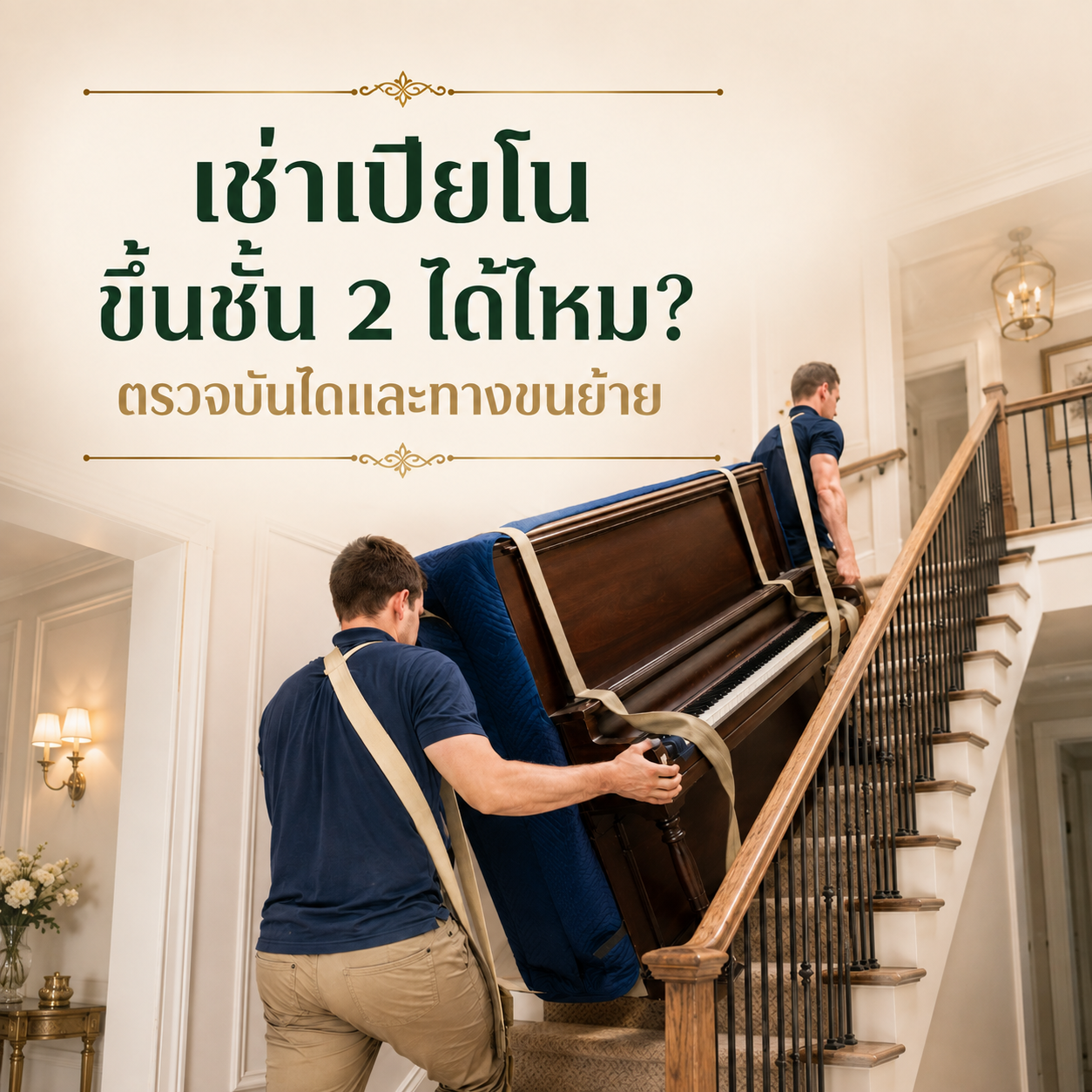
Can You Rent a Piano for the Second Floor? Which Homes Can Accommodate an Upright Piano and Are There Extra Moving Costs?
Renting an Upright Piano for the second floor is possible in many homes, but the full route must be checked first. Doorways, hallways, stairs, landings, turning space, head clearance and the final piano position all matter. The decision should not be based on the floor number or stair width alone.
Quick Answer
In many cases, an Upright Piano can be moved to the second floor. The doors, stairs, landings, turns and final placement area must be suitable, and the route must allow the piano to be moved safely. Churairat Music should assess photos, video and actual measurements before the rental contract is confirmed.
Round-trip Upright Piano transport is THB 2,500, including one tuning. This rate applies to rentals within Bangkok and covers delivery and placement on the first floor only. Moving the piano up or down stairs will require an additional charge based on the site and moving method.
Being on the Second Floor Does Not Automatically Mean a Piano Cannot Be Moved Up
An Upright Piano must pass every point from the delivery truck to the final position, including the gate, front door, entrance hall, corridor, stairs, landing, turns and the room door on the second floor.
Some homes may have wide stairs but a short landing or low ceiling that makes it difficult to rotate the piano. Other homes may have narrower stairs but a straight route with no tight turns, which can make the move easier.
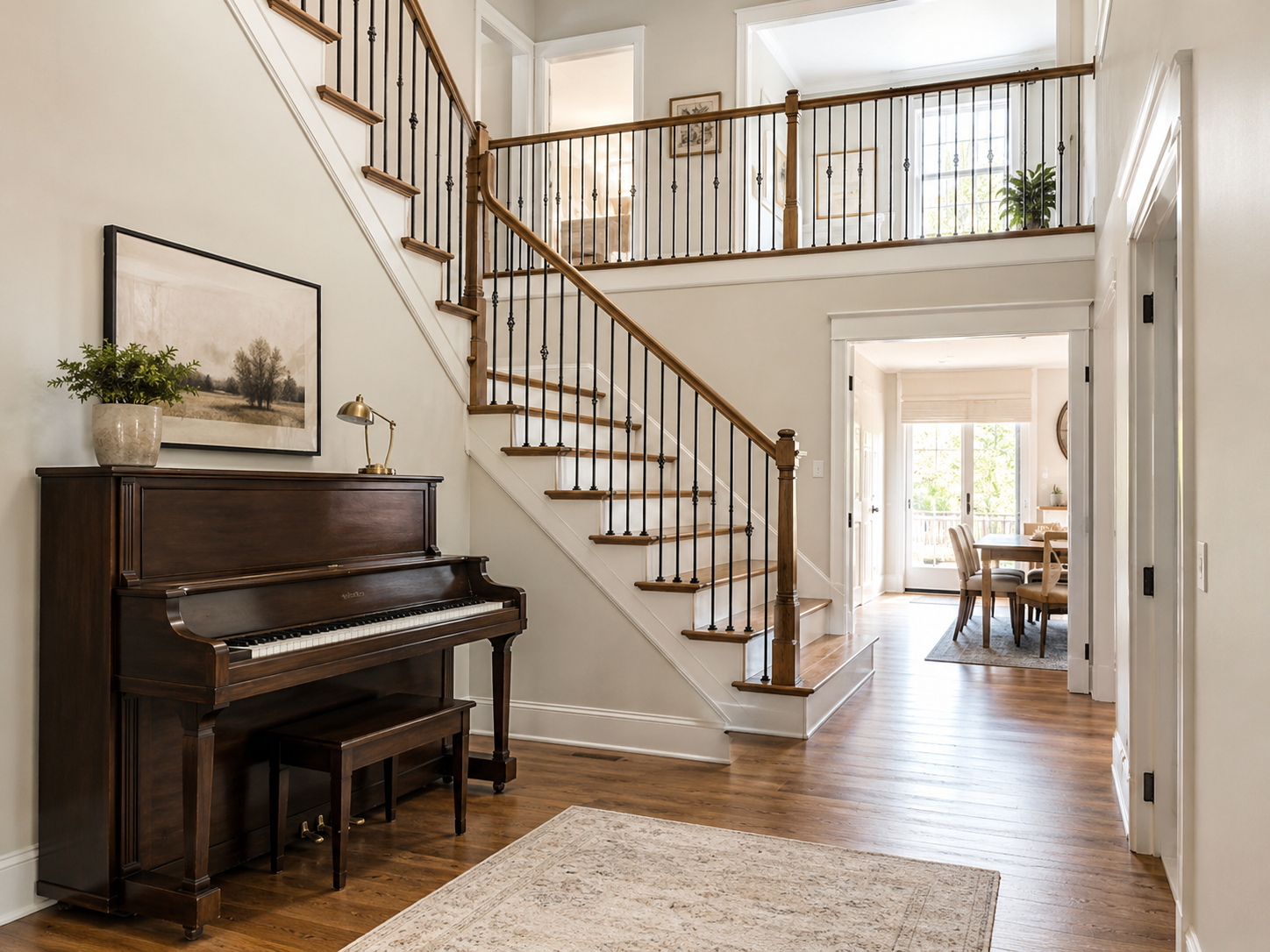
What Does the Moving Team Need to Check?
| Check Point | What to Check | Why It Matters |
|---|---|---|
| Gate and front door | Width, height and threshold | The piano must pass through from the starting point |
| Hall and corridors | Width, obstacles and turning angles | Enough space is needed to change the piano's direction |
| Stairs | Width, slope, number of steps and handrails | These affect the number of movers and moving method |
| Landing | Width, length and turning layout | This is often the point that limits piano rotation |
| Ceiling above stairs | Head clearance along the slope and landing | Helps prevent the piano or moving team from hitting the ceiling |
| Second-floor room door | Width, height and opening direction | The piano must be able to enter the final room |
| Piano placement area | Floor size, wall position and environment | The piano must be placed securely in a suitable location |
Check the width, height and threshold so the piano can pass through from the starting point.
Check width, obstacles and turning angles so there is enough space to change direction.
Check width, slope, number of steps and handrails to determine the moving team and method.
Check the width, length and turning layout because this is often the point that limits piano rotation.
Check head clearance along the slope and landing to avoid impact.
Check width, height and opening direction so the piano can reach its final position.
Check the floor area, wall and surrounding environment so the piano can be placed securely.
Which Homes Are More Likely to Be Easy for Second-Floor Piano Delivery?
Features That Usually Make Moving Easier
- A straight staircase or a wide landing
- No continuous tight corners through doors and corridors
- Enough head clearance above the stairs
- Handrails and decorations do not project into the moving route
- Enough space for the moving team to stand and control the piano safely
- The second-floor room door is close to the top of the stairs and has enough turning space
- Furniture and removable obstacles can be cleared before delivery day
Homes That Need More Detailed Assessment
- Townhouses or homes with narrow and steep stairs
- L-shaped or U-shaped stairs with small landings
- Spiral stairs or triangular steps
- Low ceilings above the stairs or landing
- Handrails projecting into the moving route
- A room door directly beside the top of the stairs with little turning space
- Several level changes, glass walls, fixed lighting or decorations that cannot be removed
Note: These conditions do not automatically mean the move is impossible. The team still needs to assess the moving method, risk, number of movers and equipment required.
What Should You Measure and Photograph?
Measurements to Take
- Width and height of the gate and front door
- Width of the narrowest part of the corridor
- Stair width measured between actual obstacles, such as wall to handrail
- Lowest head clearance from the stair step to the ceiling
- Width and length of each landing
- Turning space at the bottom and top of the stairs
- Width and height of the final room door
- Size of the piano placement area and distance from the wall
Measure in centimetres and take photos showing the tape measure at the exact point being measured.
Photos and Video to Send
- Vehicle parking point and entrance to the home
- Full view of the gate and front door
- Every corridor section and turning point
- Stairs viewed from below and from above
- Landing and ceiling above the landing
- Top of the stairs, room entrance, room door and final piano area
- A continuous walk-through video from the parking point to the piano position
A continuous walk-through video helps the team understand the sequence of turns and obstacles that separate photos may not show clearly.
Why Should the Route Be Assessed Before Signing the Rental Contract?
- To avoid delivering the piano to a property where it cannot be moved upstairs
- To choose a piano model and size suitable for the route
- To arrange enough movers and equipment
- To inform the customer of extra moving costs before delivery day
- To reduce risk to the piano, the property and the moving team
- To schedule enough time based on the difficulty of the location
What Are the Ways to Move a Piano to the Second Floor?
1. Carry It Up the Stairs
If the stairs, landing, ceiling and turns provide enough space, an Upright Piano can be moved up the stairs. The team will decide the number of movers, equipment and control method based on the route.
2. Use a Service Lift
The lift door width and height, inside dimensions, weight capacity and turning space in front of the lift on both floors must be checked. Weight capacity alone is not enough.
3. Use a Crane
A crane may be an option when the stairs cannot be used, but the team must check vehicle access, reach, height, power lines, trees, an upper-floor opening and a safe receiving area before confirming the method.
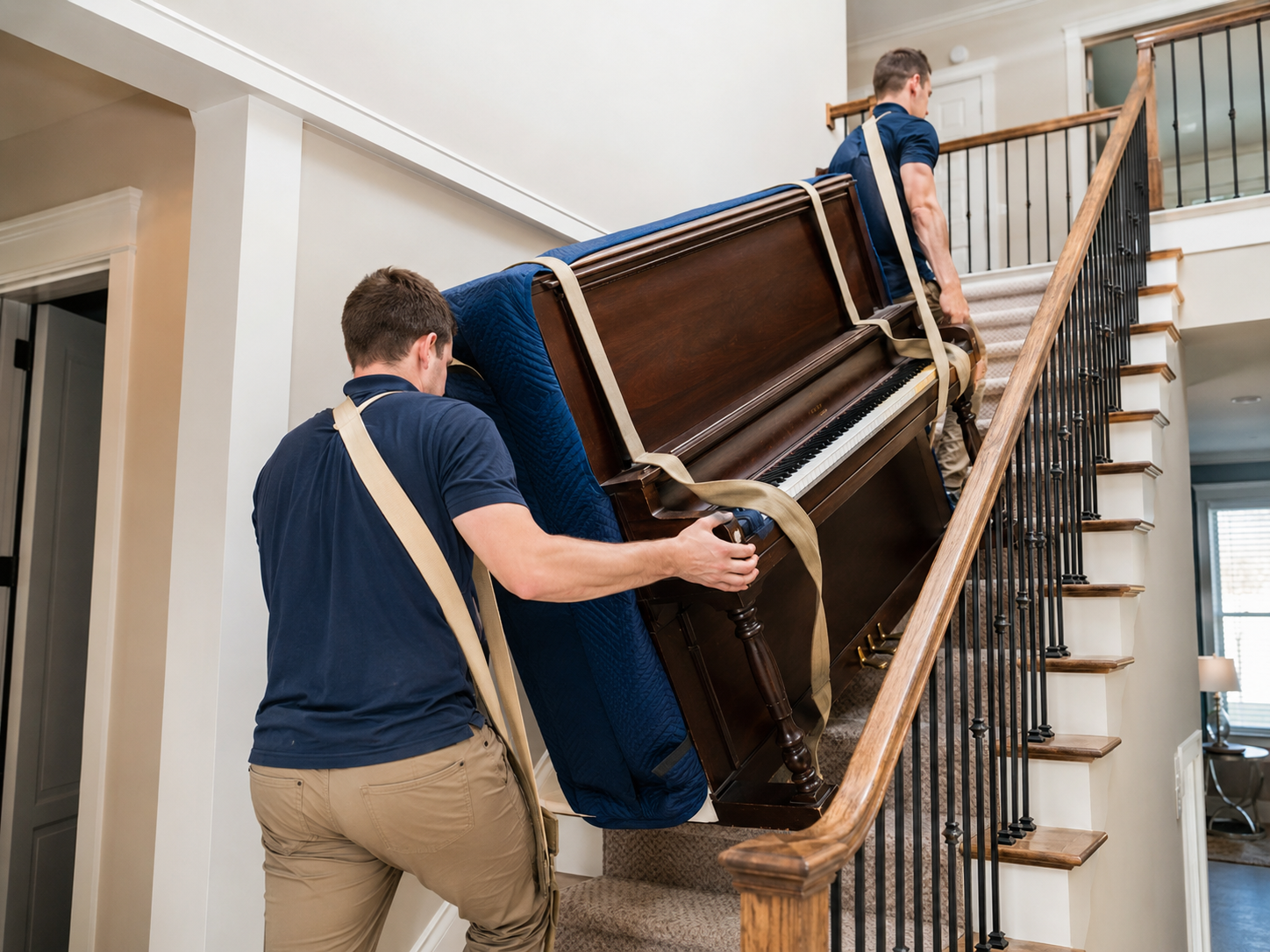
Important: Stair moving charges must be calculated for both directions: moving the piano upstairs on delivery day and bringing it back downstairs when the rental ends. This allows the customer to understand the full moving cost before deciding to rent.
How Much Does Each Moving Method Cost?
Round-trip Upright Piano transport is THB 2,500, including one tuning. This rate applies to rentals within Bangkok and covers delivery and placement on the first floor only.
Additional charges apply if the piano must be moved up or down stairs, requires extra staff, uses a service lift under building-specific conditions, needs special equipment, or must pass through a complicated route. The team assesses the number of floors and steps, width, turns, difficulty of controlling the piano, number of movers and equipment required.
Crane costs are higher than normal stair moving because the crane must be considered for both delivery and collection. The total crane lifting cost may range from several thousand baht to THB 10,000 or more, depending on distance, reach, height, working time and site difficulty.
What If the Stairs, Lift and Crane Are Not Suitable?
- Move the Upright Piano to a first-floor position instead
- Choose a Digital Piano, which can be separated into parts and is easier to move
- Choose another room with a wider route
- Adjust or remove obstacles that can be safely removed, with the owner's permission and a responsible specialist
Do not remove handrails, glass panels, doors, windows or other parts of the property without permission and a qualified person responsible for the work.
What Should the Homeowner Prepare Before Delivery?
- Remove shoes, tables, cabinets, decorations and other obstacles from the route
- Open doors and secure them so they do not swing during the move
- Keep the bottom of the stairs, landings and top of the stairs clear
- Inform the team in advance about wooden floors, special tiles or glass walls
- The route from the delivery vehicle to the piano position should be strong enough for normal piano trolley movement. If there are soft, fragile or easily damaged surfaces, inform the team in advance
- Keep children and pets away from the moving route
- Have a property contact person on site throughout the delivery
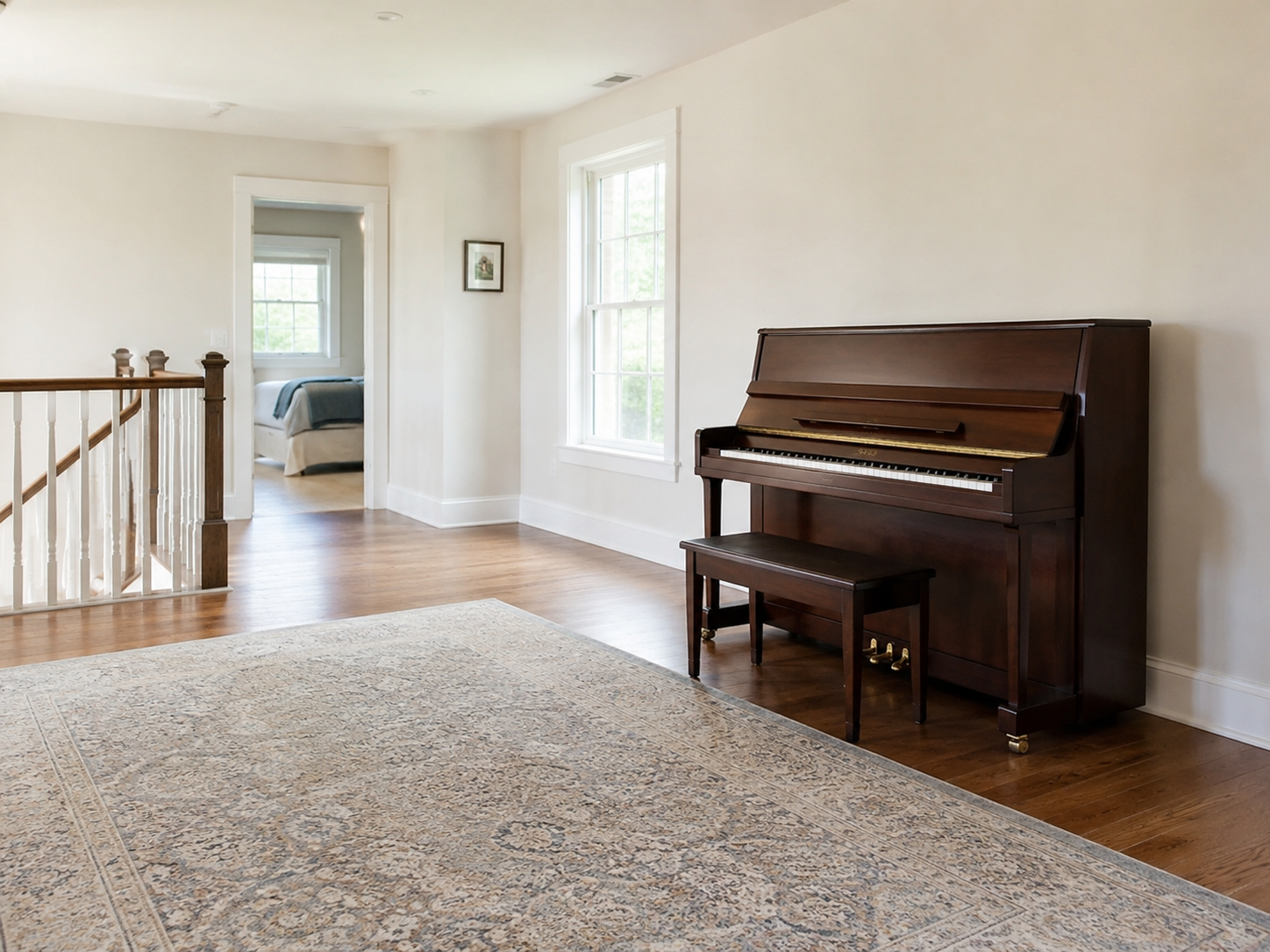
- Prepare the final piano position before the moving team arrives
What Else Should You Consider When Placing a Piano on the Second Floor?
- Place the piano on a flat and stable floor
- Avoid direct sunlight
- Do not place it under an air conditioner or anywhere water may drip
- Avoid damp walls or humid areas
- Leave enough space to open and maintain the piano
- If there is any concern about the floor structure, ask the building owner or a structural specialist to assess it
How Much Are the Monthly Rental and Security Deposit?
| Example Model | Monthly Rental | Security Deposit |
|---|---|---|
| Japanese Piano | THB 990 | THB 20,000 |
| Kawai | THB 2,000 | THB 30,000 |
| Yamaha U1 | THB 2,500 | THB 35,000 |
| Yamaha U3 | THB 3,500 | THB 45,000 |
Rental: THB 990/month
Deposit: THB 20,000
Rental: THB 2,000/month
Deposit: THB 30,000
Rental: THB 2,500/month
Deposit: THB 35,000
Rental: THB 3,500/month
Deposit: THB 45,000
Round-trip Upright Piano transport is THB 2,500, including one tuning, for Bangkok only. It covers delivery and placement on the first floor. Stair moving costs extra and must be assessed. Rental and deposit conditions may vary by model and period.
Benefits for Monthly Rental Customers
Book Benefits
1 Book Benefits Code can be used for a half-month rental discount, and 2 Codes can be used for a one-month rental discount, subject to the applicable conditions.
Security Deposit and Purchase Credit
A security deposit paid by cash or bank transfer earns 5% interest per year under the applicable conditions. If the customer decides to buy within 6 months, up to 6 months of paid rental can be credited toward the purchase price under the applicable conditions.
Privilege Coupon
Monthly rental customers receive Privilege Coupon benefits that can be used as a discount on future products and services, subject to company conditions.
What Should You Consider Before Deciding?
Before choosing an Upright Piano for the second floor, consider both the musical needs and the actual moving route. This is especially important for homes with narrow stairs, small landings or several tight turns.
An early assessment helps determine the moving method, team size and likely extra cost, and reduces the risk of a piano arriving at the property but not being able to reach the intended room.
Summary
Renting a piano for the second floor is possible in many homes, but the entire route must be checked. Send photos, video and measurements of doors, corridors, stairs, landings, ceiling clearance and the final piano position before signing the rental contract.
Round-trip Upright Piano transport is THB 2,500, including one tuning, for rentals within Bangkok and first-floor placement only. If the piano must be moved up or down stairs, requires extra staff or special equipment, there will be additional charges based on the site.
If an Upright Piano cannot be moved upstairs safely, alternatives include placing it on the first floor, choosing a Digital Piano or selecting another room with a more suitable route.
Prices and conditions may change. Please send the property details and request a quotation before confirming the rental.
Frequently Asked Questions (FAQ)
1. Can an Upright Piano be rented for the second floor?
Yes, in many cases. The doors, stairs, landings, turns and final placement area must be suitable, and the team should assess the route first.
2. Does the team need to visit the property?
The first assessment can be made from photos, video and measurements. If the information is not enough or the property is complicated, an additional site inspection may be required.
3. Is there an extra charge for moving a piano to the second floor?
Yes. Stair moving has an additional charge for both moving the piano upstairs on delivery day and bringing it downstairs on collection day. The cost depends on the steps, width, turns, number of movers and equipment required.
4. What does the THB 2,500 transport fee include?
It covers round-trip Upright Piano transport and one tuning for rentals within Bangkok, with placement on the first floor only. Stair moving costs extra and must be assessed in advance.
5. Which parts of the stairs should be measured?
Measure the narrowest width, head clearance, landing size, turning space and the final room doorway.
6. Can a piano be moved to the second floor of a townhouse?
Some townhouses are suitable and some are not. It depends on the stairs, landing, ceiling clearance and turning space.
7. What if an Upright Piano cannot be moved upstairs?
You can place it on the first floor, switch to a Digital Piano or choose another room with a more suitable route.
8. Should I send a video of the route?
Yes. A continuous video from the parking point to the piano position is recommended because it shows the turns and obstacles clearly.
9. Who should remove obstacles from the moving route?
The homeowner should clear the route before the team arrives and inform the team in advance if anything cannot be moved or removed.
10. Should I choose a Yamaha U1 or U3 for the second floor?
In addition to your playing needs, the piano size and moving route should be considered. Send the property details for assessment before choosing the model.
11. Can a crane be used if the stairs are not suitable?
It may be possible if the crane can access the property and there is a safe upper-floor opening for receiving the piano. Crane costs must be considered for both delivery and collection and may range from several thousand baht to THB 10,000 or more depending on the site.
Related Articles and Services
Home Piano Rental Service
View monthly piano rental information for home use and the basic rental details before contacting the team.
The English versions of PNR-009 and PNR-011 are not linked here because their confirmed English URLs have not been provided.
Would You Like the Team to Assess Your Second-Floor Moving Route?
Send photos, video and measurements to Churairat Music before confirming the rental.
Contact us on LINE