Can a Flood-Damaged Piano Be Repaired? Upright vs Grand Piano Risks
Can a Flood-Damaged Piano Be Repaired? Upright vs Grand Piano Risks
Flooding can cause severe damage to a piano. Whether the instrument may still be usable or should not be repaired depends on the piano type, water level, length of exposure, condition of the floodwater, and which parts came into contact with the water.
Some Flood-Damaged Pianos Can Still Be Inspected, but Some Levels of Damage Should Not Be Repaired
If the water has not yet reached important wooden structures, the damage may not be severe. However, once water reaches the piano body, keys, or action, damage can spread through the wood, felt, metal parts, and mechanisms, making it impossible to guarantee good performance after repair.
Flood Damage Should Be Prevented Before It Happens
If the location where the piano is placed has flooded before, or there is a clear risk of flooding, the piano should not be kept there. Move it to another location or to a higher floor where floodwater cannot reach it.
A piano contains wood, felt, metal components, piano strings, and many mechanical parts. Once water reaches any of these areas, damage may continue to spread through moisture, rust, swelling, and deformation.
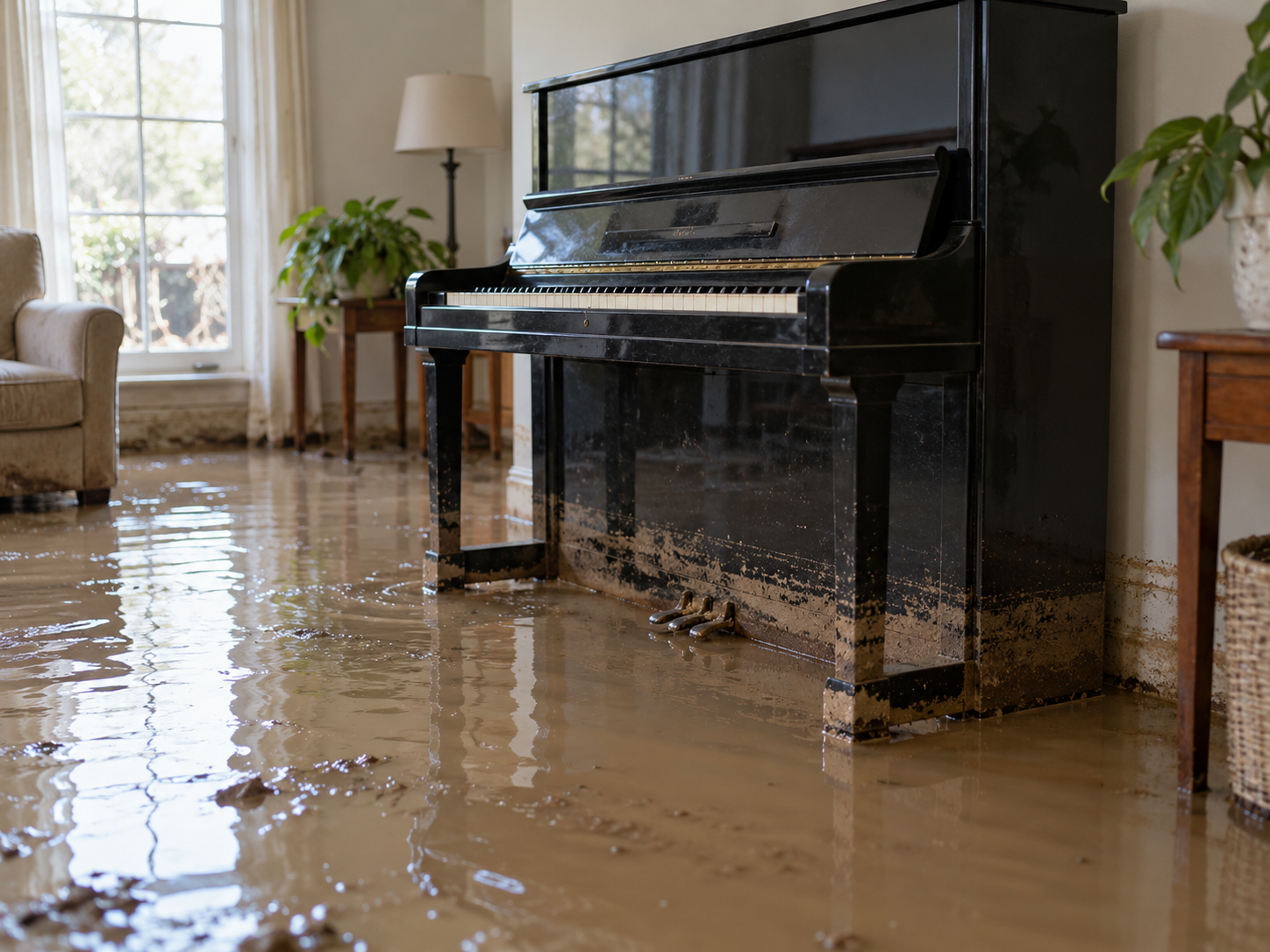
For an Upright Piano, the Water Level Matters
Water Has Not Risen Above the Piano Casters
If the water does not rise higher than the piano casters and can be drained quickly, the risk may not yet be as severe as when water reaches the wooden body of the piano directly.
However, contact the team as soon as possible to arrange an on-site inspection. Water or moisture may still remain in areas that cannot be seen from the outside.
Water Reaches the Lower Wooden Part of the Piano
If the floodwater rises above the casters and reaches the lower wooden part of the piano, it should be considered severe damage, especially if the piano remains in water long enough for the wood to absorb moisture.
Moisture absorbed by the lower wooden parts may spread upward, causing changes or loss of sound in some areas and leading wooden components to swell, warp, or deform.
Piano strings and other metal components may continue to develop rust throughout the instrument. Repair is therefore not recommended because good performance cannot be guaranteed afterward, while repair costs may become very high and uneconomical.
Water Reaches the Keys or Action
This should be considered very severe damage. The mechanism, felt, wood, and many metal components may all be affected at the same time. Repair is not recommended because the cost may be very high and uneconomical, and good performance after repair cannot be guaranteed.
Water Below the Casters Does Not Automatically Mean an Upright Piano Is Safe to Use
Even when the risk appears lower, an on-site inspection is still required to check for retained water, moisture, or internal damage that may not be visible from the outside.

A Grand Piano Has Different Flood-Risk Levels from an Upright
Water Has Not Reached the Wooden Underside of the Piano
If the water level has not reached the wooden underside of the piano and the instrument has not remained in water long enough for the piano legs and pedal support to absorb significant moisture, the damage may not yet be severe.
However, contact the team promptly to arrange an on-site inspection. Moisture absorbed by the piano legs or pedal support may cause problems later if left unattended.
Water Reaches the Wooden Underside or Internal Mechanism
A Grand Piano faces severe risk once floodwater reaches the wooden underside, and the risk becomes even greater if the water reaches the keys or action because important mechanisms are located in this area.
When the mechanism, felt, wood, and many metal components are damaged at the same time, repair is not recommended because good performance afterward cannot be guaranteed and the cost may be very high and uneconomical.
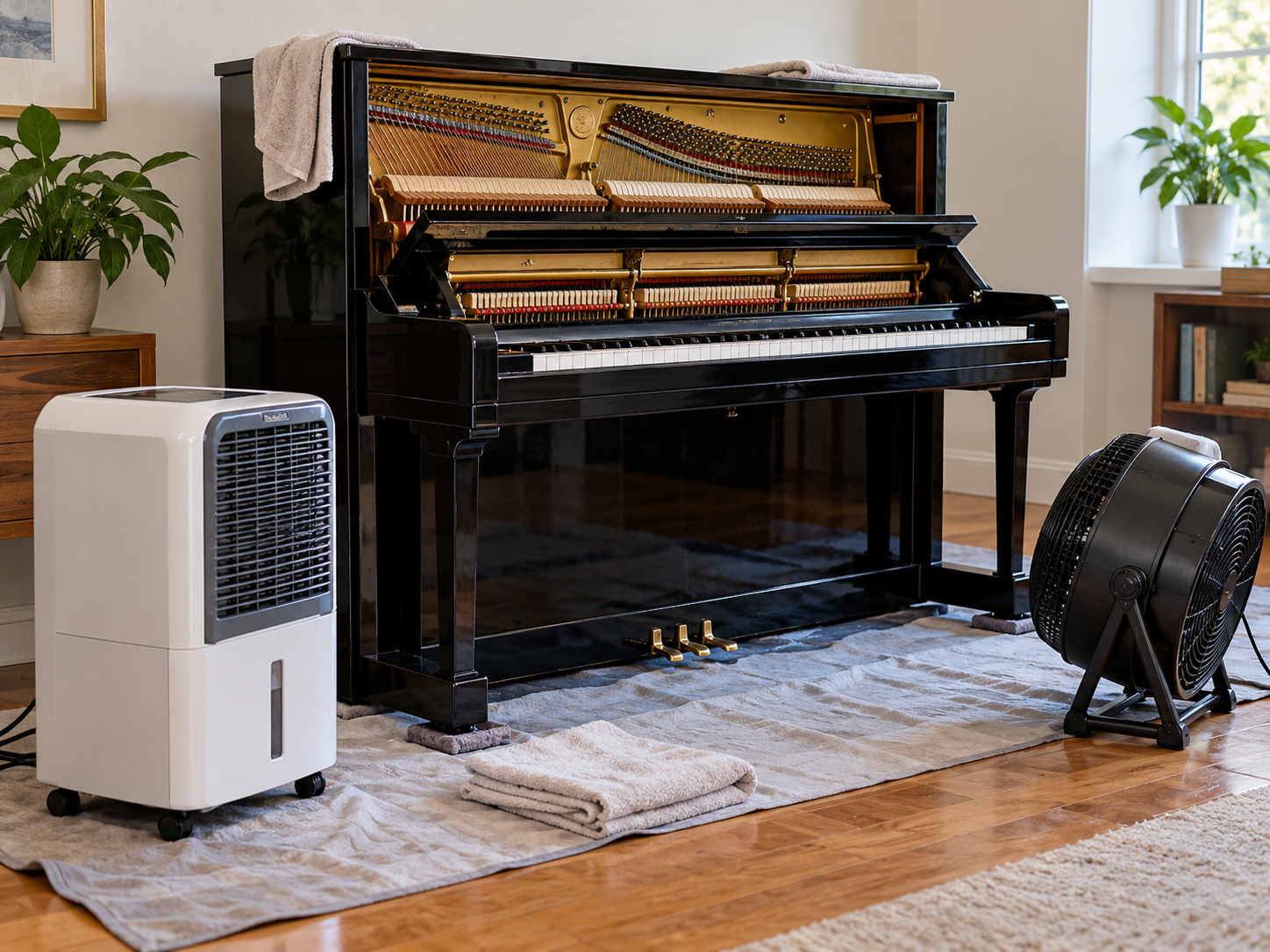
What to Do Immediately After the Floodwater Recedes
Frequently Asked Questions
Can an Upright Piano Still Be Used If Floodwater Only Reached the Casters?
If the water did not rise above the casters and was drained quickly, the damage may not yet be severe. However, the piano should not be assumed safe to use without an inspection. An on-site inspection is required before the appropriate care can be determined.
If Floodwater Reaches the Legs of a Grand Piano, Must the Piano Be Replaced?
Not necessarily. If the water has not reached the wooden underside of the piano and the exposure was brief, the condition should still be inspected to determine how much moisture has been absorbed by the piano legs, pedal support, and internal components.
Can a Piano Be Repaired If Water Reaches the Keys or Action?
This is considered severe damage and repair is not recommended because good performance afterward cannot be guaranteed and the repair cost may be very high and uneconomical.
Contact the Team to Arrange a Piano Inspection
Provide the piano brand, model, and serial number if known, together with the location, floodwater level, length of exposure, and condition of the water so the team can arrange an on-site piano inspection.
Photos or videos may be sent if convenient, but they are not required. Useful images may include the overall piano, visible water marks, keys, action, piano legs, pedal support, and any areas showing rust, moisture, or mould.
Service Areas
For customers in the main service areas and nearby provinces, including Bangkok, Chiang Mai, Phuket, and Khon Kaen, the team can provide available service schedules when an enquiry is received.
For locations outside the main service areas, please contact the team so travel feasibility and service schedules can be checked first. Availability depends on the route and travel schedule of the service team at that time.
Related Piano Knowledge
What Should You Do If Water Is Spilled on a Piano?
Have Your Piano Inspected After Flooding
A flood-damaged piano should be assessed based on its actual condition, particularly the water level, duration of exposure, and the effects on wood, mechanisms, felt, and metal components.
View Piano Service Details Contact Us via LINE