How to Care for Rented Wind Instruments During Use
How to Care for Rented Wind Instruments During Use
For renters of Flute, Clarinet, Saxophone, Trumpet, and other wind instruments, as well as parents, students, music teachers, and schools.
Remove Moisture from the Instrument After Every Use
After playing, wipe and remove as much moisture as possible from inside the instrument, clean the parts that come into contact with the mouth, and store the instrument in a dry and safe case.
If a key, valve, slide, or other component develops a problem, stop using the instrument and contact the team immediately.

Wipe and Remove Moisture After Every Playing Session
Moisture can build up inside a wind instrument from breath, saliva droplets, and condensation during playing.
After use, pass a suitable cloth or cleaning accessory through the inside of the instrument to remove as much moisture and water residue as possible.
Then wipe the outside with a clean, dry cloth before storing the instrument.
Do Not Pour Water into the Instrument or Use Unsuitable Cleaning Products
Using water or unsuitable cleaning products may affect key pads, the instrument finish, or internal components.
Care for Mouth-Contact Parts Hygienically
The mouthpiece and reed are parts that come into direct contact with the mouth. They should be cleaned using methods that are suitable for their materials.
For instruments that use reeds, store the reed separately in a clean reed case with suitable ventilation.
Reeds Are Personal Items and Should Not Be Shared
Because reeds come into direct contact with the mouth, they should not be shared with other people.
Replace a Reed If It Is Chipped, Cracked, Warped, or Worn
Ask the teacher which reed strength is suitable for the player's current level before choosing a replacement.

Store the Instrument in Its Case and Avoid Extreme Temperatures
After cleaning, store the instrument in a properly closed case and keep it in a dry area.
Disassemble the Instrument Using Its Normal Method
Before storing an instrument that separates into sections, disassemble it using the normal method for that instrument. Do not force a joint that is stuck by twisting or pulling it.
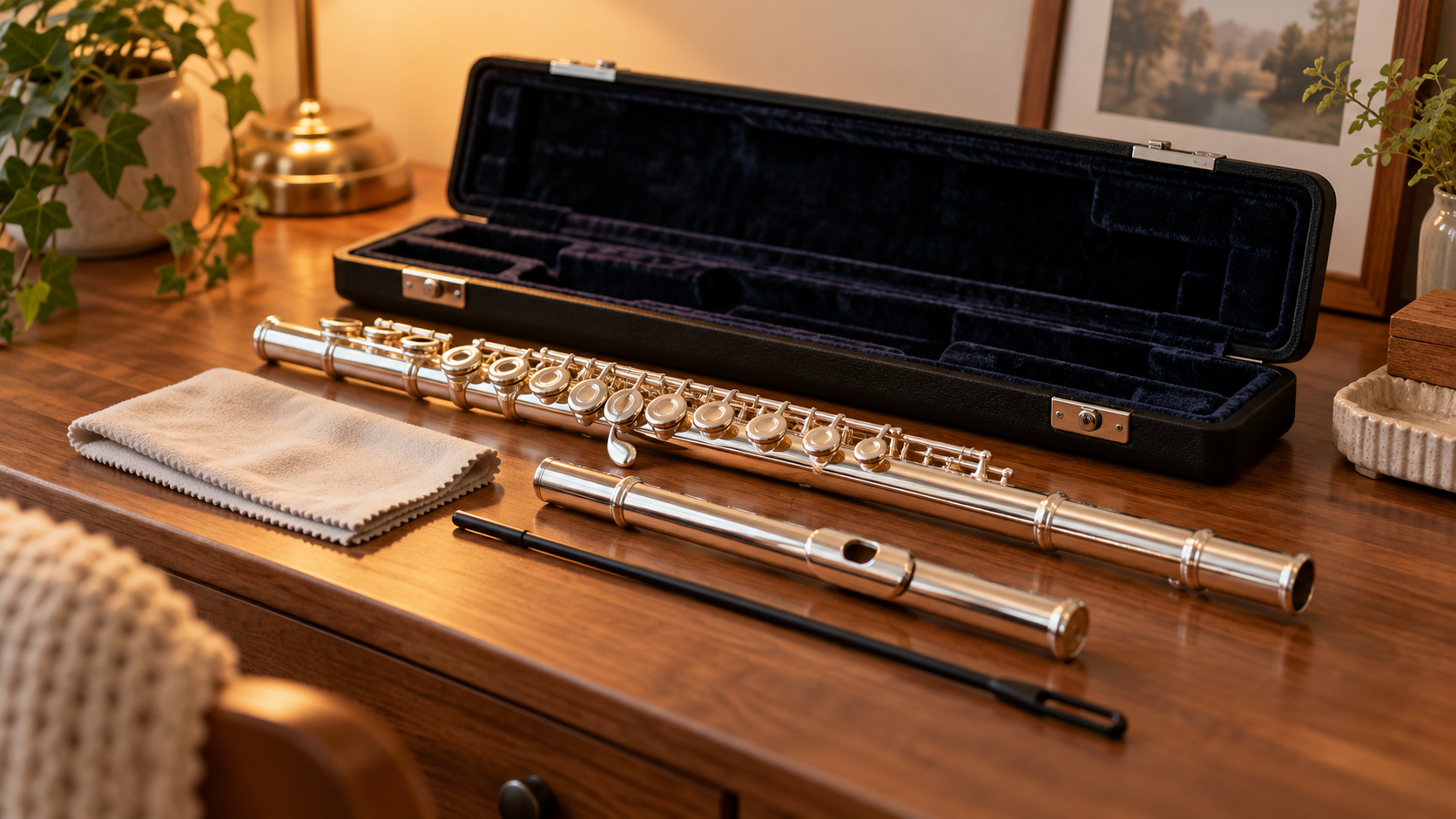
When Should You Stop Using the Instrument and Contact the Team?
Stop using the instrument and contact the team if you notice any of the following:
Do Not Use Pliers, Add Oil, or Try to Fix the Instrument Yourself
Do not add oil or lubricating spray yourself, and do not pry, bend, or use tools to fix the instrument. Different symptoms may have different causes, and an incorrect repair attempt may cause additional damage to keys, valves, or key pads.
Regular Care Helps Keep the Instrument Ready for Practice
Regular care helps keep a rented instrument ready for practice and also makes it easier to notice unusual symptoms early.
Churairat Music Musical Instrument Rental Service
Beginners should have an instrument available for practice from the first day. Renting allows them to start practicing immediately and gives them the opportunity to choose an instrument based on the teacher's recommendation rather than limiting the choice to an entry-level model based only on price.
Once the learner reaches a suitable level, practices consistently, and intends to continue long term, purchasing an instrument can then be considered.
Under the applicable conditions, rental payments can be applied as a discount toward purchasing the same type or category of instrument, up to the equivalent of six months of the annual rental rate.
Customers who rent continuously for four years are eligible for ownership according to the company's conditions.
Rental periods are available for 3 months, 6 months, and 1 year, with monthly rental payments made by credit card according to the applicable conditions.
Churairat Music has a service team and service center for rented instruments. Renters should provide the instrument type, the teacher's recommendation, the expected period of use, and the intended use area so the team can check available instruments and recommend an appropriate service arrangement.
Frequently Asked Questions
Should I Clean the Instrument Every Time After Playing?
Yes. Remove moisture from inside the instrument and wipe the outside every time before storing it to help reduce moisture buildup and maintain the instrument's condition.
Can Wind Instrument Reeds Be Shared with Other People?
No. Reeds should not be shared because they are personal items that come into direct contact with the mouth. Keep your own reed in a clean, ventilated reed case.
Should I Add Oil Myself If a Key or Valve Is Stuck?
No. Do not add oil or lubricating spray yourself, and do not pry, bend, or use tools to fix the problem. Different symptoms may have different causes, and an incorrect repair attempt may cause additional damage to the key, valve, or key pad. Stop using the instrument and contact the team.
Can I Leave a Wind Instrument in a Car?
It should not be left in a very hot car or stored there for long periods because large changes in temperature and humidity may affect the condition of the instrument.
View Musical Instrument Rental Details
Check the available instruments, rental periods, and latest service conditions before starting a rental.
View Musical Instrument RentalIf a Rented Instrument Develops a Problem, Do Not Force It or Try to Repair It Yourself
If a key, valve, slide, or other component develops a problem, stop using the instrument and provide the instrument type together with the symptoms you found so the team can recommend the appropriate next step.
View Service Details Contact Us via LINE