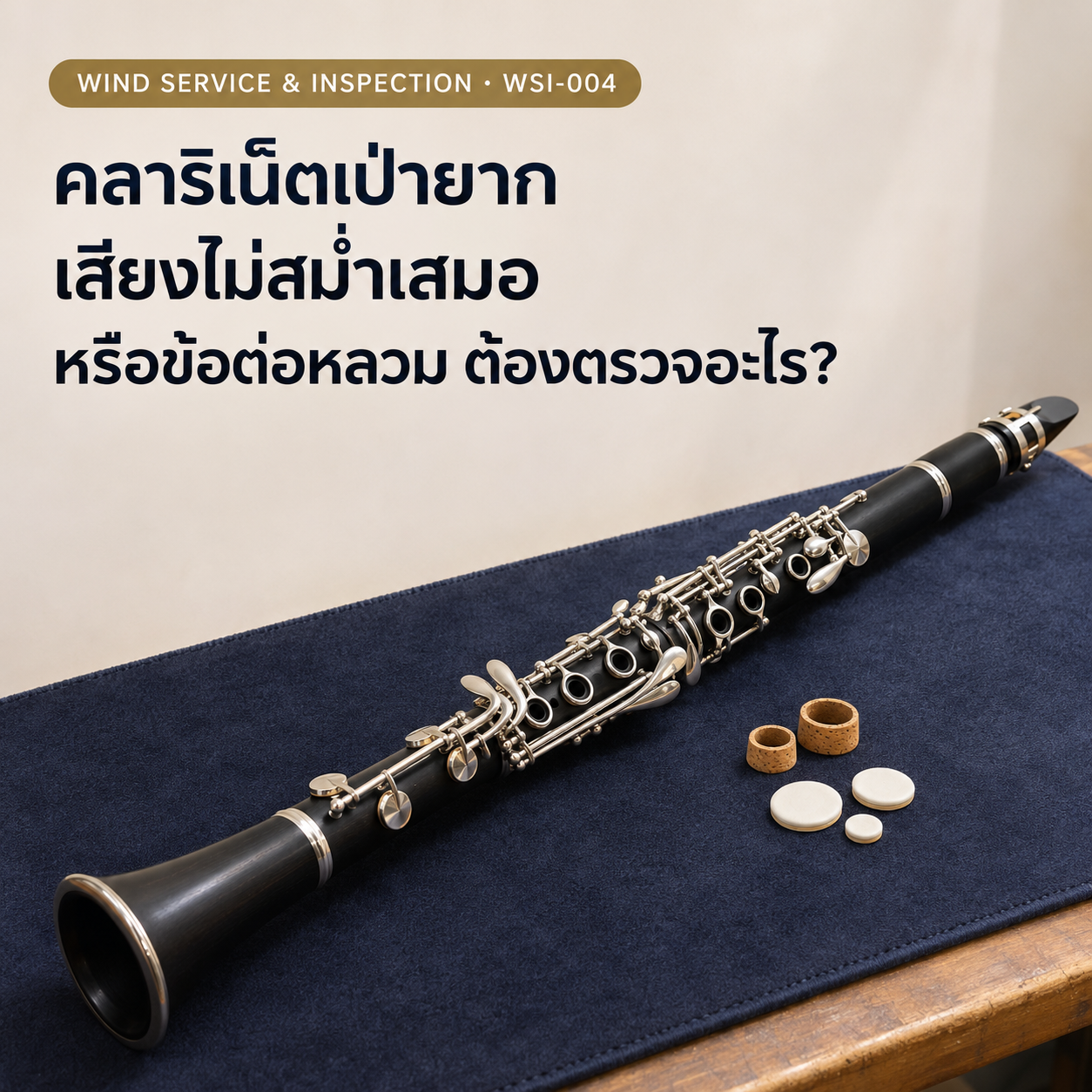
Clarinet Is Hard to Play, Sounds Uneven, or Has Loose Joints: What Should You Check?
If your clarinet has become harder to play, produces intermittent notes, or fails to play certain notes, start by checking the reed, mouthpiece, joint assembly, and whether your fingers are fully covering the tone holes. If the same notes remain problematic after these checks, have a technician inspect the pads and key mechanism.
Basic Checks Before Sending the Instrument for Service
Check one point at a time to help identify the issue. If the problem continues, note what happens so you can describe it to the service team.
- Try a reed that is in good condition.
- Check that the reed is positioned properly on the mouthpiece.
- Make sure the joints are assembled correctly without forcing them.
- Check that your fingers fully cover the tone holes.
- Note which notes are affected and whether the problem happens every time or only occasionally.
If the problem keeps returning, you can contact the service team. Photos or a video may be included to help describe the issue.
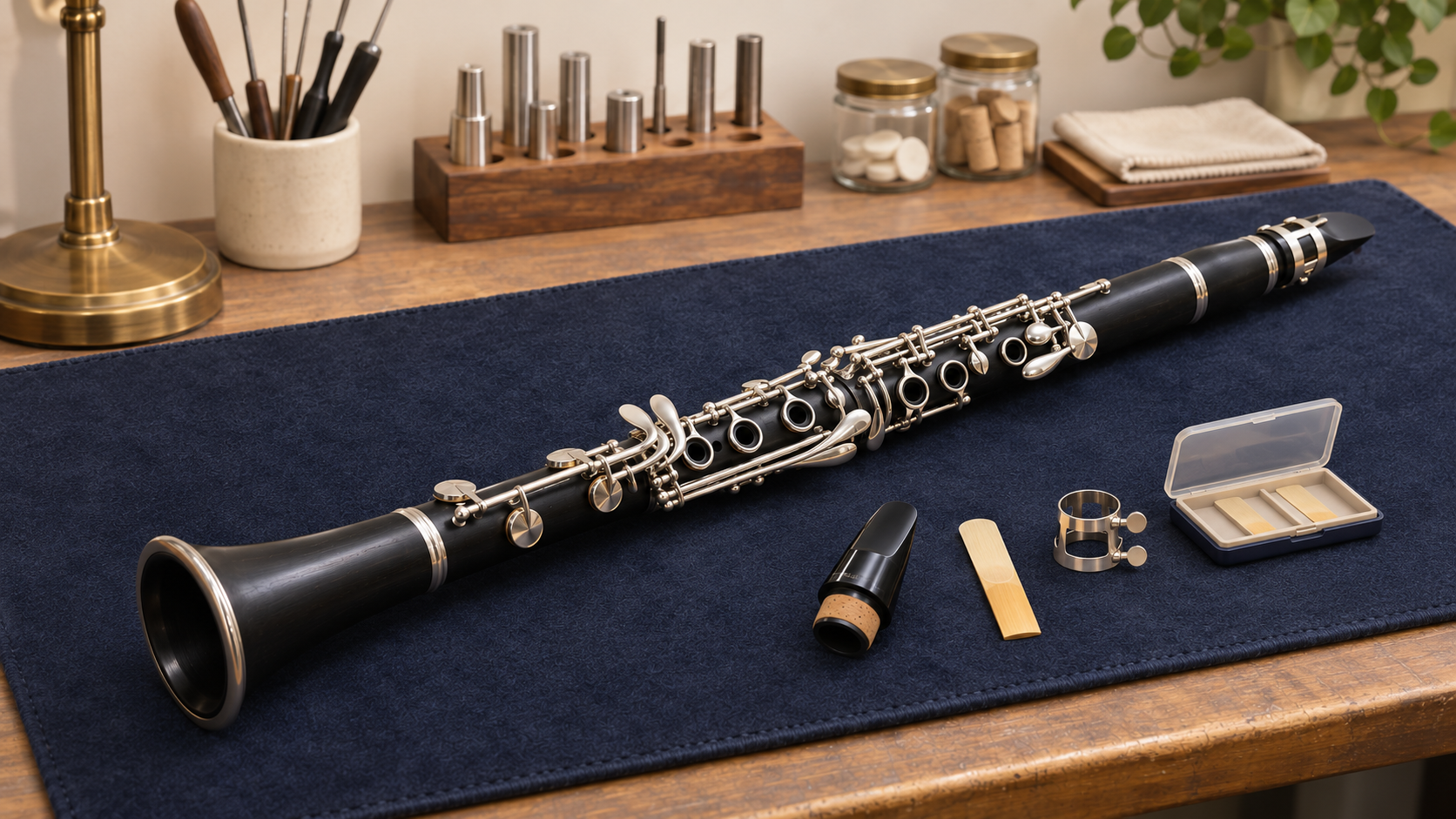
Loose or Tight Clarinet Joints
If a Joint Feels Loose
The cork around a joint may be worn, causing the joint to fit loosely. A technician can check the cork and the fit of the joint before recommending a repair.
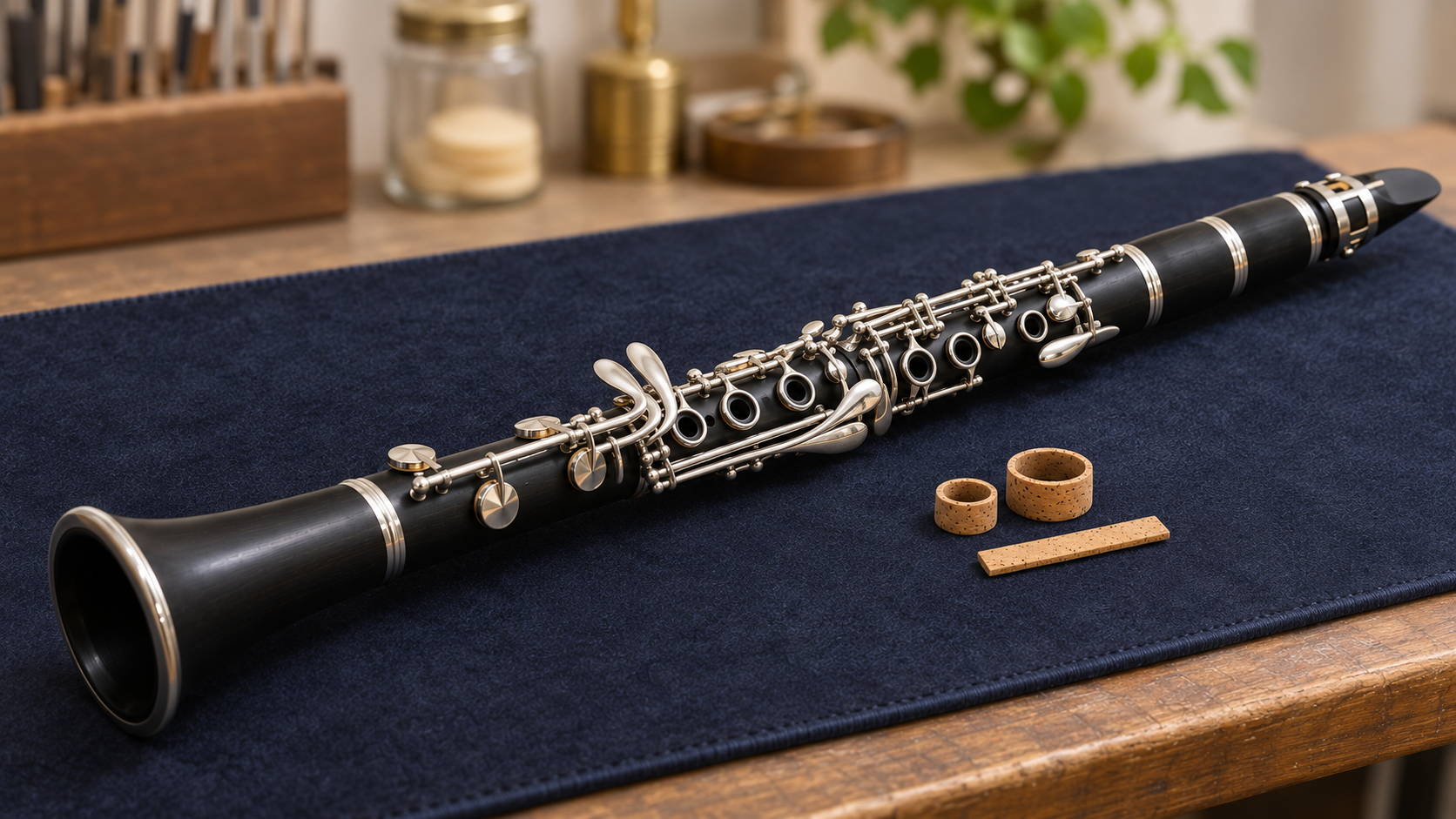
If a Joint Feels Tight
Check the condition of the cork before assembly. Avoid forcing or twisting the parts, and do not press the keys while putting the instrument together.
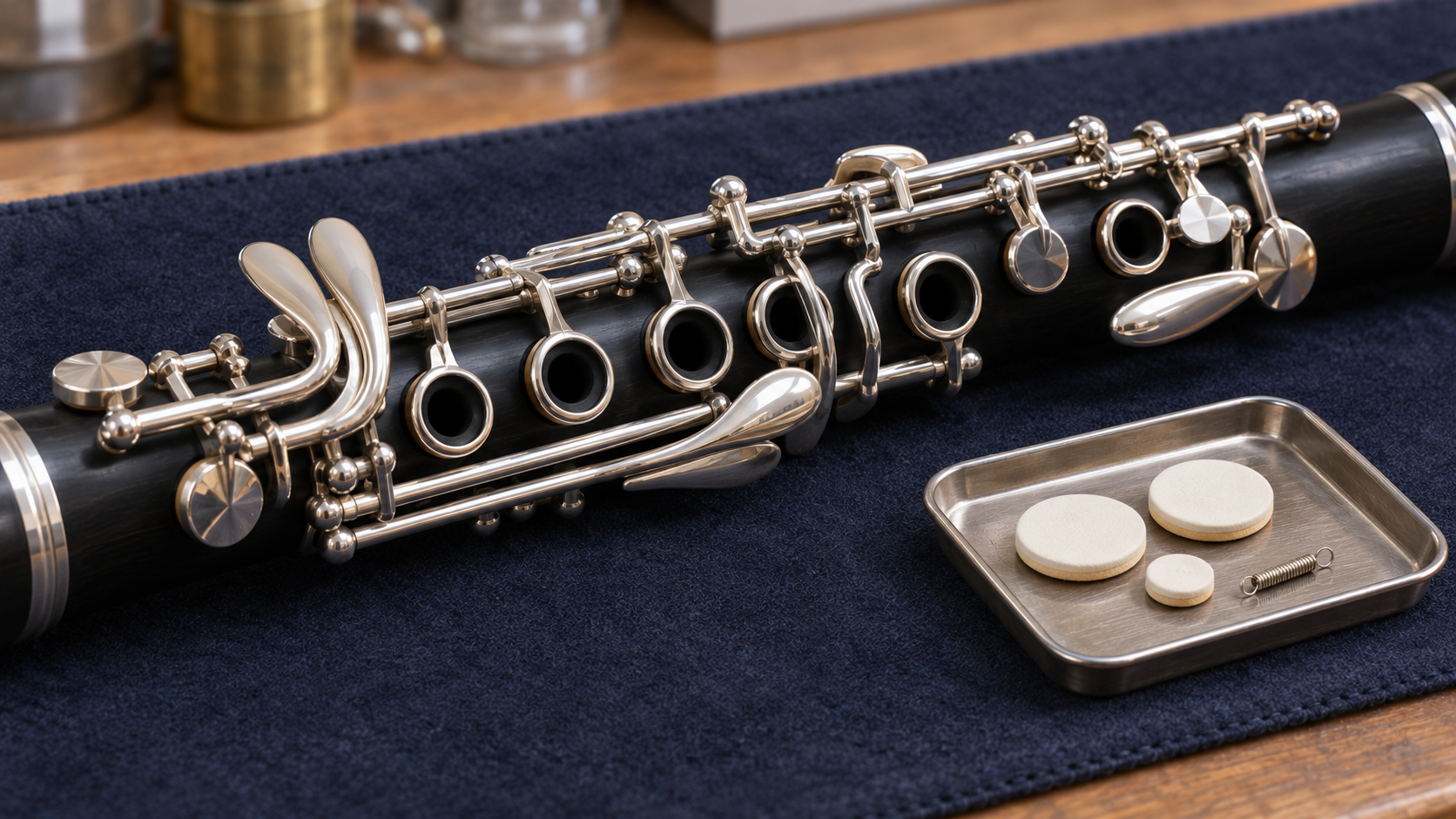
What Clarinet Pad or Key Repairs May Be Needed?
After inspecting the instrument, a technician can determine whether the keys need adjustment, a joint cork needs replacement, or one or more pads need attention. If pads are worn in several places, the technician can assess whether to replace individual pads or the full set.
Avoid applying oil when the cause is unknown, as it may contaminate the pads or cork.
What Information Should You Give the Service Team?
The following details can help the team understand the issue:
- Instrument type, such as B-flat clarinet
- Brand, model, and body material, if known
- The symptoms and which notes are affected
- Any history of dropping or impact
- The date you need the instrument
- The location of any crack or loose joint, if found
Frequently Asked Questions
Does a loose clarinet joint mean the cork must be replaced?
If the cork is worn, a technician may replace the cork on that joint. The repair method can be confirmed after checking the joint and how well the parts fit together.
Can I keep playing a wooden clarinet with a small crack?
Stop playing and have a technician inspect it, as the crack may become larger.
Is a hard-to-play clarinet caused by the reed or the instrument?
Try a reed in good condition, check its position, make sure the joints are assembled correctly, and check that your fingers cover the tone holes. If the clarinet is still hard to play or the same notes remain problematic, ask a technician to inspect the pads and key mechanism.
Ask About Clarinet Inspection and Service
Contact Churairat Music to ask about instrument drop-off locations and inspection appointments. Photos and videos can help describe the issue. After inspecting the instrument, the service team will explain the recommended work, repair cost, and estimated completion schedule before starting.
View Wind Instrument Service | Contact the Service Team | Ask Us on LINE
Privilege Coupon
Customers who use Churairat Music’s maintenance or adjustment services may receive a Privilege Coupon, subject to the company’s terms. The coupon can be used as a discount on future product purchases or services. Please ask the team about the value and terms before using the service.