In brief
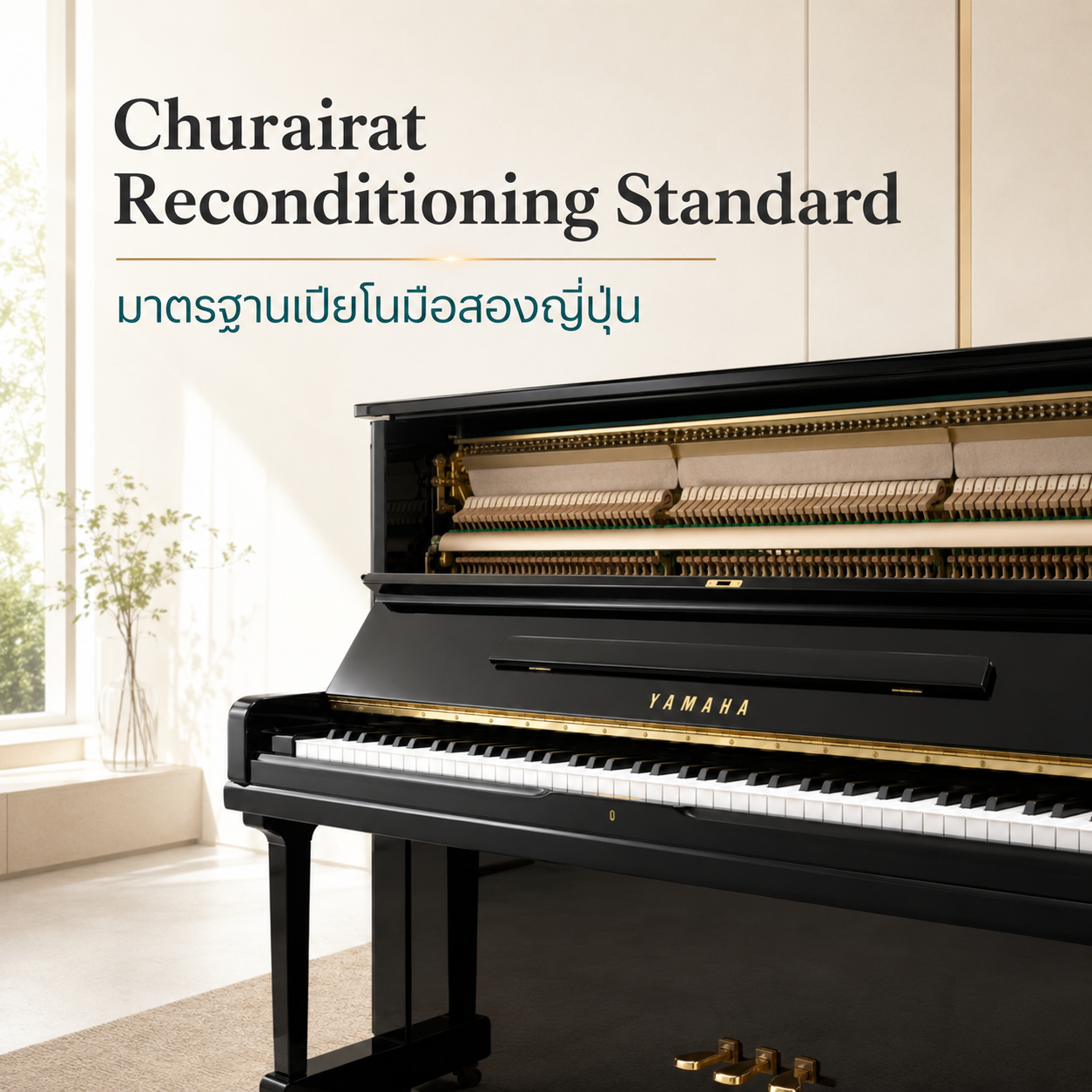
The Churairat Reconditioning Standard is Churairat Music’s process for selecting, inspecting, reconditioning, and preparing secondhand Japanese pianos. It begins with selection in Japan, followed by a factory QC checklist of more than 50 inspection points and reconditioning at our own facility in Thailand.
Each piano is cleaned, regulated, repaired, or fitted with replacement parts as its actual condition requires, so its cabinet and mechanism are ready for use under the company’s standard.
Good reconditioning begins before the piano reaches Thailand
The process starts by selecting a piano with a sound foundation, structure, cabinet, and finish that are in good condition and suitable for reconditioning.
Churairat Music does not focus on buying the cheapest pianos in Japan. A piano whose structure, mechanism, or overall condition cannot meet our intended standard is not one we want to offer customers.
Japanese-market Yamaha pianos attract interest, but “imported from Japan” is not enough
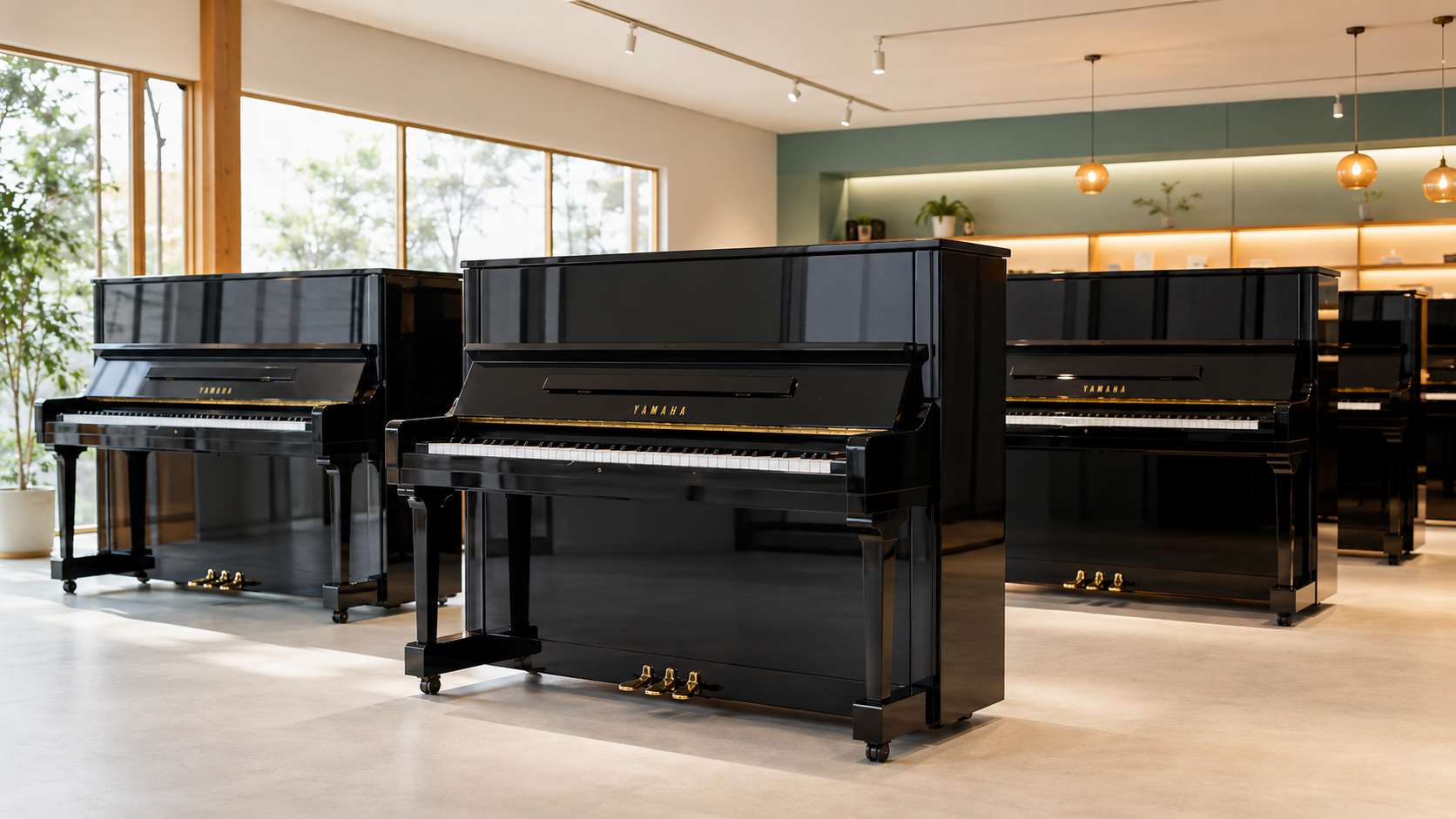
Yamaha pianos made for the Japanese market are widely recognised for their manufacturing standards. However, every used piano has a different age, history, environment, and maintenance record.
The questions to ask next
Does the piano have a good foundation? How was it selected, and what inspection and reconditioning did it undergo before being offered for sale?
More than 50 inspection points across seven key systems
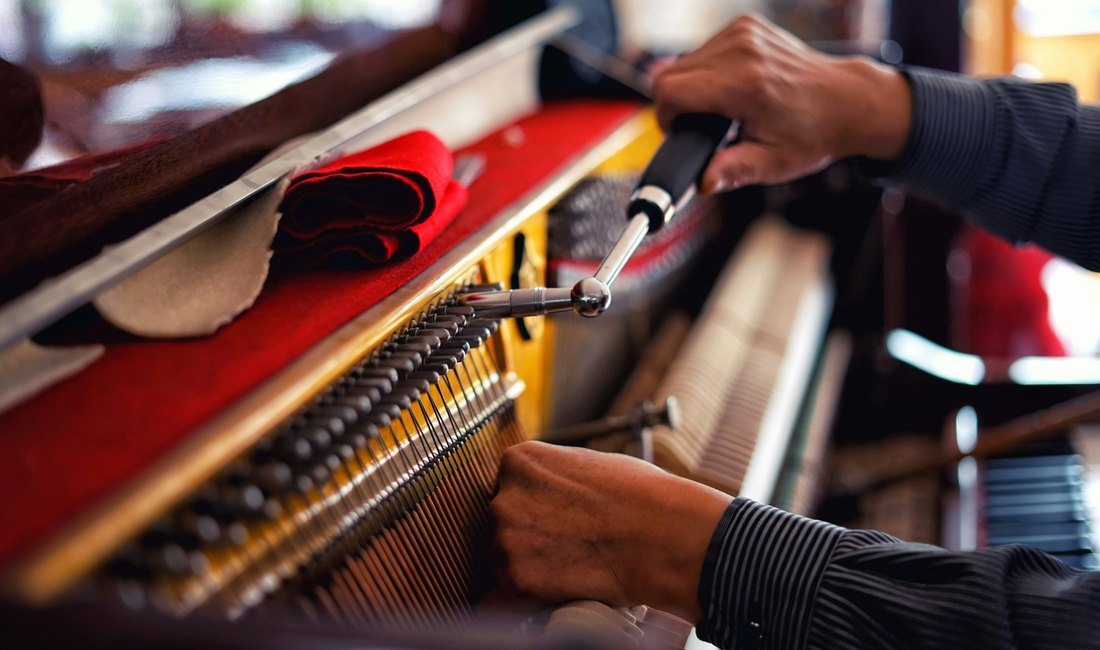
Every piano is inspected individually because no two used pianos require exactly the same work. The goal is not merely to make a piano look newer, but to identify what should be cleaned, regulated, repaired, or replaced.
Action and playing mechanism
Inspection covers how key movement transfers to the hammers and internal mechanism, including regulation and tuning.
Keys and keyboard
White keytops, black keys, spacing, and supporting parts are checked because they affect touch and player control.
Strings and internal system
Sound-producing and structural components are inspected and cleaned so the team sees the piano’s true internal condition.
Cabinet and exterior finish
The cabinet is inspected, cleaned, detailed, and treated according to condition so it is attractive and suitable for home use.
Rear structure
Back Beam, Sound Board, Rib, Back Post, and Sound Button are checked because they relate to the piano’s structure and sound system.
Rubber buttons and slow-down system
Rubber supports for the top and key cover are checked, together with the slow-down system when fitted.
Pedals and other components
Pedals, hinges, screws, and related parts are included because proper preparation extends beyond the most visible areas.
Why inspect every piano individually?
Every piano is different
One may need more action work; another may need attention to keys, cabinet surfaces, or a particular mechanism.
It is not a one-process-fits-all job
The checklist helps the team inspect systematically and determine the work required for that particular instrument.
Reconditioning does not mean replacing every part with a new one
The appropriate approach is to inspect condition and function, then clean, regulate, repair, or replace parts as necessary. Quality should be judged by readiness after the process, not simply by the number of replaced parts.
Why can reconditioned Yamaha U1 or U3 prices differ?
Cost includes more than the purchase price in Japan. It reflects the starting quality, selection, inspection, reconditioning, parts, technician labour, regulation, tuning, cabinet detailing, warranty, and after-sales support.
The standard does not end when the piano leaves the factory
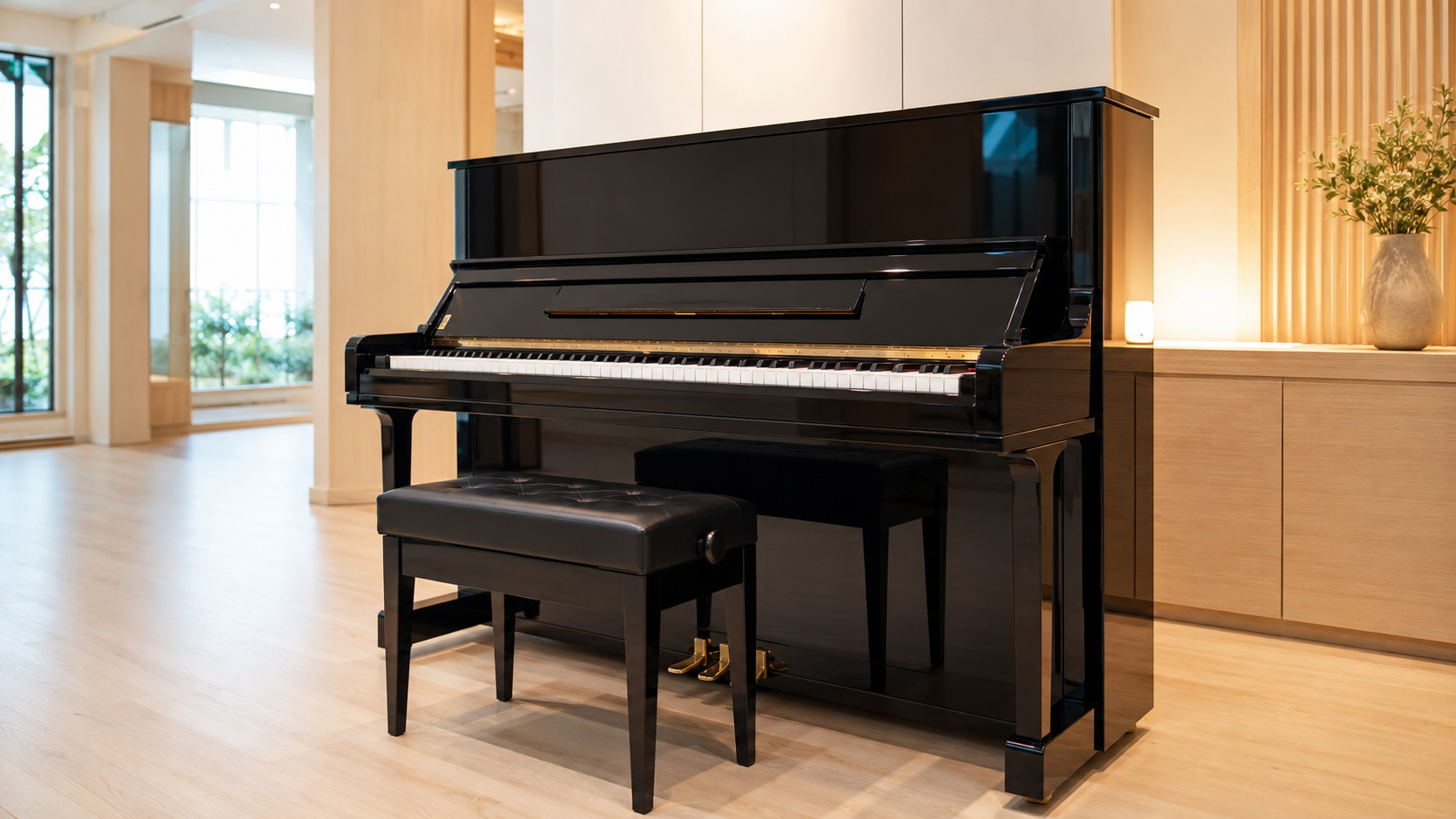
In the main service areas of Bangkok, Chiang Mai, Phuket, and Khon Kaen, eligible pianos receive warranty and after-sales services under company conditions.
If we are confident in the pianos we select, recondition, and sell, we should also be ready to support those pianos and their owners for the long term.
Conclusion: what should a secondhand Japanese piano undergo before sale?
Our approach is not to take a badly worn piano and merely make it look new. It is to select a good piano from the beginning and carefully prepare both its exterior and internal mechanism for dependable use.
Frequently asked questions
What is a reconditioned piano?
A used piano that has been inspected, cleaned, detailed, regulated, repaired, or fitted with replacement parts as necessary to prepare it for use.
Does reconditioning mean only refinishing the cabinet?
No. Churairat Music considers both the cabinet and finish as well as the action, keyboard, strings, structure, and internal components.
Must every part be replaced?
No. Each piano has a different condition, so work is carried out according to actual need.
Why select the piano in Japan?
The quality after reconditioning partly depends on the piano’s starting foundation, so structure, mechanism, cabinet, and finish should be considered from the beginning.
What does the Churairat Reconditioning Standard inspect?
More than 50 points covering the action, hammers, dampers, keyboard, tuning pins, strings, frame, cabinet, soundboard, rear structure, pedals, rubber buttons, slow-down system, and related parts.
Does a reconditioned piano still need tuning?
Yes. An acoustic piano continues to require tuning and maintenance according to use and environment.
Why do pianos of the same Yamaha model have different prices?
Age, history, starting condition, reconditioning, cabinet work, warranty, and after-sales support can all differ.