Piano Knowledge · PNO-007
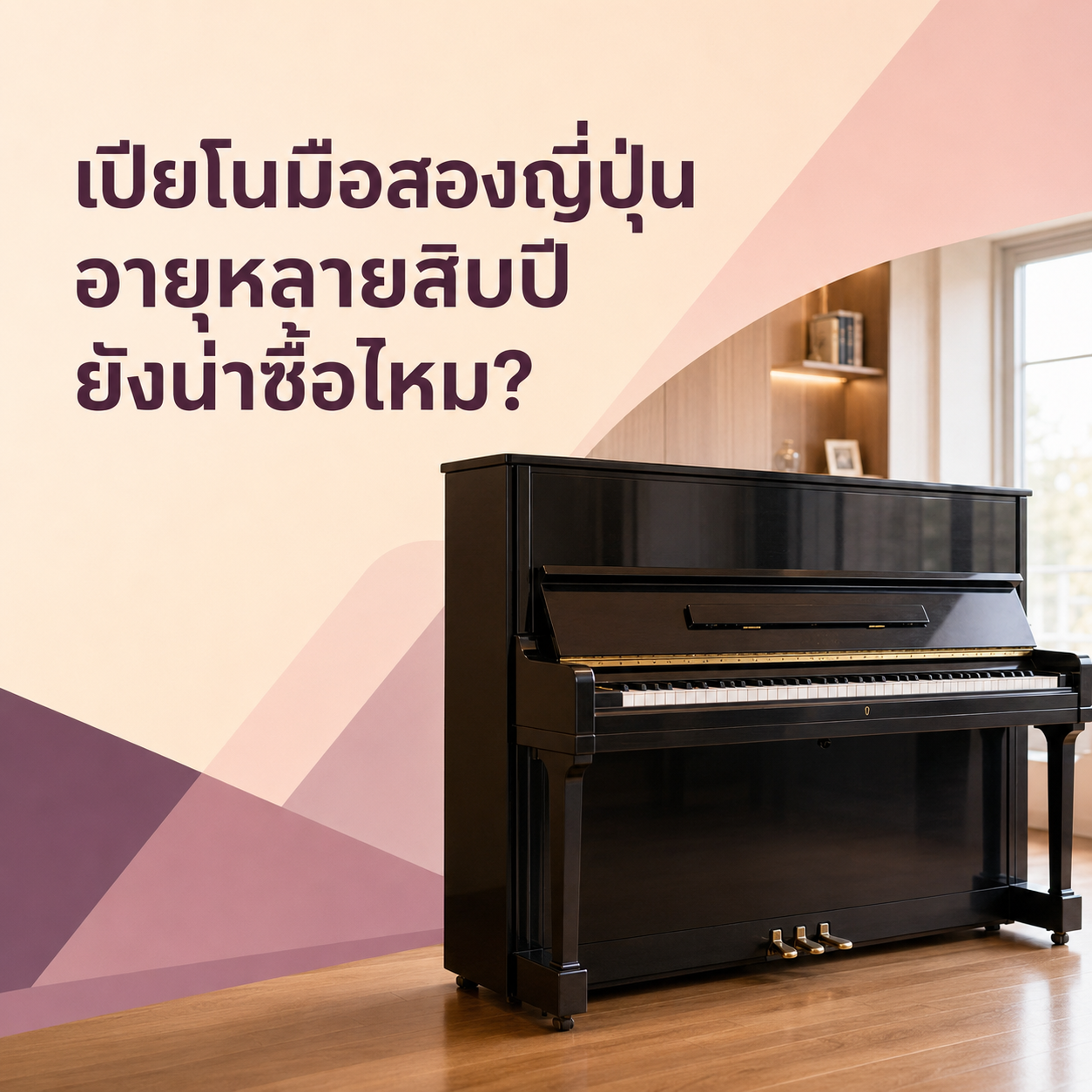
Is a Used Japanese Piano That Is Several Decades Old Still Worth Buying?
The answer does not depend on age alone. It depends on the piano’s fundamental condition, the quality of its reconditioning, and the seller’s responsibility for warranty and after-sales support.
Quick answer
Yes, it can still be worth buying if the piano has a sound fundamental structure, has been carefully selected, and has been properly reconditioned. More important questions are: What does the warranty cover? If a problem develops during the warranty period, will a qualified technician genuinely inspect, repair and adjust the piano? Most importantly, can you trust the seller?
Why can a decades-old piano remain usable?
A good acoustic piano is designed for long-term use. Its key structures—including the iron frame, soundboard, strings, keyboard action and outer cabinet—can be inspected, repaired, adjusted or replaced where necessary. When the piano has sound fundamentals, systematic care can restore much of its readiness to play.
An older used Japanese piano may also have the advantage that its natural materials and structure have already settled over time. This is beneficial only if the piano has not suffered structural problems, excessive humidity, heavy use or unsuitable storage.
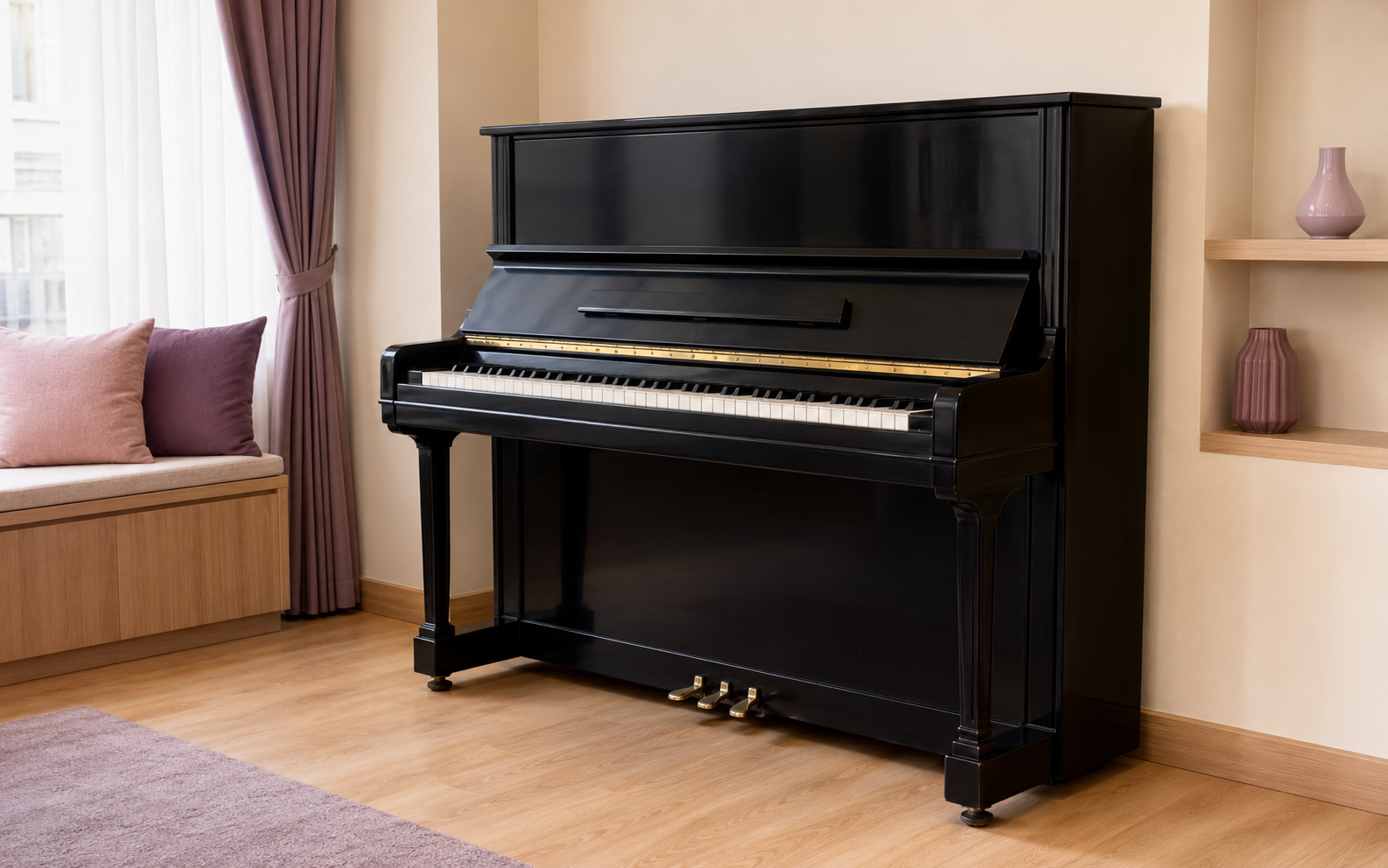
Five points that matter more than a piano’s age
Structure and soundboard
They should be in suitable condition, without problems that affect structural stability or sound vibration.
Strings and tuning pins
The piano must hold its tuning reliably—not merely sound in tune on the day it is delivered.
Keyboard action and hammers
The keys should respond evenly without sticking, and the hammers must remain in good working condition.
Regulation and voicing
The mechanism, tonal balance and tuning should be adjusted so that the piano feels and sounds natural to play.
After-sales care
There should be a clear warranty, tuning support and a technical team responsible for the piano after it enters your home.
How is reconditioning different from cleaning and tuning?
Genuine reconditioning is not simply polishing the cabinet and tuning the piano once. It is a systematic inspection to identify what needs adjustment, repair or replacement—from the keyboard action, strings and hammers to internal and external components, tonal balancing and tuning.
This work requires time, skill and meaningful cost. Its purpose is to prepare a piano to perform well, not merely to make it look new on the day of sale.
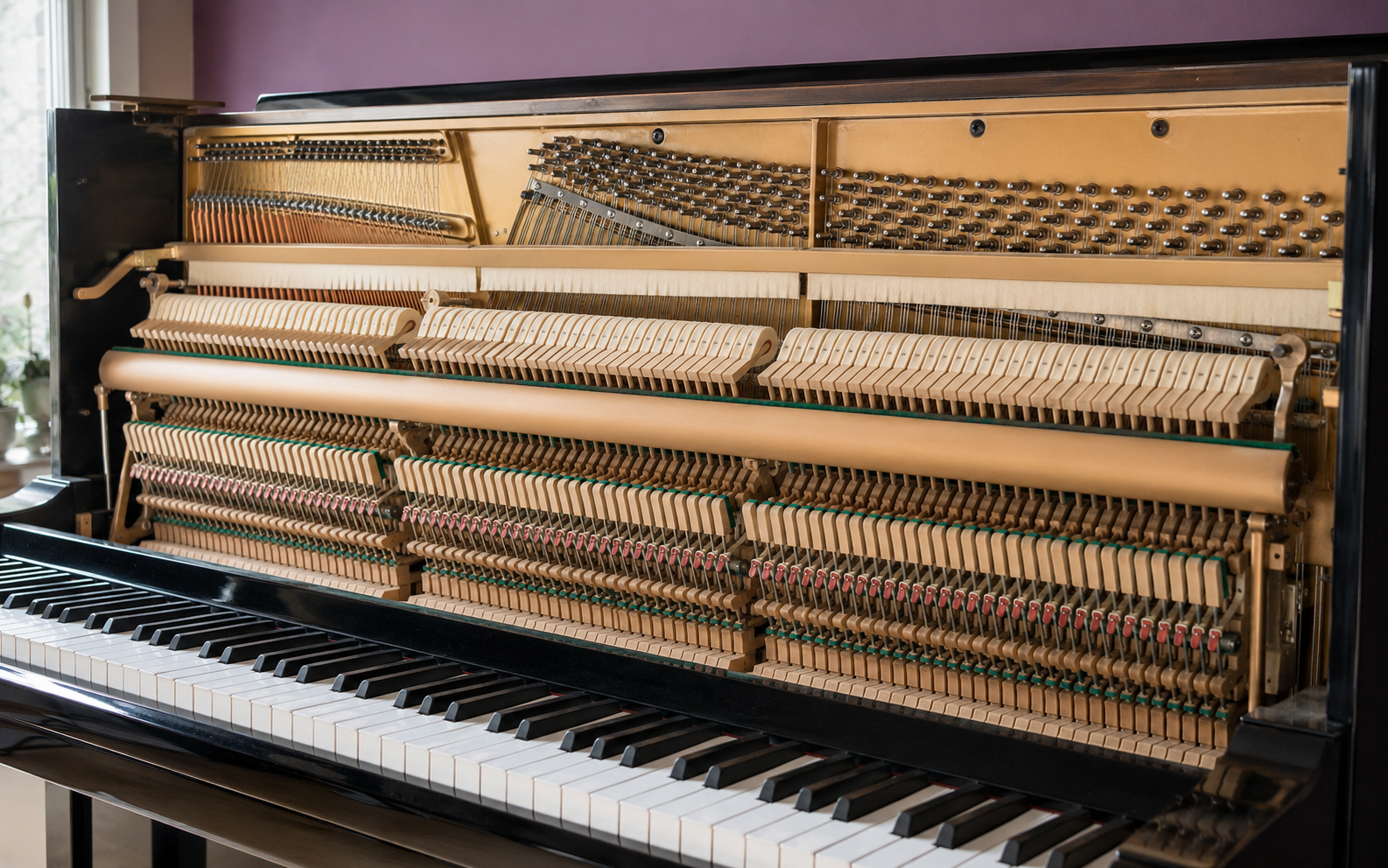
Churairat Reconditioning Standard
Churairat Music’s used Japanese pianos are carefully selected before import and then reconditioned at the company’s own factory. More than 50 points are inspected and adjusted before delivery. Qualifying pianos include a five-year warranty and three complimentary tunings within the main service areas, subject to company terms.
Who looks after a reconditioned piano after purchase?
Five-year warranty + three tunings
For qualifying pianos in Bangkok, Chiang Mai, Phuket and Khon Kaen, support continues beyond the delivery date.
Hydraulic piano bench
Included with the piano so the player can adjust the seat height for a comfortable and appropriate playing position.
Lifetime Buy Back Guarantee
Acoustic pianos purchased from Churairat Music are covered by a lifetime buy-back guarantee, subject to company terms.
Privilege Coupon
Eligible purchases and services can provide discount privileges for participating products, subject to programme terms.
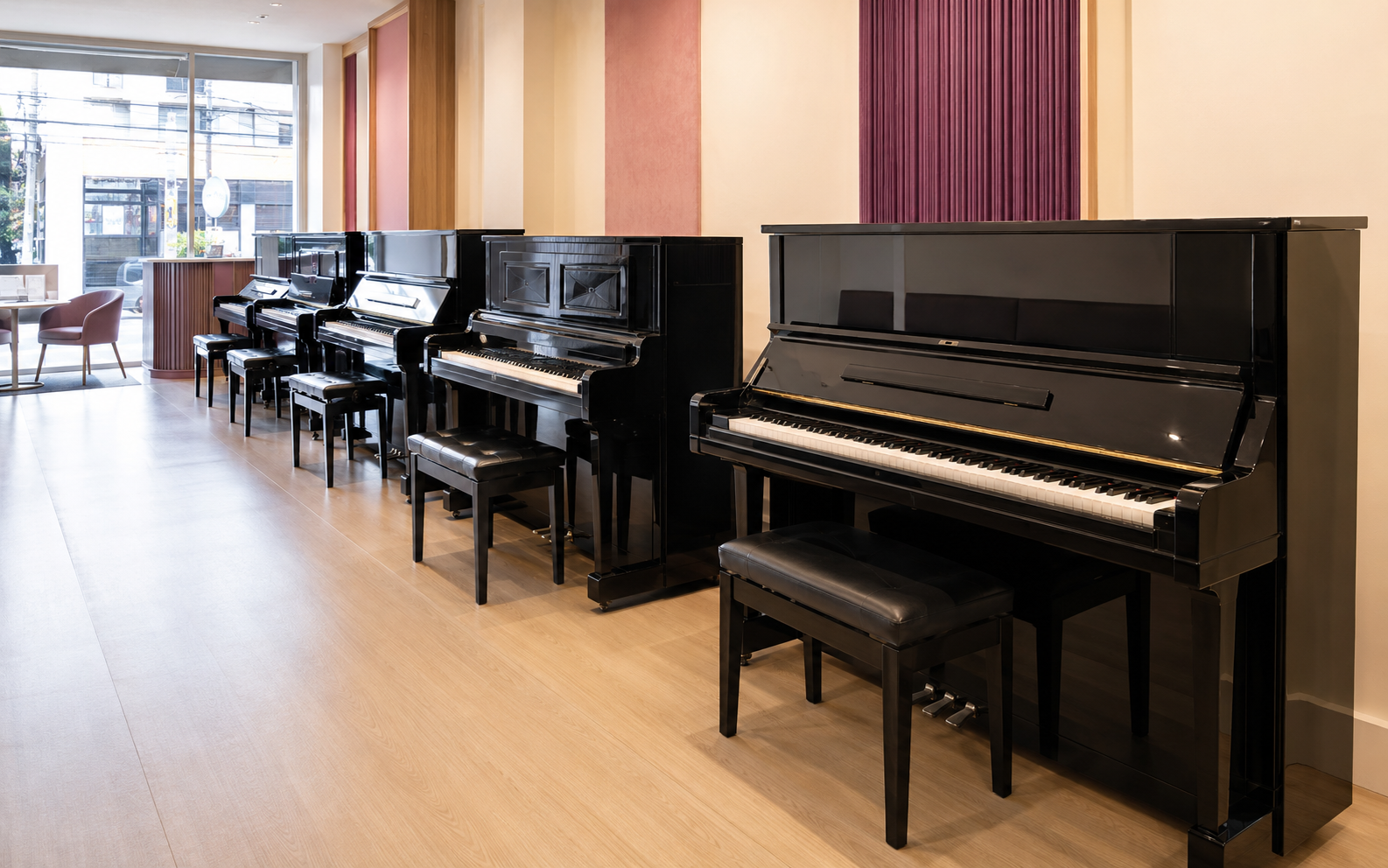
Questions to ask in detail before buying
| Question to ask | What a useful answer should include |
|---|---|
| What has been reconditioned? | The seller should explain which areas were inspected and what work was performed—not simply say that the piano was “repaired”. |
| What does the warranty cover and for how long? | The terms should be clear, with an identified team responsible for service. |
| What tuning and care are provided after delivery? | You should receive a clear service plan for the period after the piano enters your home. |
| What happens if I no longer need the piano? | There should be an option such as a buy-back guarantee or an assessment based on the piano’s condition and the market. |
Do not judge the outer cabinet alone
A glossy finish cannot reveal tuning stability, soundboard condition, key response or the quality of technical regulation. Inspect the individual piano, try it in person and ask how it was prepared.
Frequently asked questions
Can a used Japanese piano still sound good?
Yes, if its structure, mechanism and tonal balance are in suitable condition. Age alone cannot determine sound quality.
Does a used piano need frequent repairs?
Careful selection and proper reconditioning can greatly reduce the risk. However, every acoustic piano still needs periodic care and tuning. A trustworthy seller should keep the piano operating normally throughout the warranty period.
Is buying a new piano always safer?
A new piano has the advantage of being new, but a properly prepared used piano can offer strong value and may allow the buyer to choose a higher model at a similar budget.
Should I try the piano before buying?
Yes. Trying the piano and inspecting its condition together provide a much clearer picture of the readiness of that individual instrument.
Conclusion: age is one data point, not the verdict
A used Japanese piano that is several decades old can still be worth buying when it is selected on its actual condition—not merely its age or outer appearance. A piano with sound fundamentals and thorough reconditioning can be a cost-effective instrument for long-term learning and playing.
Churairat Music helps buyers consider the complete picture: model, condition, reconditioning, warranty, tuning, Hydraulic bench and the Lifetime Buy Back Guarantee, subject to company terms.