


Piano Knowledge · PNO-013
What Is the Difference Between Used Yamaha C3, C5 and C7 Grand Pianos?
Compare size, sound potential, room suitability and the condition checks that matter when choosing a used grand piano for a home, teaching studio or long-term playing.
Quick answer
The C3 is a well-balanced size for many homes and teaching rooms. The C5 suits players who want greater tonal scale and power, while the C7 is intended for larger spaces and uses that need more projection. A larger model is not automatically better for every room, and the piano’s foundation and Churairat Recondition Standard work matter more than the model name alone.
The main difference begins with piano length
The Yamaha C3, C5 and C7 are different sizes within the C Series. As a grand piano becomes longer, its string length and overall soundboard area increase, giving it more potential for power, depth and tonal dimension. The right choice, however, begins with the room, placement and intended use.
A balanced grand for homes, teaching rooms and serious playing in a manageable space.
More tonal scale and power than the C3, with greater space and budget requirements.
A large grand for studios, music schools, performance rooms and generous spaces.
Who are the C3, C5 and C7 for?
Homes and teaching rooms
A genuine grand-piano experience in a format easier to place than a C5 or C7. Suitable for serious practice, playing and teaching.
Greater tonal scale
For rooms and budgets that can support a larger instrument, and players seeking more power and dimension than a C3.
Larger rooms and uses
For studios, music schools, performance rooms or other uses that benefit from a larger grand and stronger projection.
Remember: a grand piano that is too large for the room can be difficult to place and control. A well-conditioned C3 or C5 may be more suitable in practice than a C7.
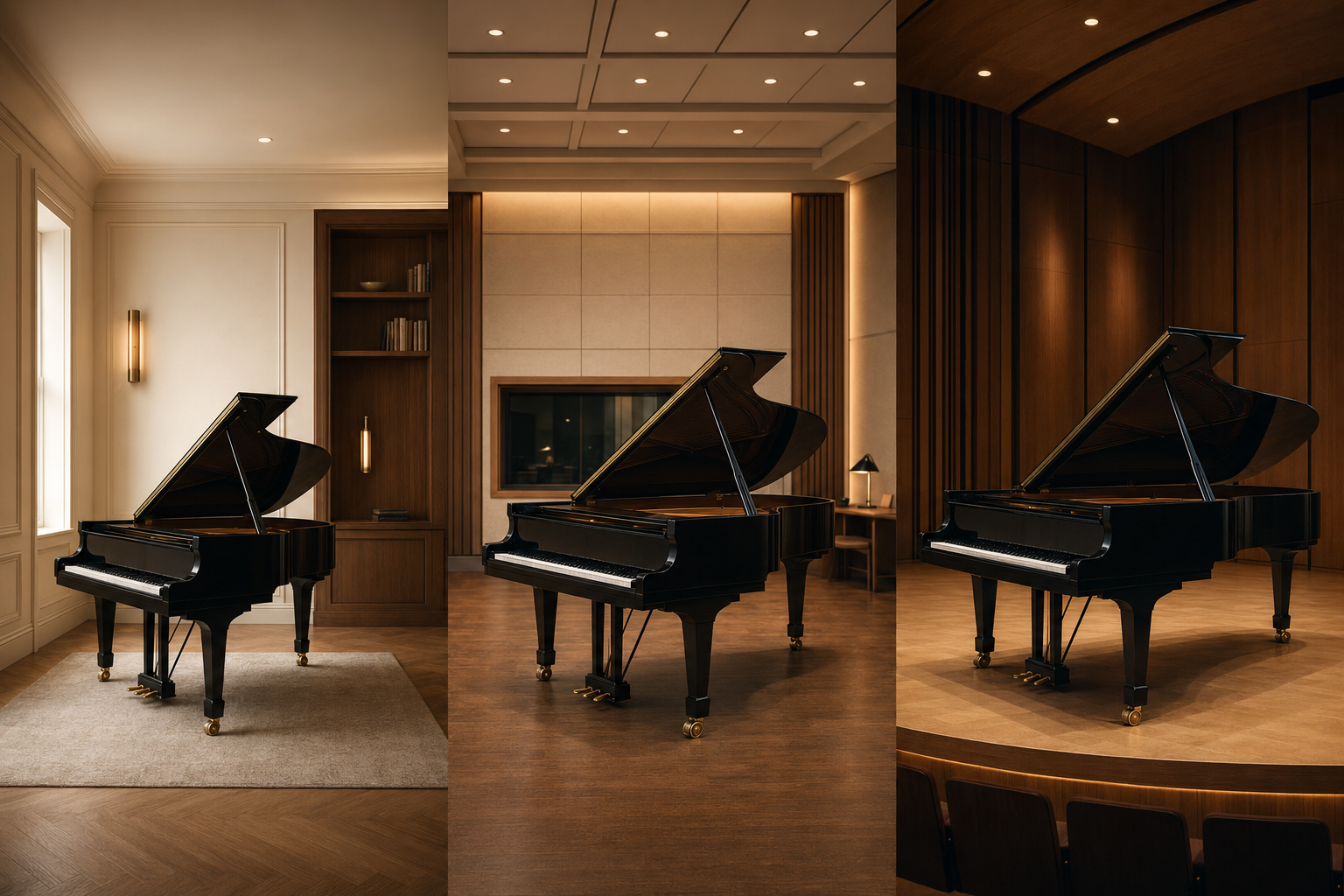
Yamaha C3, C5 and C7 comparison
| Model | Approximate length | Best suited to | Also consider |
|---|---|---|---|
| Yamaha C3 | 186 cm | Homes and teaching rooms that need a true grand while keeping space manageable | Clearance, delivery access and the sound level in the room |
| Yamaha C5 | 200 cm | Players seeking more tonal scale and power than the C3, with space to support it | Compare it with a C3 to confirm that the difference benefits the room and player |
| Yamaha C7 | 227 cm | Studios, music schools, performance rooms and spaces needing a large grand | Plan placement, moving access and room sound control carefully |
Choose for the room and player before the model name
Trying the actual piano shows whether its power, key response and pedal operation suit the player. Do not decide from length alone or assume that the larger model must always be the better choice.
Start with a size the room can genuinely support, including lid, bench, walkway and delivery clearance.
The purpose determines the appropriate scale and sound output.
Try the tone, key touch, response and pedals on the individual piano.
Compare condition, reconditioning, warranty and after-sales support—not length alone.
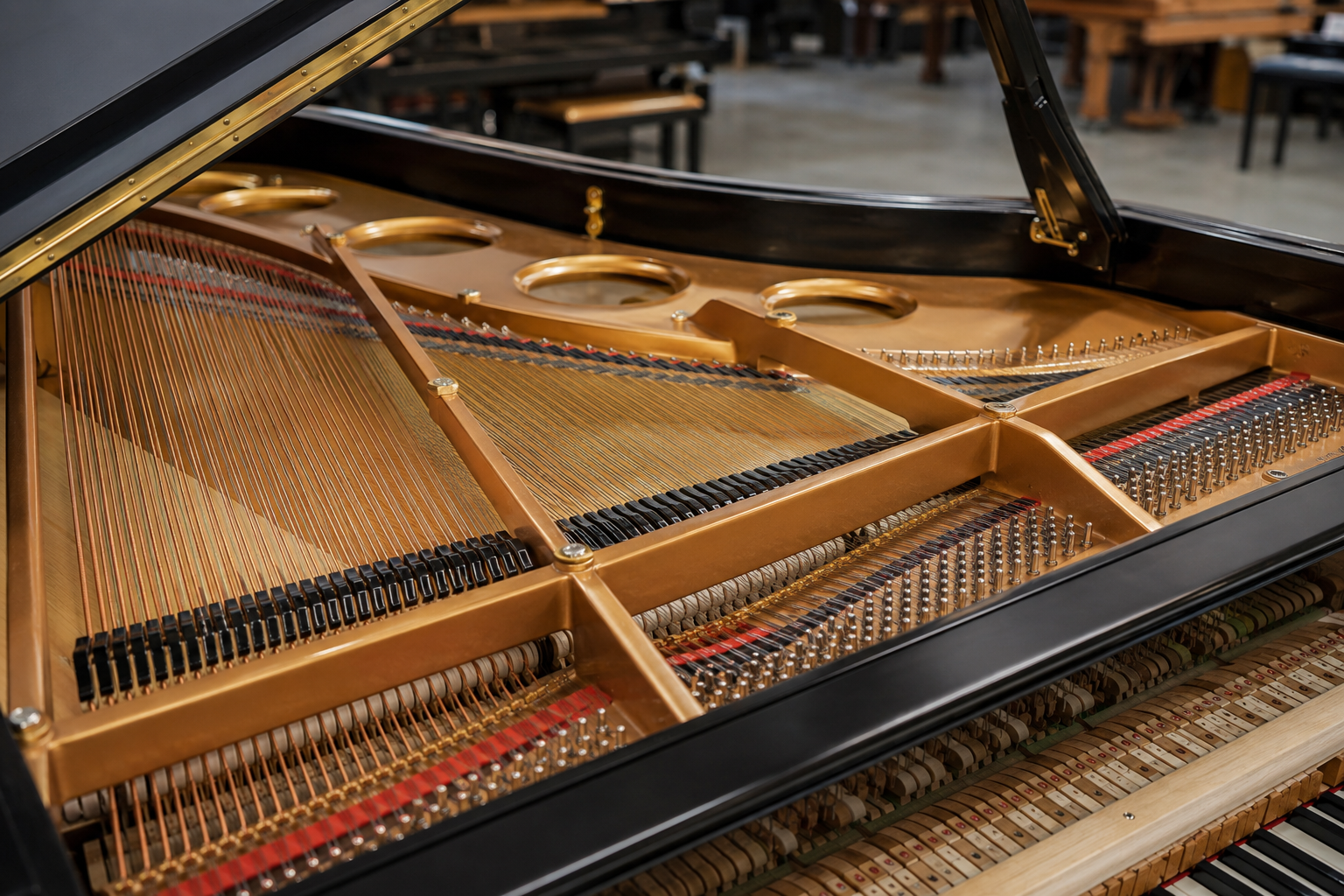
A used grand piano requires detailed condition checks
A grand piano has a complex action and many interdependent components, so two examples of the same model can differ greatly. Inspect the structure, soundboard, strings, tuning pins, key action, hammers, pedals, tonal balance and tuning. Photographs, model name and production year are not enough on their own.
Churairat Recondition Standard covers more than 50 inspection and adjustment points, from selecting used pianos in Japan to preparing the structure, tonal system, action, internal and external components so that each grand piano is ready for use.
What to ask before buying a used Yamaha C Series
| Question | Why it matters |
|---|---|
| Has it undergone the Churairat Recondition Standard? | This shows whether the piano was inspected and adjusted systematically rather than only cleaned externally. |
| What is the condition of the soundboard, strings, tuning pins, action and hammers? | These areas affect tone, tuning stability, touch and long-term use. |
| What tonal balancing and tuning work has been completed? | This helps establish the piano’s readiness at the trial and on delivery. |
| What warranty and technical support follow delivery? | The value of a grand piano should continue after purchase day. |
Include post-purchase value in the decision
For pianos within Churairat Music’s service areas of Bangkok, Chiang Mai, Phuket and Khon Kaen, ongoing services and benefits are available subject to company terms.
With after-sales care subject to company terms.
Helping the piano settle and remain ready after moving.
An adjustable bench suited to the player and daily use.
Privilege Coupon and Lifetime Buy Back Guarantee, subject to terms.
The Churairat Privilege Coupon allows eligible purchases or services to contribute toward discounts on participating products. Buy-back value is assessed from the piano’s condition and the market at the time of evaluation.
Frequently asked questions
Is a C3 large enough for home use?
For many homes, the C3 is a well-balanced size that provides a true grand-piano experience while keeping space manageable. Room size, placement, delivery access and sound level should still be assessed first.
Is a C5 always better than a C3?
No. The C5 offers greater size and tonal potential, but suitability depends on the room, budget, player and the condition of each individual piano.
Is a C7 suitable for a home?
It can be suitable when the room and placement support its size and sound output. In a more limited space, a well-conditioned C3 or C5 may be a better fit.
Is an older C Series piano still worth buying?
Age is not the only deciding factor. Yamaha pianos are built for a long service life, and an instrument with a sound foundation, careful selection, detailed reconditioning and reliable after-sales care can remain a worthwhile choice.
Conclusion: choose for today and plan for the day you may no longer use it
The Yamaha C3, C5 and C7 differ in size, sound potential and room suitability. The C3 works well in many homes and teaching rooms, the C5 adds scale and power, and the C7 suits larger spaces and uses. Begin with the size that fits the room and purpose, then choose an individual piano with a sound foundation, detailed Churairat Recondition Standard work and complete after-sales support.
Churairat Lifetime Buy Back Guarantee
Another consideration from the day of purchase is what to do if you no longer use the piano in the future. Eligible pianos receive the Churairat Lifetime Buy Back Guarantee, a lifelong buy-back policy subject to company terms. The buy-back value is assessed according to the piano's condition and the market at the time of evaluation.
This privilege means that buying a grand piano does not end on delivery day. It also provides a practical option if your needs change in the future.
Read about the Churairat Lifetime Buy Back Guarantee