PIANO KNOWLEDGE · PNO-020
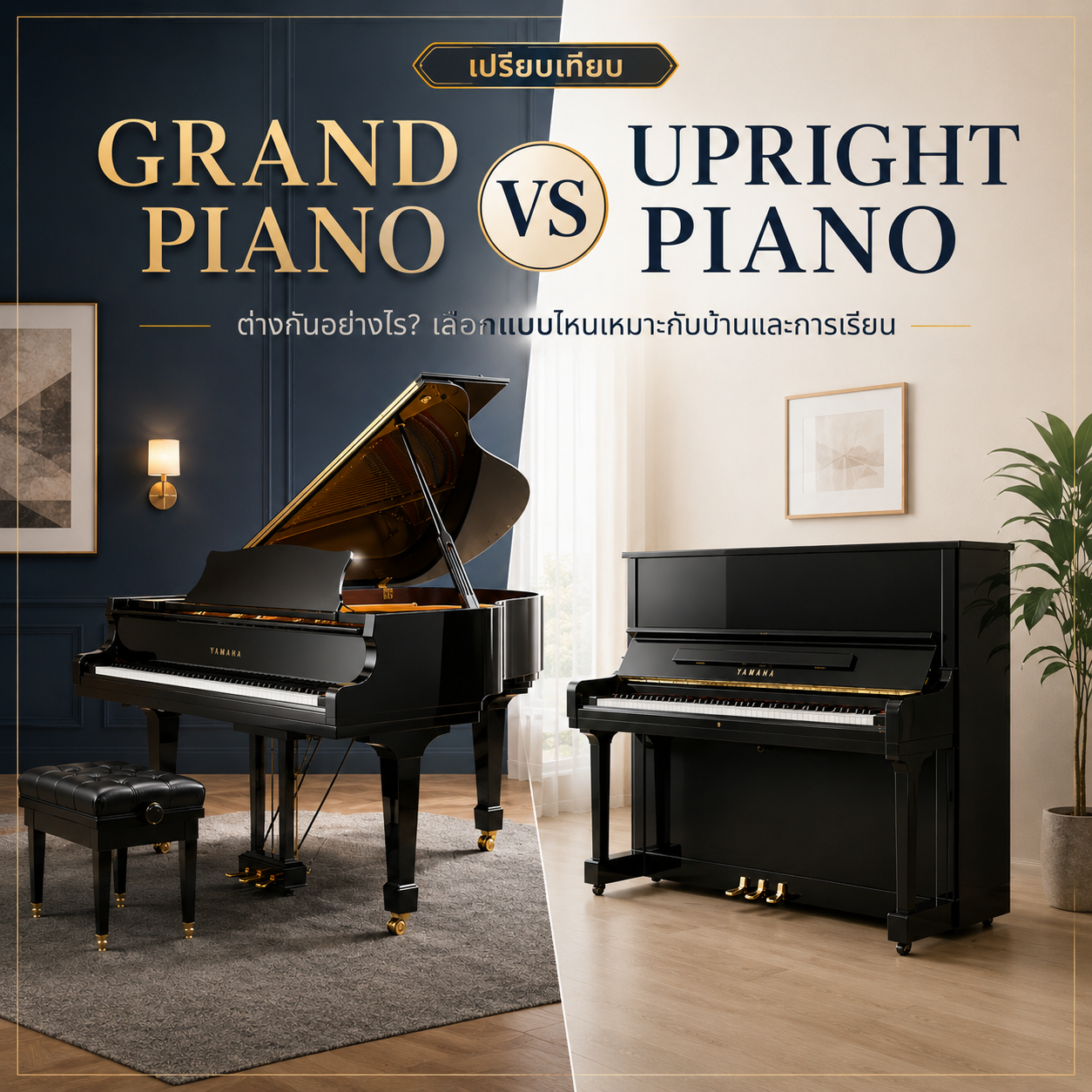
Grand Piano vs Upright Piano: What Is the Difference?
Compare their construction, sound, action, key response, space requirements, budget and long-term use to choose the right acoustic piano for the player and the home.
Short answer
A Grand Piano positions its strings and soundboard horizontally, with an action that uses gravity to help the hammers return. This gives it different potential for resonance and key control from an Upright Piano, whose vertical construction takes up less space and is easier to place in many homes.
Both are acoustic pianos, but they suit different needs
Grand and upright pianos both create sound through real strings, a soundboard and hammer mechanisms. Their differences therefore go beyond their shape to include string orientation, action design, key response, space requirements and budget.
The right choice should begin with how the piano will actually be used. A grand piano is not automatically better in every situation. A well-maintained upright that suits the player may be a better choice than a grand that does not fit the room or the intended use.
Grand Piano vs Upright Piano: a simple comparison
| Feature | Grand Piano | Upright Piano |
|---|---|---|
| Strings and soundboard | Placed horizontally, allowing longer strings and a larger soundboard as the instrument increases in size. | Placed vertically to save floor space, resulting in shorter strings and a smaller soundboard by design. |
| Sound | Can offer greater depth, resonance and a wider dynamic range depending on the piano's size and quality. | Provides a true acoustic-piano sound in a more compact cabinet; volume and tonal quality vary by model and condition. |
| Action | The action works horizontally and uses gravity to help the hammers return. | The action works vertically and uses springs to help the hammers return. |
| Key response | A suitable instrument often allows finer control of touch, dynamics and repeated notes. | Suitable for many levels of study and practice, although its response differs from a grand action. |
| Space and moving | Requires room for the instrument's length, the bench, the player, walkways, lid opening and a suitable moving route. | Takes up less space, is easier to position and is generally more flexible for home interiors. |
| Budget | Options range from entry-level new grands to reconditioned Yamaha grand pianos at several price levels. | Available in a wide range of new and reconditioned models, providing greater flexibility in both model level and budget. |
Important: Sound and key response should be compared on the actual instruments. Size, model, condition, regulation and the room itself all affect the player's experience.
Why does a Grand Piano sound and respond differently?
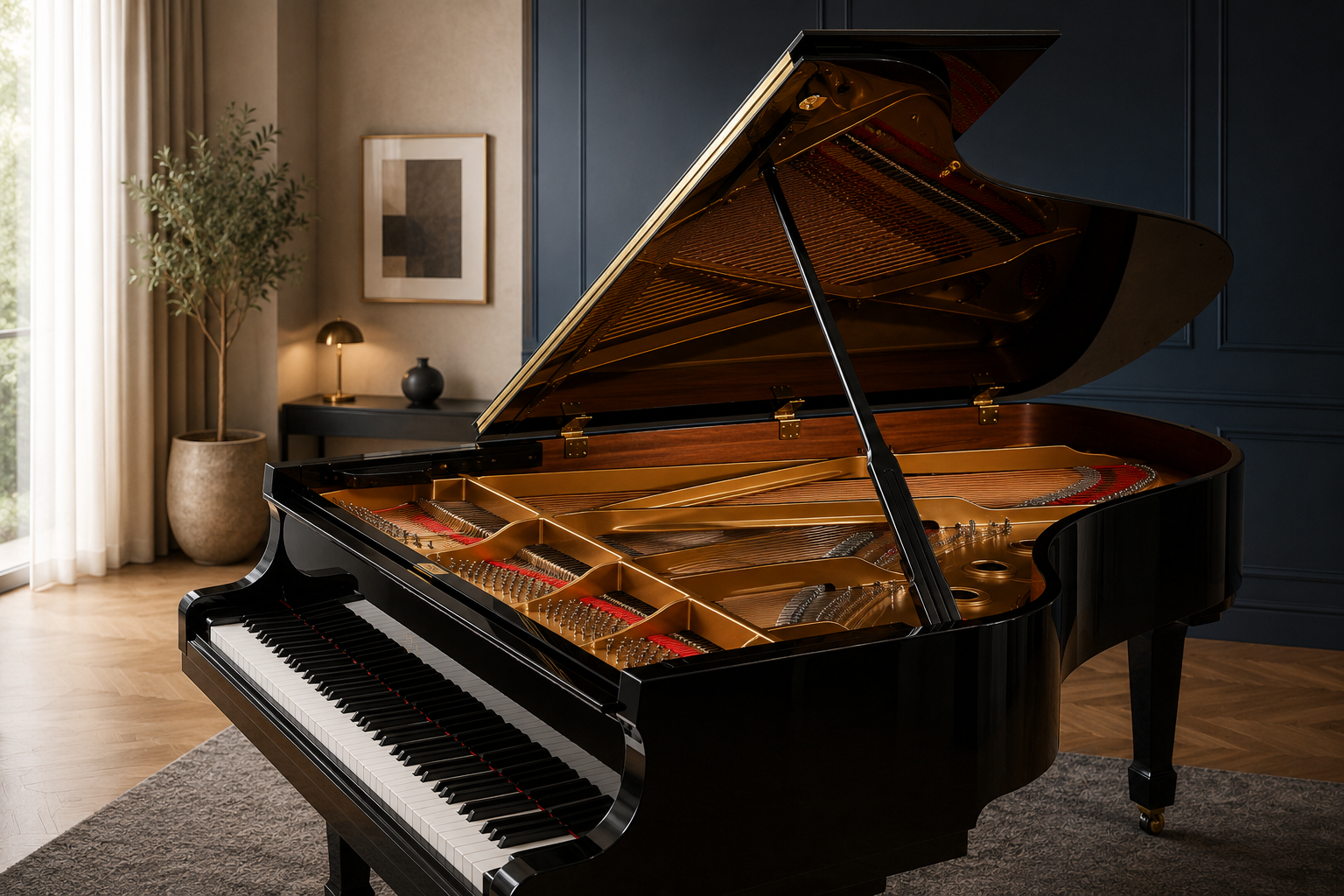
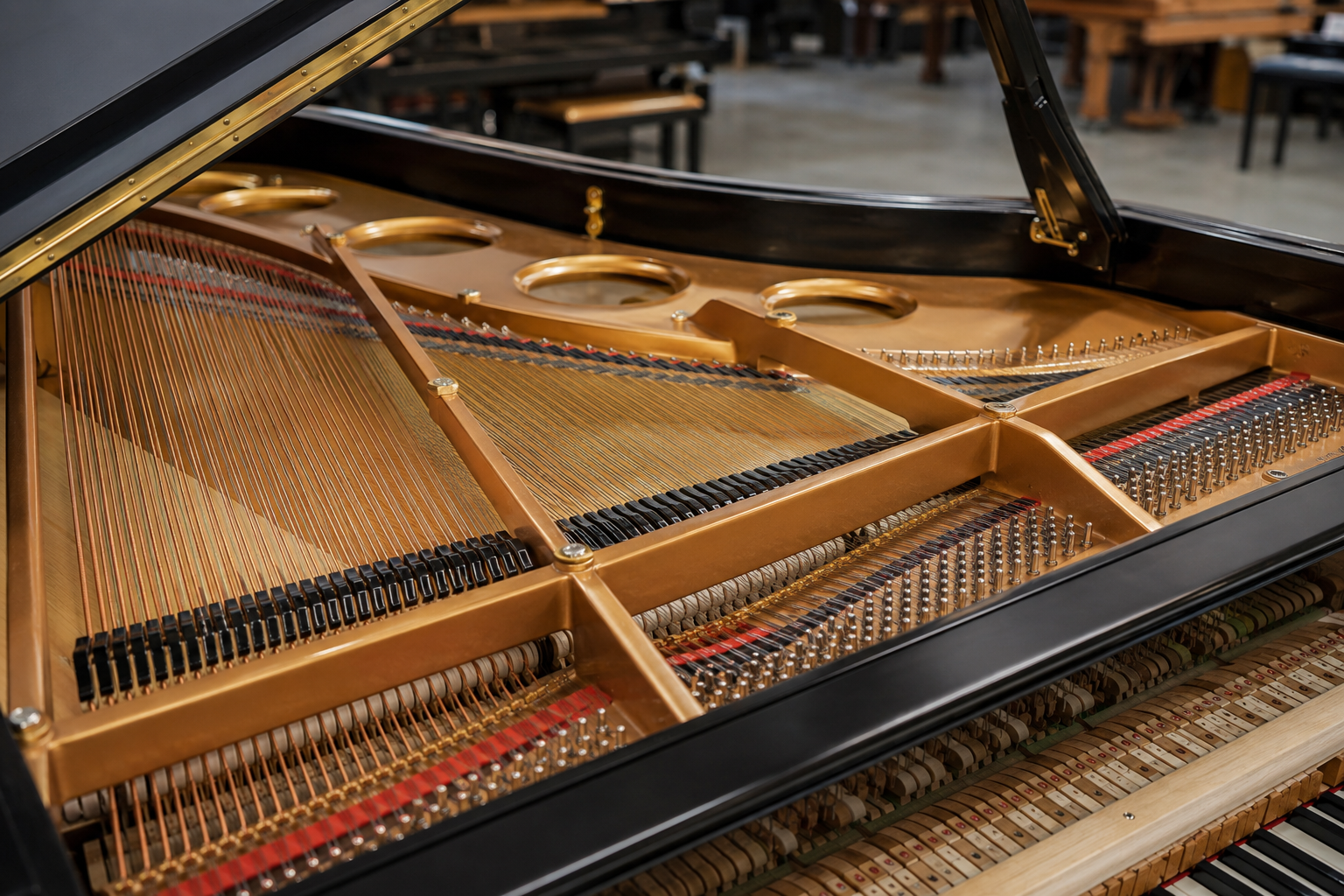
Strings and soundboard
The strings create vibrations, while the soundboard transmits them as sound. A horizontal layout allows string length and soundboard area to increase with the size of the piano.
Grand action
The hammers travel upward to strike the strings and gravity helps them return, producing a distinctive response for repetition and touch control.
Size affects potential
A longer grand can provide greater tonal potential, but the quality and suitability of the actual instrument matter more than size alone.
When should you choose an Upright Piano or a Grand Piano?
Choose an Upright Piano when...
- Floor space is limited or your home is not ready for a grand piano.
- You want a quality acoustic piano within a controlled budget.
- You want a broad choice of model levels, both new and reconditioned.
- A beginner is not yet sure whether they will continue learning long term.
- You want the piano to blend into the room without taking over the main living area.
Choose a Grand Piano when...
- You value tonal potential, resonance and detailed key control.
- You are a serious student, teacher, studio or family looking for the home's main instrument.
- You have suitable space and an accessible moving route.
- You want the piano to become a prominent feature of the room.
- You are ready to compare actual grand pianos across different sizes and levels.
Space means more than the size of the room
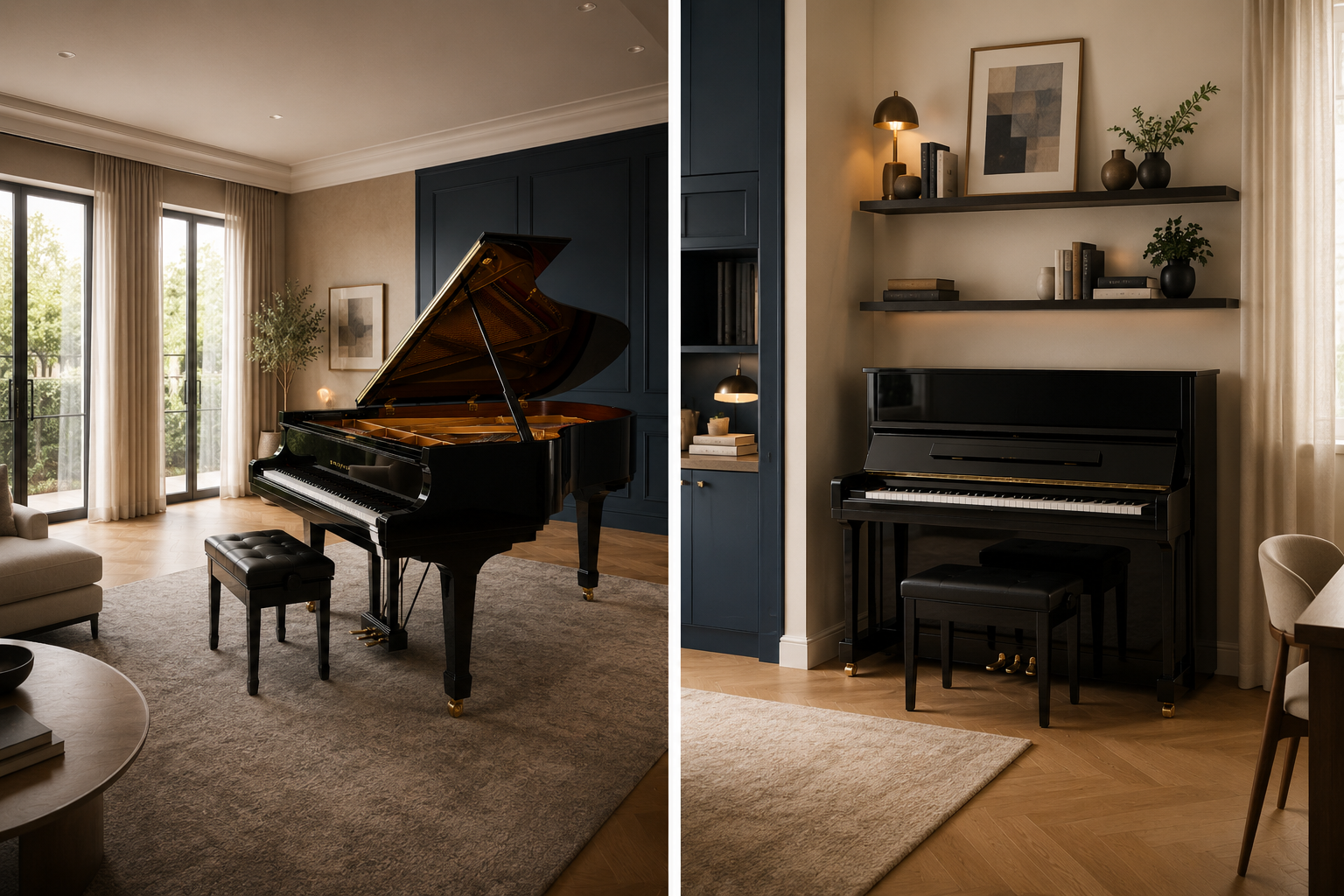
Before choosing a grand piano, measure both the instrument's length and width. Allow space for the bench, the player, walkways and opening the lid. Also check doors, lifts, stairs, turning points and vehicle access along the moving route.
An upright piano takes up less floor space and can usually sit close to a wall, making it suitable for homes that need to preserve their main living area. Like every acoustic piano, however, it should be kept away from direct sunlight, moisture and sudden temperature changes.
Before deciding: Ask the seller to assess the piano size, placement and moving route using the actual property. This helps prevent problems after purchase.
How should you choose by budget and goal?
Consider a CLASSIC upright such as the black MX-119, with a cash price below THB 100,000, or the black MX-132, with a cash price around the mid-THB 100,000 range. Other colours may cost slightly more.
The black CLASSIC GPX-152 is 152 cm long and has a promotional cash price below THB 200,000.
Consider a reconditioned Yamaha G Series or C Series grand after inspecting the actual condition and Churairat Recondition Standard. Prices begin around the high-THB 200,000 range and vary by condition.
Book a trial of actual grand and upright pianos, or consider renting first where appropriate, to understand everyday use before buying.
Price should not be the only answer
Consider sound, touch, available space, instrument condition, after-sales service and your options if you later wish to change models or stop using the piano. Buying from a seller that provides long-term support helps reduce the risks associated with an acoustic piano, which requires ongoing care.
What if you want to change models or no longer use the piano?
With a high-value acoustic piano, confidence should not end on the purchase date. Your options if you later change models, adjust the learning plan or stop using the piano should be part of the decision from the beginning.
Churairat Lifetime Buy-Back Guarantee
This covers every acoustic piano at every price purchased from Churairat Music, including new CLASSIC pianos and Japanese reconditioned pianos from Yamaha, Kawai and other brands. Digital pianos are excluded, and company terms apply.
When you wish to sell the piano back or change models, the company will inspect the instrument and assess its value according to its condition and the market at the time of assessment. It is therefore not a guarantee of a fixed repurchase price.
Frequently asked questions
Is a Grand Piano better than an Upright Piano in every way?
Not always. A grand piano has structural advantages in sound production and action design, but a quality upright that suits the space, budget and player may be the more appropriate and better-value choice for some homes.
Should a beginner start with a Grand Piano or an Upright Piano?
Begin with the learner's goals, available space and readiness. If you are unsure, an upright piano or renting first offers flexibility. If you are ready and genuinely want a grand piano, the CLASSIC GPX-152 is one accessible starting point.
How large must a home be for a Grand Piano?
This depends on the model's length, space for the bench and player, walkways, lid opening and the moving route. Room area alone does not provide the full answer, so the actual space should be assessed before you decide.
Are Grand and Upright Pianos covered by the Buy-Back Guarantee?
Every acoustic piano at every price purchased from Churairat Music, including new and Japanese reconditioned pianos, is covered by the Churairat Lifetime Buy-Back Guarantee under company terms. Digital pianos are excluded.
Summary: choose for the player, the home and the long term
A grand piano offers different potential for sound and key response through its strings, soundboard and action design. An upright piano offers greater flexibility in space, budget and placement. The best approach is to try both types on actual instruments and compare them against the player's needs, the home and the long-term plan.
Think beyond the first model you choose
The Churairat Lifetime Buy-Back Guarantee gives you another option if you later wish to change models or no longer use your acoustic piano. The company will inspect the piano and assess its value under the applicable terms at that time.