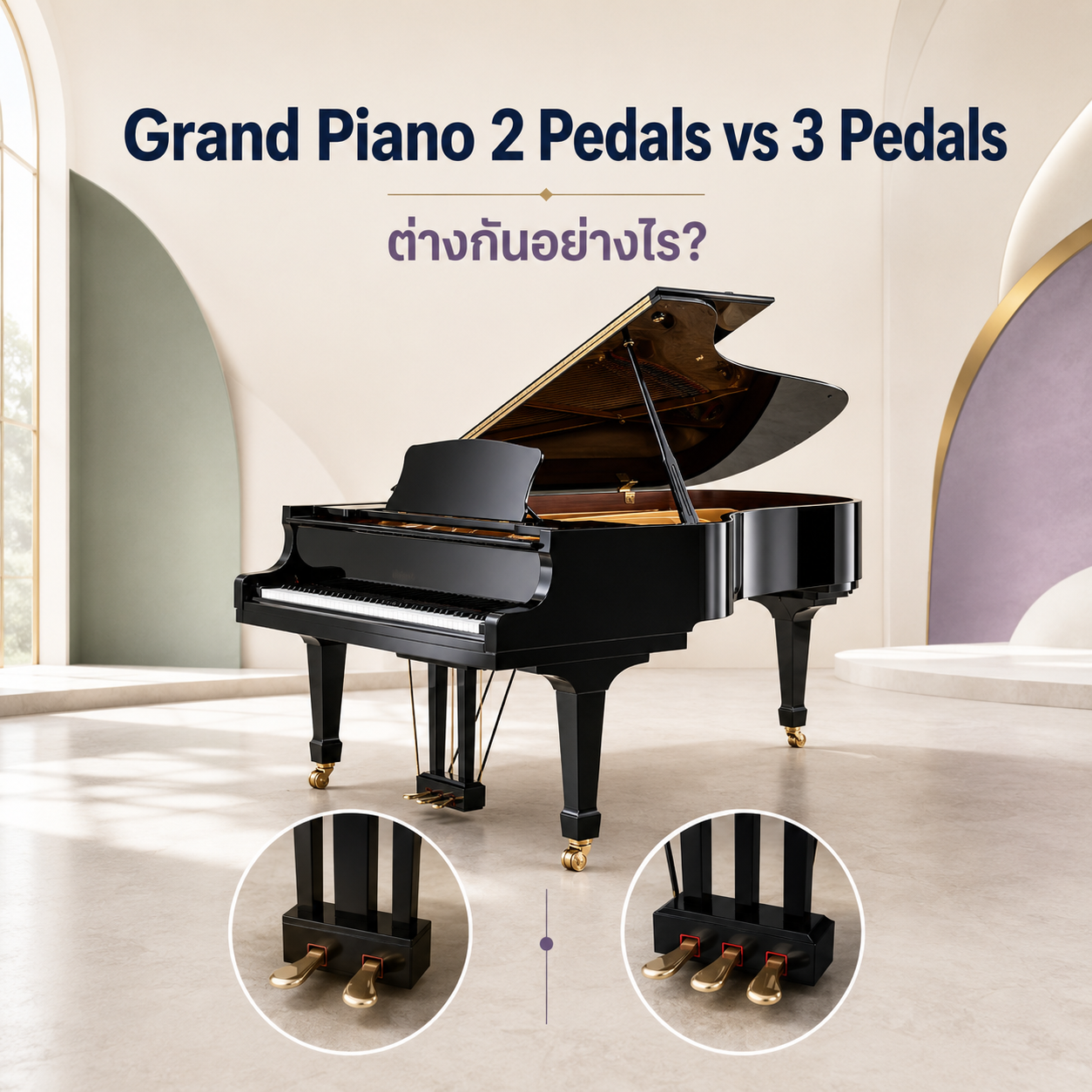
Grand Piano with 2 Pedals vs 3 Pedals: What Is the Difference?
Which should you choose, and what does each pedal do when playing—especially when comparing Yamaha Reconditioned Grand Pianos?
Quick answer
A 2-pedal grand piano has a Soft Pedal and a Sustain or Damper Pedal. A 3-pedal grand piano adds a Sostenuto Pedal for sustaining selected notes or chords.
Many general players can use a 2-pedal grand comfortably. The third pedal is useful for certain repertoire and more advanced playing. Pedal count alone does not determine piano quality.
Some grand pianos have two pedals while others have three, making this a common question for buyers of Yamaha Reconditioned Grand Pianos. The difference does not mean that every 2-pedal instrument is lower in quality. It mainly concerns the functions a player needs and the particular piano model.
What does each grand piano pedal do?
Soft Pedal or Una Corda Pedal
Pressing it shifts the action slightly sideways. The hammers then strike the strings and a different area of the hammer felt, producing a softer sound and a change in tone—not merely lower volume.
Use it when: the music calls for a softer or gentler tone.
Sustain Pedal or Damper Pedal
Pressing it lifts the dampers from all the strings, allowing them to continue vibrating and resonating after the keys are released.
Use it when: you want continuity and depth of sound. This is the pedal used most often in performance.
Sostenuto Pedal
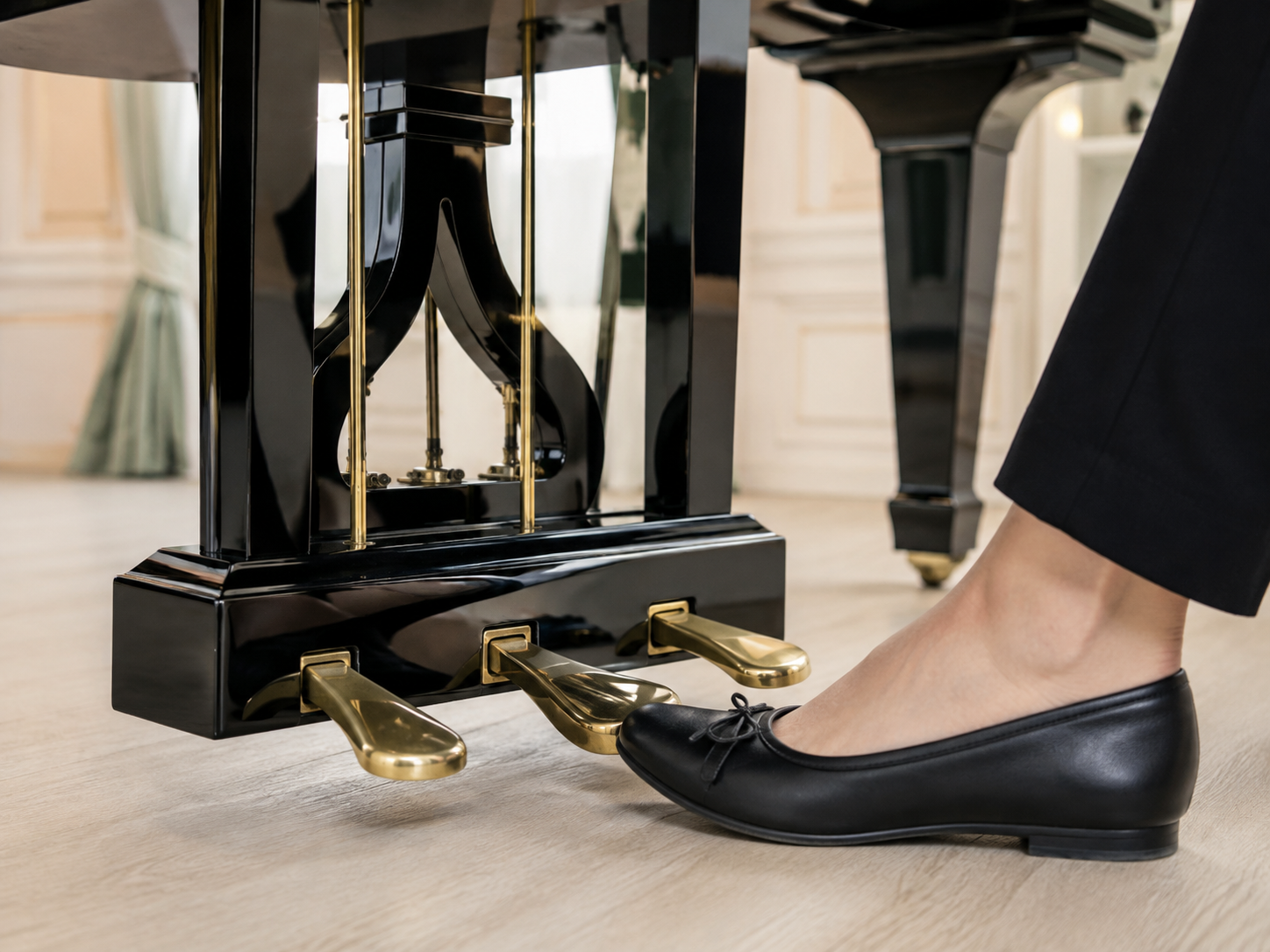
First hold the notes or chord you want to sustain, then press the middle pedal. Those selected sounds remain sustained while notes played afterward operate normally.
Use it when: you need to sustain selected notes or chords while continuing with another musical line.
How is a 2-pedal grand piano different from a 3-pedal model?
The principal difference is that a 3-pedal grand piano adds a Sostenuto Pedal in the middle. A 2-pedal model still includes the Soft Pedal and Damper Pedal—the main functions used for lessons, practice and a wide range of repertoire.
Three pedals therefore provide an additional way to control sustain, but they do not automatically mean that the piano has a better structure, sound or overall quality than every 2-pedal instrument.
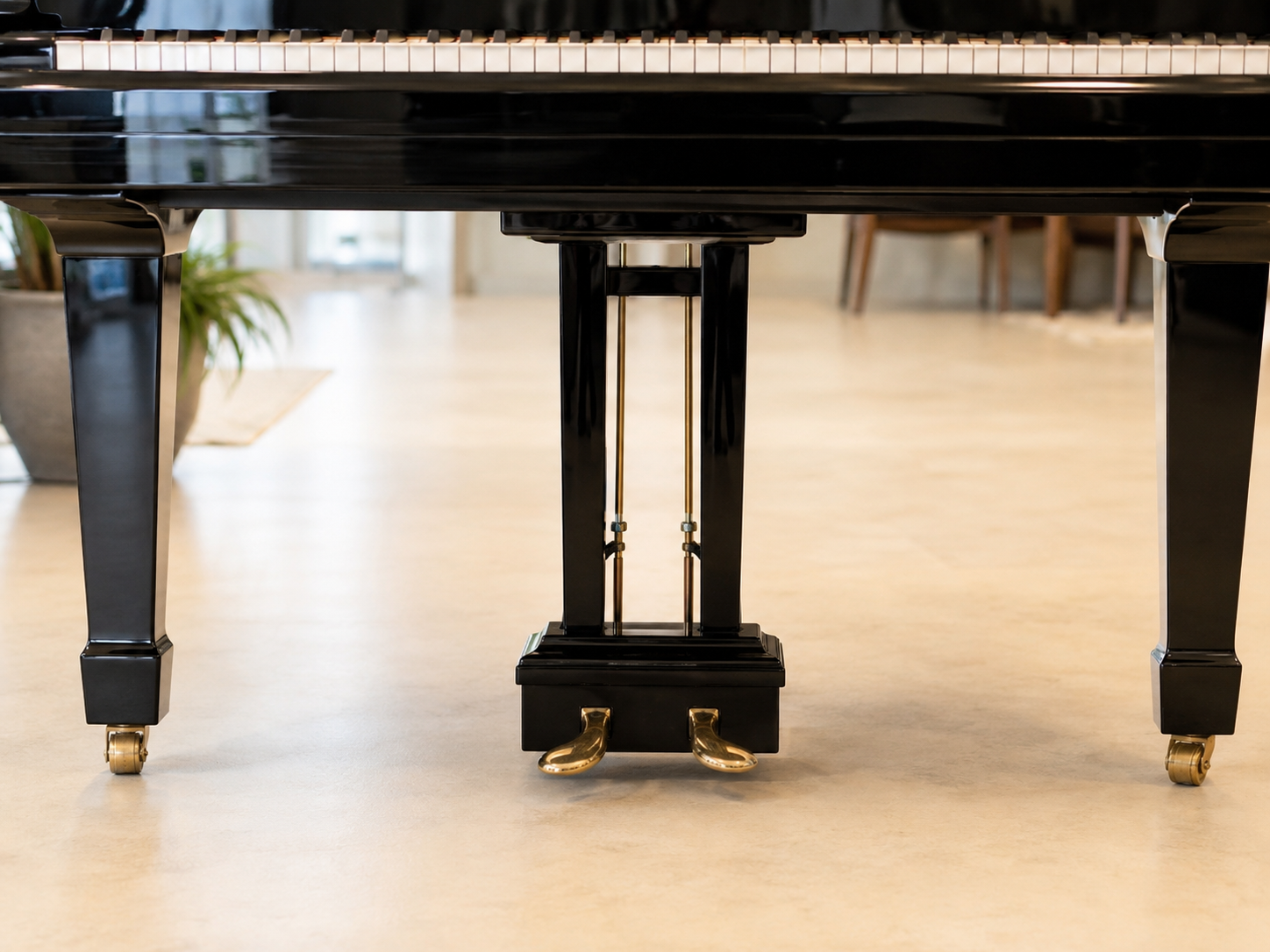
| Comparison | 2 Pedals | 3 Pedals |
|---|---|---|
| Functions | Soft Pedal and Damper Pedal | Soft Pedal, Damper Pedal and Sostenuto Pedal |
| General use | Sufficient for most lessons, practice and home playing | Useful when the repertoire or player requires selective sustain |
| Does it indicate quality? | No. Assess the structure, soundboard, key action, hammers and regulation together. | No. The piano's actual quality and condition remain the main criteria. |
| Buying approach | Choose by trying the individual instrument and considering your budget. | Choose it when Sostenuto is useful to you or when you want the complete pedal set. |
How is the Sostenuto Pedal different from the Damper Pedal?
The Damper Pedal on the right lifts the dampers from all strings, allowing every note played to resonate. The Sostenuto Pedal in the middle sustains only the notes being held before the pedal is pressed.
Notes played after the Sostenuto Pedal is engaged operate normally. This lets the player preserve selected sounds without causing every later note to continue resonating.
Example
A player can hold a bass chord, press the Sostenuto Pedal, and then continue with a melody above while only the bass chord remains sustained.
Who should choose a 3-pedal grand piano?
Beginners and home players
A 2-pedal grand can work very well when the piano is of suitable quality and condition. It is generally less expensive than a 3-pedal model of the same size.
Students moving into more complex repertoire
Check whether the music you play calls for Sostenuto, and try the function on the actual piano before deciding.
Teachers, studios and serious players
Three pedals provide a more complete set of functions, but touch weight, tonal balance and the piano's actual condition still matter.
Buyers of Yamaha Reconditioned pianos
Compare individual instruments rather than deciding by pedal count alone.
How should you choose a Churairat Yamaha Reconditioned Grand Piano?
Churairat offers Yamaha Reconditioned Grand Pianos with both two and three pedals, including the G-2, G-3, G-5 and C Series.
- Choose a size that suits your home and placement area.
- Set your budget and define how the piano will be used.
- Try each pedal on the actual instrument.
- Test the key weight and level of control.
- Listen to the tonal balance across the full keyboard.
- Evaluate the actual condition of each individual piano.
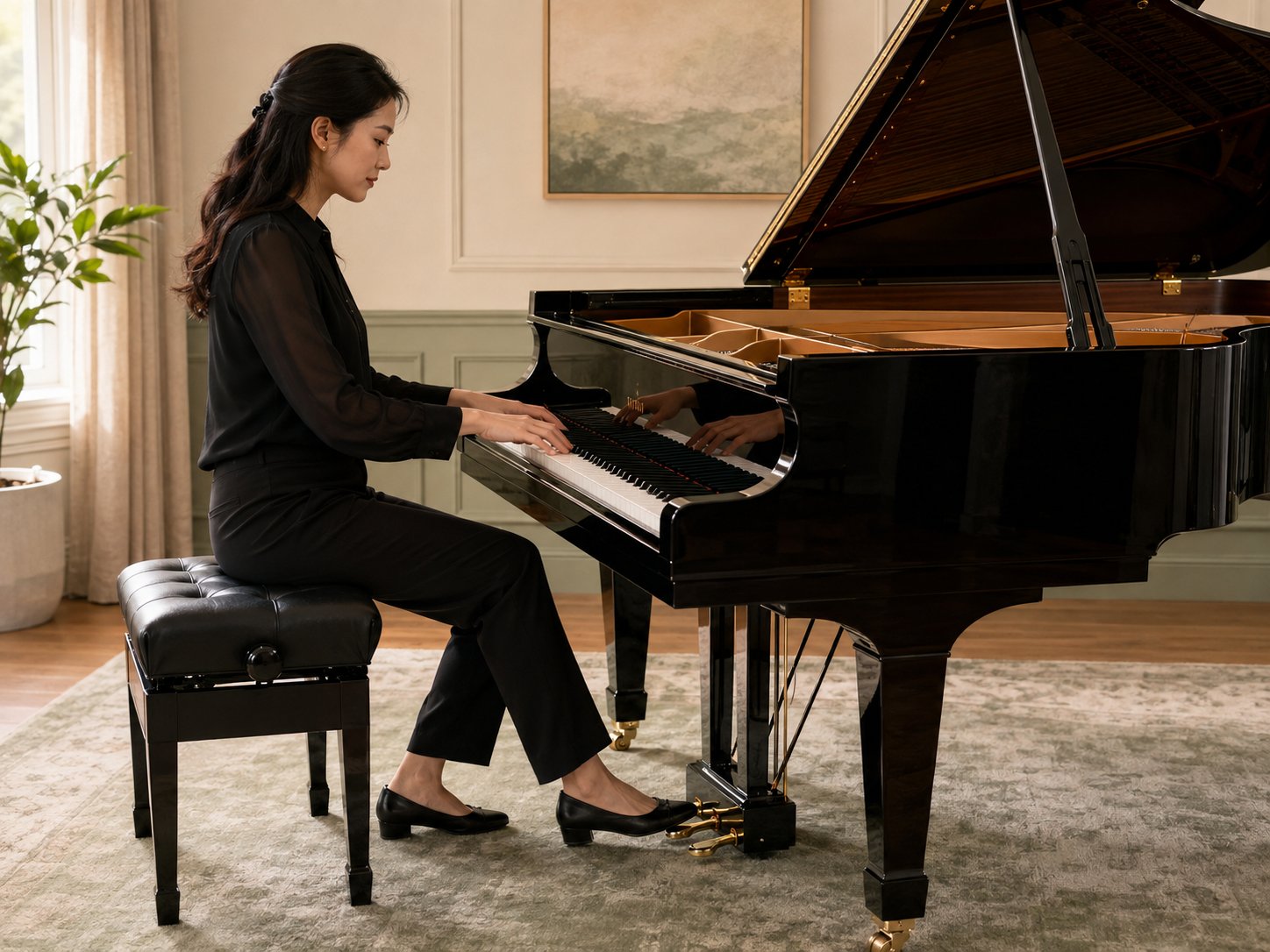
Churairat Recondition Standard
Every Churairat piano passes the Churairat Recondition Standard before delivery, with more than 50 inspection and reconditioning points. These cover the structure, soundboard, key action, hammers, interior and exterior components, tonal-balance regulation and tuning.
For this reason, evaluating a grand piano should not end with its pedal count. Consider the quality of the instrument and its overall readiness for use.
Long-term confidence
Churairat grand pianos include the Churairat Lifetime Buy Back Guarantee, subject to company terms and an assessment based on the piano's condition and market conditions on the assessment date.
This benefit provides an option if the customer no longer uses the piano in the future; it is not a guarantee of a fixed buyback price.
Frequently asked questions
Can a 2-pedal grand piano be used for classical music?
Yes. Many pieces primarily use the Soft Pedal and Damper Pedal, although some repertoire may specifically call for the Sostenuto Pedal.
Is a 3-pedal grand piano always better than a 2-pedal model?
No. Pedal count is not a measure of quality. The piano's actual condition and suitability for the intended use are more important.
Is the Sostenuto Pedal used often?
It depends on the repertoire and the player's level. General players may use it infrequently, but it is valuable when selected notes need to be sustained.
Should I judge a reconditioned grand piano by its pedals alone?
No. Examine the structure, soundboard, key action, hammers, key weight, tonal balance and reconditioning standard together.
Do Churairat grand pianos come with a buyback guarantee?
Yes. The Churairat Lifetime Buy Back Guarantee applies under company terms, with an assessment based on the piano's condition and market conditions on the assessment date. It is not a guarantee of a fixed buyback price.
Summary
The difference between a 2-pedal and 3-pedal grand piano is the Sostenuto Pedal added to the 3-pedal model. A good buying decision, however, should also consider budget, instrument quality, actual condition, a size suitable for the home and the player's intended use.
If the player does not need Sostenuto, a quality 2-pedal instrument in suitable condition remains a strong choice. Players whose repertoire requires selective sustain—or who want the complete pedal set—should try a 3-pedal grand piano in person before deciding.
Would you like to try 2-pedal and 3-pedal grand pianos?
Book a visit to test the key weight, tonal balance and pedal response on the actual instruments, with guidance suited to your space, playing level and budget.
Contact our team on LINE