


Piano Knowledge · PNO-011
What Is the Difference Between Yamaha U1H, U1M, U1A / U3H, U3M and U3A?
How to read model codes and approximate production periods before choosing a used Yamaha piano from Japan
Quick answer
First choose U1 or U3 according to your home and playing goals. Then use the model code and serial number to check the piano's information. Make the final decision from the actual condition, reconditioning work and after-sales services provided with that individual instrument.
Start with U1 or U3—not H, M or A
Buyers comparing used Yamaha U1 and U3 pianos often see U1H, U1M, U1A, U3H, U3M and U3A and assume that a later code must always be better. These codes help identify a model era and approximate production period, but they do not show which piano is in better playing condition today.
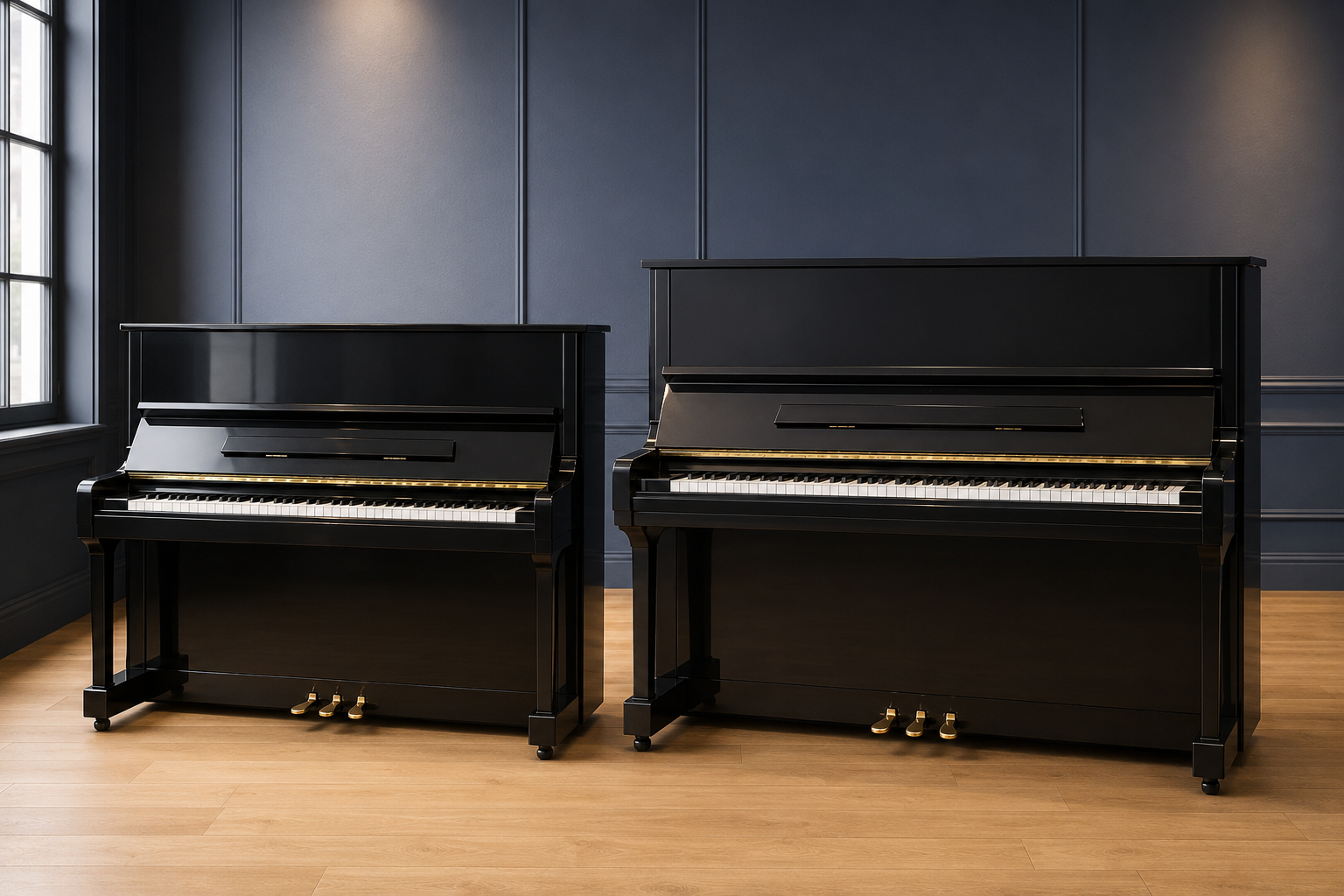
A standard-size upright that suits homes or rooms requiring a real piano for lessons and practice where space is limited.
Its longer strings and larger soundboard area suit buyers with enough space who want more power, bass response and tonal dimension.
Read the full comparison in Yamaha U1 vs U3: What Is the Difference?
What do H, M and A mean?
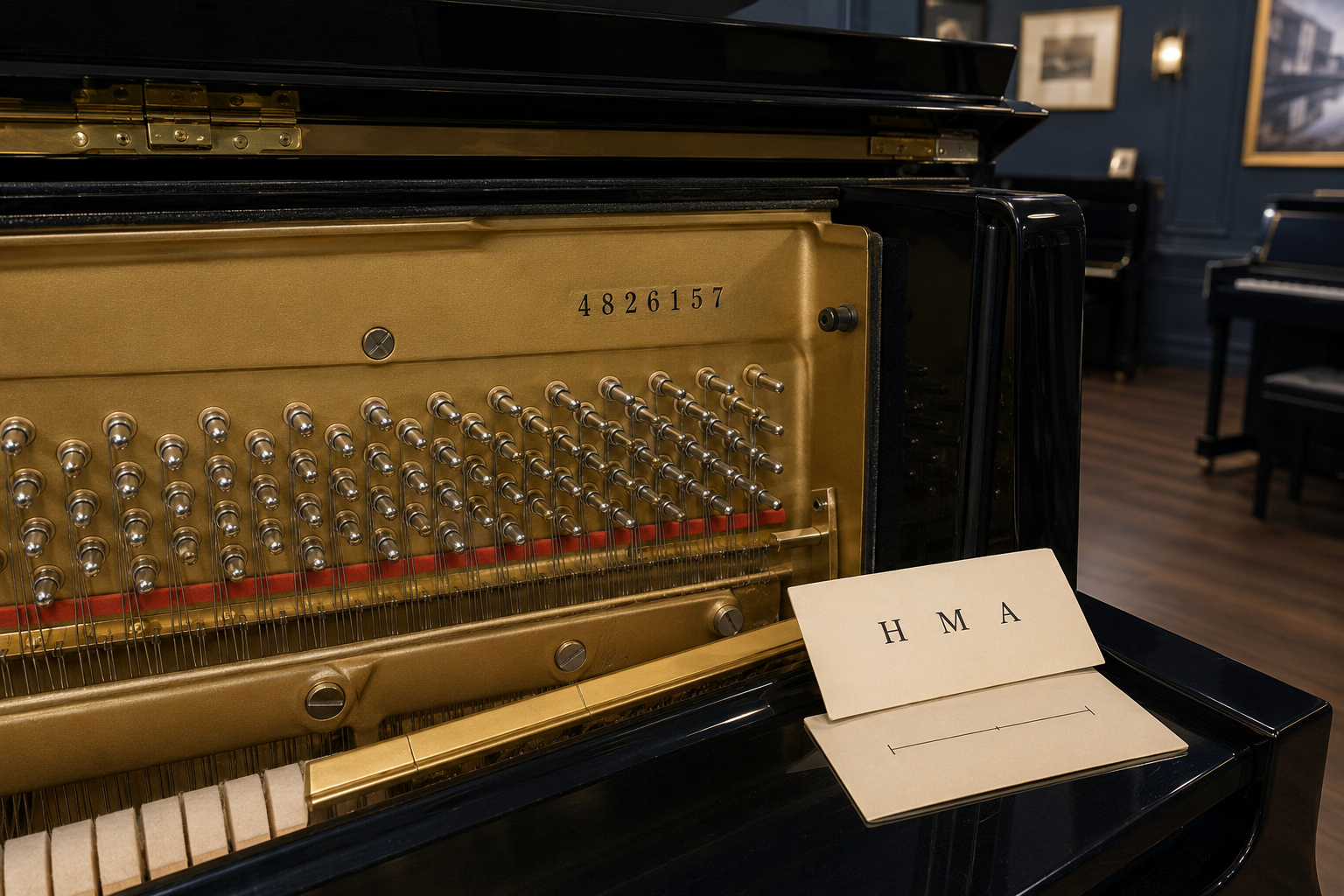
The final letter identifies a model from a particular production period; it is not a quality grade. The periods below are approximate references only. Always confirm the serial number on the actual piano.
U1H / U3H are common on the used market. Their greater age makes detailed inspection of the structure, action and reconditioning especially important.
U1M / U3M belong to a transition period and are slightly later than H models, but the condition of individual pianos can still vary widely.
U1A / U3A belong to the following era and may command a higher price because of age and condition, but the code does not prove that a piano is always better.
Remember: the model code identifies the piano's era, while the serial number helps estimate the production period of that specific instrument. Neither one fully describes its present condition.
Why a later year is not the final answer
Every used piano has a different history of use, storage and maintenance. A poorly stored U1A may need more corrective work than a structurally sound U3H that has been cared for systematically. The model code should never replace an inspection of the actual instrument.
Structure and tuning stability
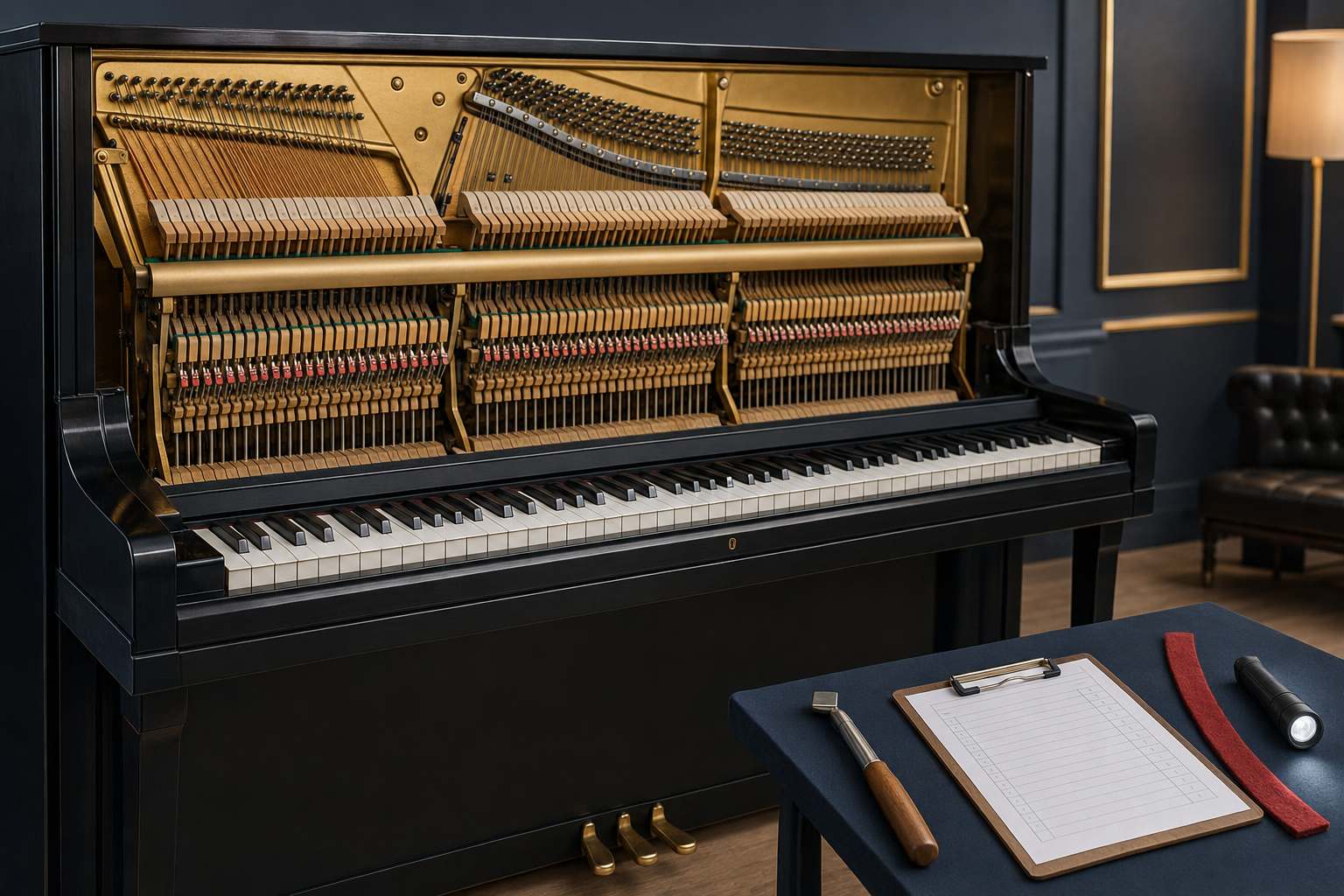
Check the strings, tuning pins, soundboard and whether the piano can hold its tuning.
Action and components
Inspect the keyboard action, hammers and other internal components.
Touch and actual sound
Play the piano to assess key response, tonal balance and its real voice.
Reconditioning work
Ask who performed the work, which process was used and which areas were addressed.
Which piano should you choose when prices are close?
| Situation | A better way to decide |
|---|---|
| U1A and U3H at a similar budget | Begin with the size that suits your home, then compare the actual condition and reconditioning of each piano. |
| U1M and U1A at different prices | Ask how much of the difference comes from condition, completed work, warranty and included services. |
| Well-maintained U3H vs U3A with an unknown history | Do not judge by age alone. Look for evidence of inspection and adjustment and identify who is responsible after delivery. |
Churairat Recondition Standard: what the model code cannot tell you
A model code and serial number reveal part of a piano's identity, but they do not show the present condition of its action, strings, hammers or tuning. This is why the Churairat Recondition Standard matters: it is the process used to select, inspect and adjust used Japanese pianos at Churairat Music's factory before delivery.
More than 50 inspection and adjustment items cover the structure, soundboard, strings, tuning pins, keyboard action, hammers, exterior and internal parts, tonal balance and tuning. The aim is not merely to make the cabinet look new, but to prepare the piano for reliable use.
Value continues after the purchase
When comparing similarly priced pianos, include what happens after purchase—not only the model code or asking price.
Warranty under applicable terms in Bangkok, Chiang Mai, Phuket and Khon Kaen service areas.
Complimentary tuning services under applicable terms.
An adjustable piano bench for practical playing comfort.
Privilege Coupon and Lifetime Buy Back Guarantee under company terms.
Buy-back value is assessed from the piano's condition and market conditions on the assessment date. Eligible Privilege Coupon value can be used as a discount on participating products under programme terms.
Frequently asked questions
Is a U1A always better than a U1H?
No. A U1A belongs to a later production period, but the actual condition, reconditioning quality and after-sales care must also be compared.
Is a U3H too old?
Age alone does not determine quality. If the structure is sound and the piano has passed an appropriate Churairat Recondition Standard process, it can still be suitable for lessons and playing.
Is a photograph of the model code enough?
No. Ask for the serial number and internal photographs, and play the piano or arrange for an experienced specialist to inspect it.
If U1 and U3 prices are close, should I choose the U3?
Choose U3 when its size suits your home and goals, but do not accept a piano in poorer actual condition simply to obtain the larger model.
Conclusion: a model code is a starting point, not a verdict
Yamaha U1H, U1M, U1A, U3H, U3M and U3A help buyers understand approximate production periods, but they are not a fixed quality ranking. First choose U1 or U3 for the home, then compare the actual condition, Churairat Recondition Standard and continuing support after delivery. Warranty, tuning, Privilege Coupon and the Churairat Lifetime Buy Back Guarantee help reveal value over the years of ownership—not only the first-day price.
