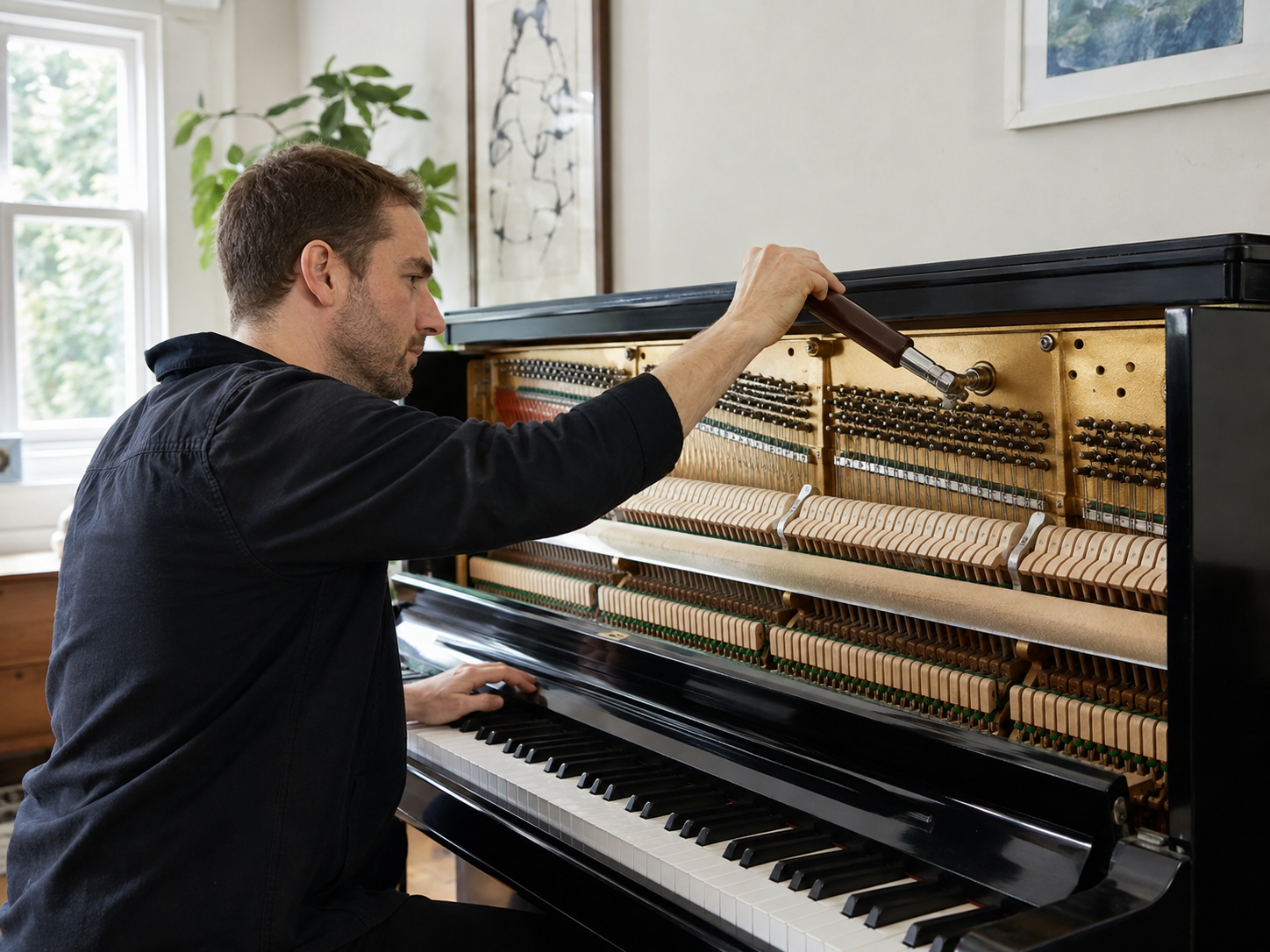
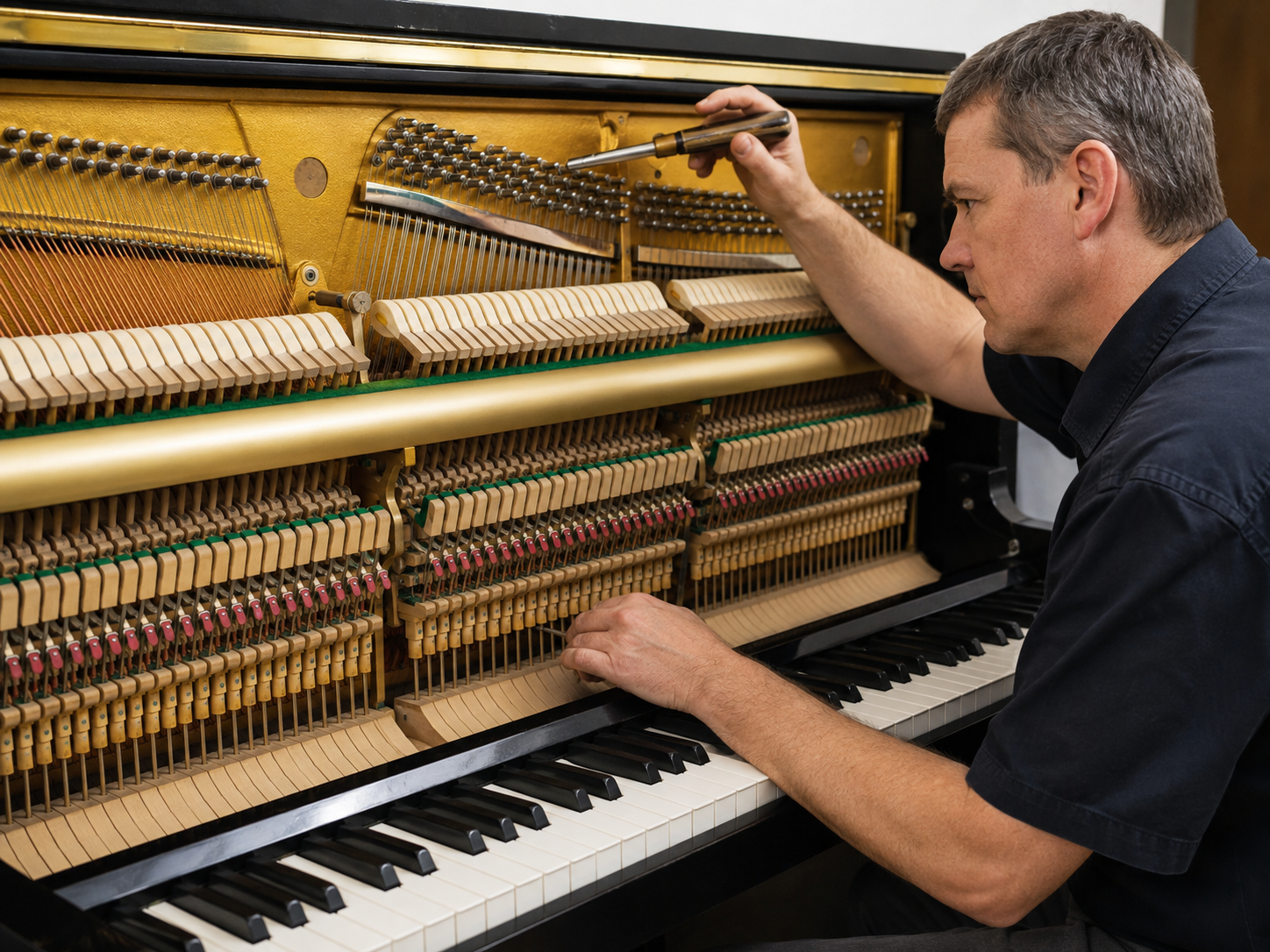
A piano has more than 200 strings and a highly detailed internal mechanism. Regular piano tuningregularly is not only about bringing inaccurate notes back to the correct pitch. It also helps prevent students and players from becoming accustomed to hearing and remembering incorrect pitch.
During each tuning visit, the technician also performs a basic internal inspection, such as checking for insects that may damage felt, rodents, or other animals that may have entered the piano. Finding a problem early makes it possible to recommend corrective action before serious damage occurs, or to help prevent existing damage from becoming worse.
QUICK ANSWER
6 Months or 1 Year?
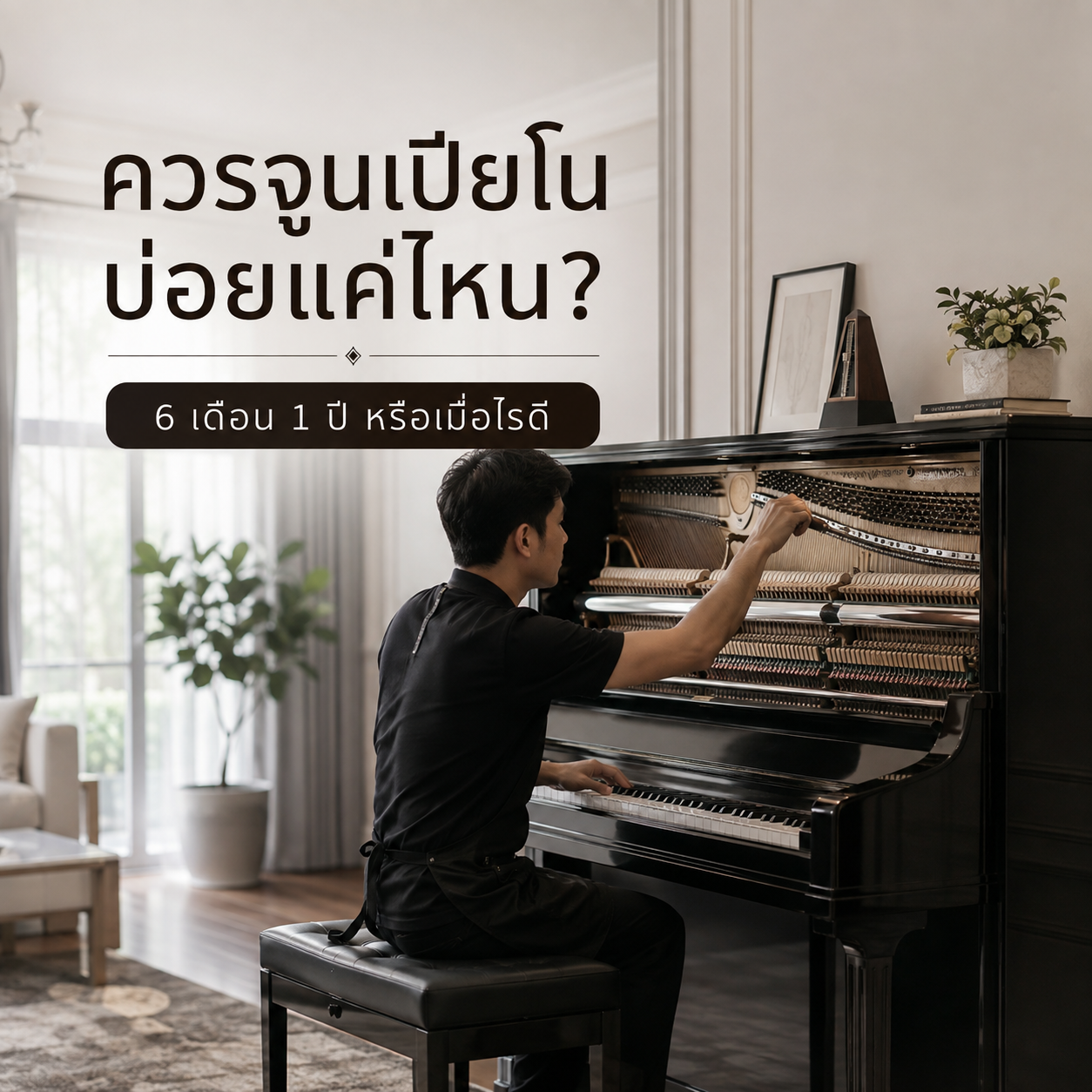
How often should a piano generally be tuned?
For a piano used normally at home,we recommend inspection and tuning every 6 monthsto maintain pitch and allow the technician to inspect the instrument periodically. If you do not know when it was last tuned, it has not been maintained for many years, or it has sticking, stiff or non-returning keys, mechanical problems, a broken string, or an abnormal tuning pin, the piano should be physically inspected first. Some causes of sticking, stiff or non-returning keys may be corrected before or together with tuning, but if humidity has caused action parts to become tight or swollen,the mechanical problem must be repaired before tuning.
WHY PIANOS CHANGE
Why can a piano go out of tune even when it is not played often?
Piano strings remain under high tension at all times. Humidity, temperature, seasonal changes, air-conditioning cycles and use can gradually change string tension. When individual strings move away from their proper pitch, notes across the keyboard no longer maintain their normal relationship, especially when playing chords or together with other instruments, even though the player may not notice it clearly at first.
Piano tuningis the adjustment of string tension so that the pitch and pitch relationships across all 88 keys return to an appropriate standard. The technician evaluates the overall pitch and the condition of the piano rather than simply correcting individual notes that sound out of tune.
TUNING SCHEDULE
Should a piano be tuned every 6 months or wait until one year?
For pianos used normally at home, Churairat Music recommends inspection and tuning every 6 months rather than waiting a full year. Pitch can change gradually without the player noticing, and regular service visits also make it easier to detect internal problems earlier.
General home use
Every 6 months
Helps maintain pitch and allows the technician to inspect the piano periodically, without waiting until the instrument sounds clearly out of tune.
Student / regular practice
Every 6 months
Helps improve pitch awareness and accuracy when practising or playing with other instruments.
Large temperature / humidity changes
Every 6 months
Environmental changes can affect string tension and the wooden components inside the piano.
Recently moved / repositioned
Inspect and tune after moving
In Thailand, climate, temperature and humidity between locations generally do not differ enough to require waiting for the piano to acclimatise before tuning.
Not used for several years
Inspect before tuning
There may be mechanical or humidity-related problems, or the overall pitch may have dropped significantly, requiring repair or a gradual pitch correction.
QUICK DECISION
What should you do based on the piano's condition?
Piano condition
Recommended action
Normal use
Inspect and tune every 6 months
Last tuning date is unknown
Arrange an inspection and tuning
Not played or maintained for several years
Inspect first; do not assume that tuning alone will be sufficient
Sticking / stiff / non-returning keys
Inspect and correct the action before or together with tuning
Broken string / abnormal tuning pin
Inspect and repair before proceeding with tuning
Recently moved piano
Inspect and tune after moving
IF YOU WAIT TOO LONG
What can happen if a piano is left untuned for too long?
01
Students may become accustomed to inaccurate pitch, which is not ideal for ear training or remembering note pitch correctly.
02
Playing with other instruments or accompaniment tracks may sound less harmonious.
03
If the overall pitch has dropped significantly, it may need to be restored gradually and may require more frequent tuning than usual.
04
Small problems may go unnoticed, such as stiff or sticking keys, ageing parts, or signs of insects or animals inside the piano.
ENVIRONMENT
Does a piano still need tuning if the home uses air conditioning or the piano is rarely played?
It should still be inspected and tuned periodically even if it is rarely played, because playing frequency is not the only factor that changes pitch and instrument condition. A piano contains wood, felt, leather and metal, which respond differently to environmental conditions. Air-conditioned homes can experience temperature and humidity changes between on and off periods, while a piano that is rarely played should still have its action and humidity condition checked periodically, including for signs of insects, rodents or other animals inside.
Avoid direct sunlight
Do not place it against a hot or damp wall
Keep it away from water sources
Avoid direct airflow from an air conditioner
Inform the technician if you find mould or a musty smell
Report stiff keys or unusual surface conditions before the appointment
TIME TO CALL
Signs that it may be time to book a tuning or piano inspection
1
Chords or two-handed playing no longer sound balanced or harmonious.
2
The piano does not match the pitch of videos, accompaniment tracks or other instruments.
3
About 6 months have passed since the last tuning, or you do not know when the piano was last tuned.
4
The piano has recently been moved, repositioned or exposed to a period of high humidity.
5
There are sticking or stiff keys, mechanical noises, or unusual pedal sounds in addition to pitch problems.
SERVICE CHECK
What does a piano technician check?
Each service visit should begin with an inspection and assessment of the actual piano. The technician considers the overall pitch, action condition, keys, pedals, strings, tuning pins and the symptoms reported by the owner to determine whether tuning alone is sufficient or whether some parts should be repaired or corrected before or together with tuning. Some causes of sticking, stiff or non-returning keys may be corrected during the same service, but if humidity has caused action parts to become tight or swollen, the mechanical problem must be repaired before tuning.
Customers can call the team and describe symptoms such as sticking keys, stiff action, pedal problems or unusual noises. The team will ask for the necessary information and arrange for a technician to inspect the piano in person. Repair recommendations and costs are always based on the actual inspection of the instrument.
Overall pitchChecks pitch level and pitch relationships across the keyboard
Action and keysChecks sticking keys, stiff keys and key response
PedalsChecks operation and unusual noises
Internal conditionChecks components, humidity and basic signs of damage
BEFORE BOOKING
Information to prepare and ask before booking a piano tuning
01
Know when the piano was last tuned and whether there are other symptoms besides pitch problems.
02
Ask what happens if the piano cannot be tuned immediately and needs repair first, including the service process and costs.
03
Ask about warranty conditions for tuning and repair work.
04
Provide the service location so the team can check travel feasibility and available appointments.
CHURAIRAT PIANO SERVICE
Piano Tuning, Repair and Maintenance Services by Churairat Music
Churairat Music has more than 37 years of experience in piano care, with service centres in Bangkok, Chiang Mai, Phuket and Khon Kaen. For customers in the main service areas and nearby provinces, including Bangkok, Chiang Mai, Phuket and Khon Kaen, the team will check available appointments and provide service dates so customers can choose a suitable time and book in advance. For locations outside the main service areas, customers can ask the team to check travel feasibility and availability, which depend on the team's routes and travel schedules at the time.
Generally, we recommend inspecting and tuning a piano every 6 months to maintain pitch and check the instrument periodically. If there are abnormalities involving the action, strings or tuning pins, a technician should inspect and correct them as appropriate.
Yes. It should still be inspected and tuned periodically even when it is not played, because string tension and component condition still change with temperature and humidity. Regular inspections can also help identify internal problems earlier.
In general everyday usage, they refer to the same service: adjusting string tension so that the pitch and pitch relationships across all 88 keys return to an appropriate standard.
In Thailand, a piano can generally be inspected and tuned after moving without waiting for it to acclimatise. Climate, temperature and humidity between locations usually do not differ enough to require the waiting period that may be appropriate in countries with much greater climatic differences.
It depends on the cause, so the technician should inspect the piano first. Some causes of sticking, stiff or non-returning keys may be corrected before or together with tuning, but if humidity has caused action parts to become tight or swollen, the mechanical problem must be repaired before tuning.
Not always. If the overall pitch has dropped significantly, the technician may need to restore it gradually and more than one tuning may be required. The piano should also be checked for mechanical problems or other parts that may need repair first.
Tuning adjusts pitch, so it does not directly correct heavy or stiff keys. A technician should inspect the internal action and perform regulation or repair abnormal parts as needed. Each piano model is designed at the factory with its own key weight and response characteristics. Regulation can restore correct and consistent mechanical operation, but it cannot freely make the keys heavier or lighter beyond the range the model was designed for.
Churairat Music has service centres in Bangkok, Chiang Mai, Phuket and Khon Kaen. For customers in the main service areas and nearby provinces, the team will check availability and provide possible appointment dates. For locations outside the main service areas, customers can ask the team to check travel feasibility and availability, depending on the team's routes and travel schedules at the time.
SUMMARY
We recommend inspecting and tuning every 6 months
For a piano used normally at home, we recommend inspection and tuning every 6 months. If its tuning history is unknown, it has not been maintained for several years, or there are sticking or stiff keys, mechanical noises, a broken string, an abnormal tuning pin or pedal problem, the piano should be physically inspected and the necessary issues corrected before or together with tuning.
BOOK A PIANO SERVICE
Not sure whether your piano needs tuning or repair first?
Send the date of the last tuning, the symptoms you have noticed and your service location via LINE. Our team will ask for the necessary information and arrange an in-person piano inspection before confirming the repair approach and costs.