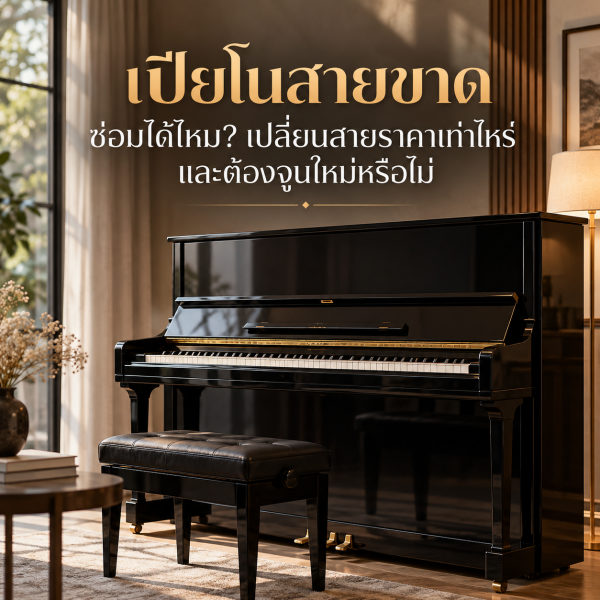
A broken piano string should be inspected on site before any repair decision is made. Depending on the condition of the tuning pins and related parts, the string may be replaced and the piano tuned, but the repair scope and cost can only be confirmed after inspection.
For schools starting a new band or expanding an existing one, it is important to have instruments available for practice and actual use from the beginning. Renting first allows the school to arrange instruments according to the teacher’s recommendations, the band format, and the number of players before committing to a large purchase.
For a child who has just started learning flute, it is helpful to have a personal instrument available for practice from the first day. Renting first is generally a suitable option, while the teacher should help assess whether the student can comfortably reach the keys and hold the flute correctly. Once the student is learning consistently and plans to continue long term, the family can consider buying.
Choosing a piano tuner should not be based on the starting price alone. Because a piano has a delicate mechanism and the service is carried out inside the home, it is important to consider the provider’s clarity, service scope, contact channels, and responsibility for follow-up after the appointment.
Before moving a piano, it is recommended to have the instrument inspected at its original location for sticking keys, heavy keys, Pedal problems, or other mechanical issues that may need repair first. Once the piano has been positioned properly at the new location, tuning can be scheduled immediately for moves within Thailand.
When water is spilled on a piano, the most important steps are to stop the source, absorb the water from the surface, and determine whether it remained outside or seeped into the internal parts. If you are not sure whether water entered the piano, stop using it and arrange an inspection.
Beginner Clarinet students should have their own instrument to practice from the first day, but there is no need to buy immediately. Renting first allows the student to begin with a Bb Clarinet that follows the teacher’s recommendation. Once the student continues learning with confidence, practices regularly, and needs the instrument for long-term use, buying can then be considered.
Beginner saxophone students should have their own instrument to practice from the first day, but there is no need to buy immediately. Renting first allows the student to begin with an instrument that suits their level and the teacher’s recommendation. Once the student continues learning, practices regularly, and needs the instrument for long-term use, buying can then be considered.
Beginners should have their own musical instrument to practice from the first day of lessons so they can review what they learn and develop consistently. If the student is not yet sure about long-term learning or instrument use, renting first provides practical experience before making a purchase. Once the student reaches a certain level and needs the instrument for long-term use, buying can then be considered, with eligible rental payments applied toward a future purchase according to company conditions.
Buying a piano for your child does not mean starting with the most expensive model. The better approach is to consider your child’s readiness, the available space at home, and the family’s learning plan. For beginners, an Acoustic Piano provides real piano tone, key weight, and key response, while renting first can help the family evaluate whether the child will continue learning and whether the piano fits everyday home use.
High humidity can affect internal piano components, causing rust, stiff action parts, abnormal key response, or musty smells. Proper care involves more than simply cleaning the exterior. It is important to watch for abnormal symptoms and have the actual piano inspected so the effects of humidity can be assessed properly.
If a piano sounds buzzy, muted, dull, or produces an unusual vibration, the cause may not be related to tuning alone. The problem can involve the action mechanism, hammers, strings, Damper system, or other internal components. This article explains common symptoms and what a technician should inspect on the actual piano before deciding on the appropriate repair or adjustment.