Pianos and Sea Air: Why Churairat Music Does Not Recommend Placing an Acoustic Piano Near the Sea
Pianos and Sea Air: Why Churairat Music Does Not Recommend Placing an Acoustic Piano Near the Sea
Salt air and high humidity can cause serious piano damage that may be difficult, time-consuming, and costly to repair.
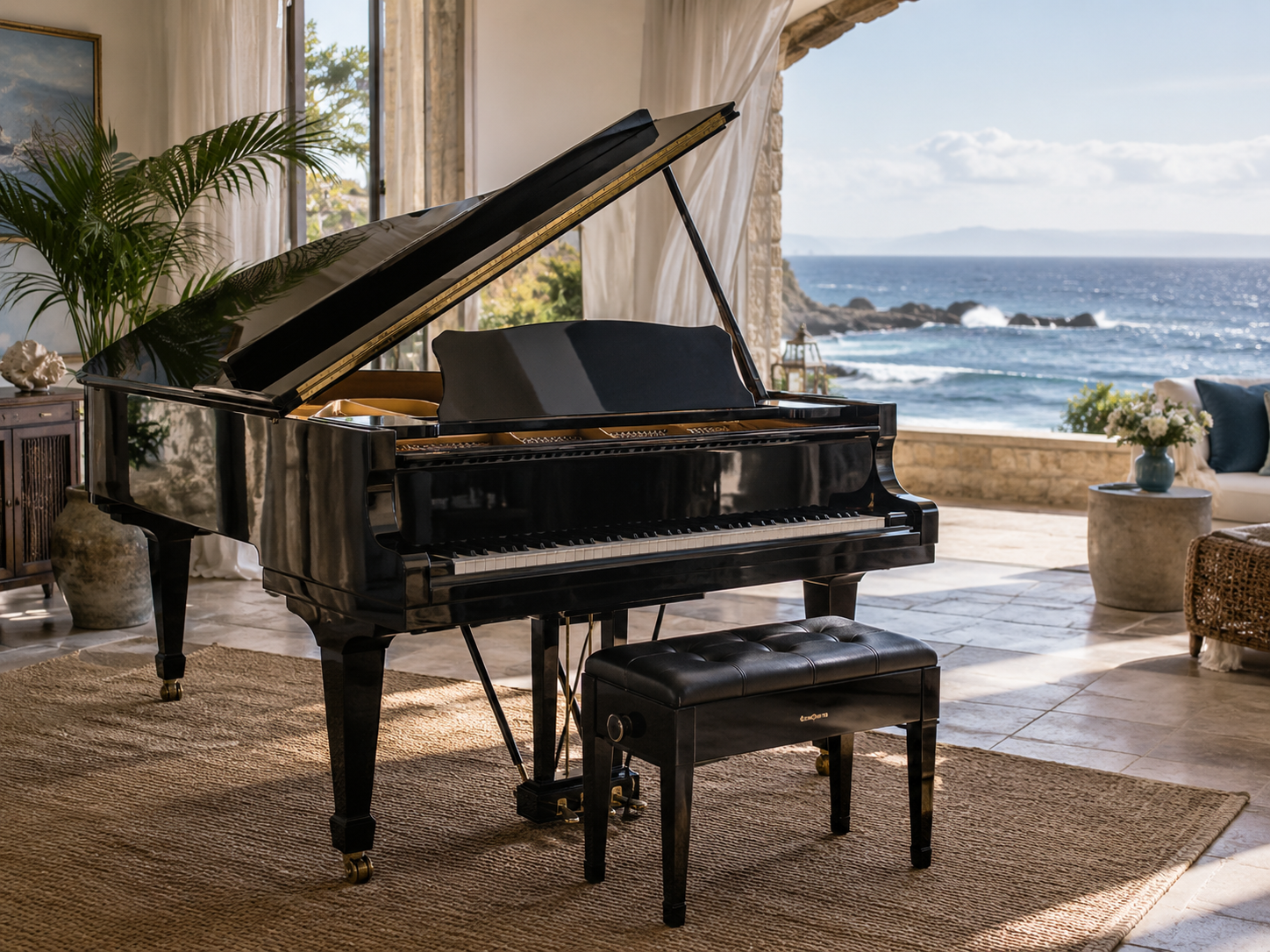
Churairat Music strongly advises against placing an acoustic piano near the sea. Salt air and humidity can cause rust and corrosion on piano strings, tuning pins, center pins, and internal mechanisms. This may lead to stiff action, sticking keys, unstable tuning, or other serious damage. In many cases, tuning alone is not enough and several parts may need repair or replacement.
Why Is a Piano Near the Sea at Greater Risk?
For Churairat Music customers, we strongly advise against placing an acoustic piano in a location close to the sea. Coastal air does not involve humidity alone. Salt particles carried by the wind can settle on metal components, while moisture can accelerate corrosion and rust. At the same time, wood, felt, and internal action parts are sensitive to humidity and may swell, become stiff, change shape, or stop working together correctly.
Sea Air Is More Than Just Humidity
Coastal air contains both moisture and airborne salt. When salt accumulates on metal piano parts, humidity can make corrosion develop more easily. The risk may be higher in homes or buildings that regularly open doors, windows, or balconies to sea breezes.
Salt Air
Salt particles can increase the risk of corrosion on strings, tuning pins, screws, center pins, and other internal metal components.
Humidity
Humidity can affect wood, felt, and action parts, causing them to swell, change condition, become stiff, or operate abnormally.
How Can Sea Air Damage a Piano?
Piano Strings, Tuning Pins, Screws, and Metal Parts
These parts may develop rust or corrosion, which can affect tone, make tuning difficult, or reduce tuning stability.
Center Pins and Action Pivot Points
Rust or stiffness may develop at pivot points, causing keys to move slowly, stick, fail to return properly, or respond unevenly.
Felt, Wood, and Internal Components
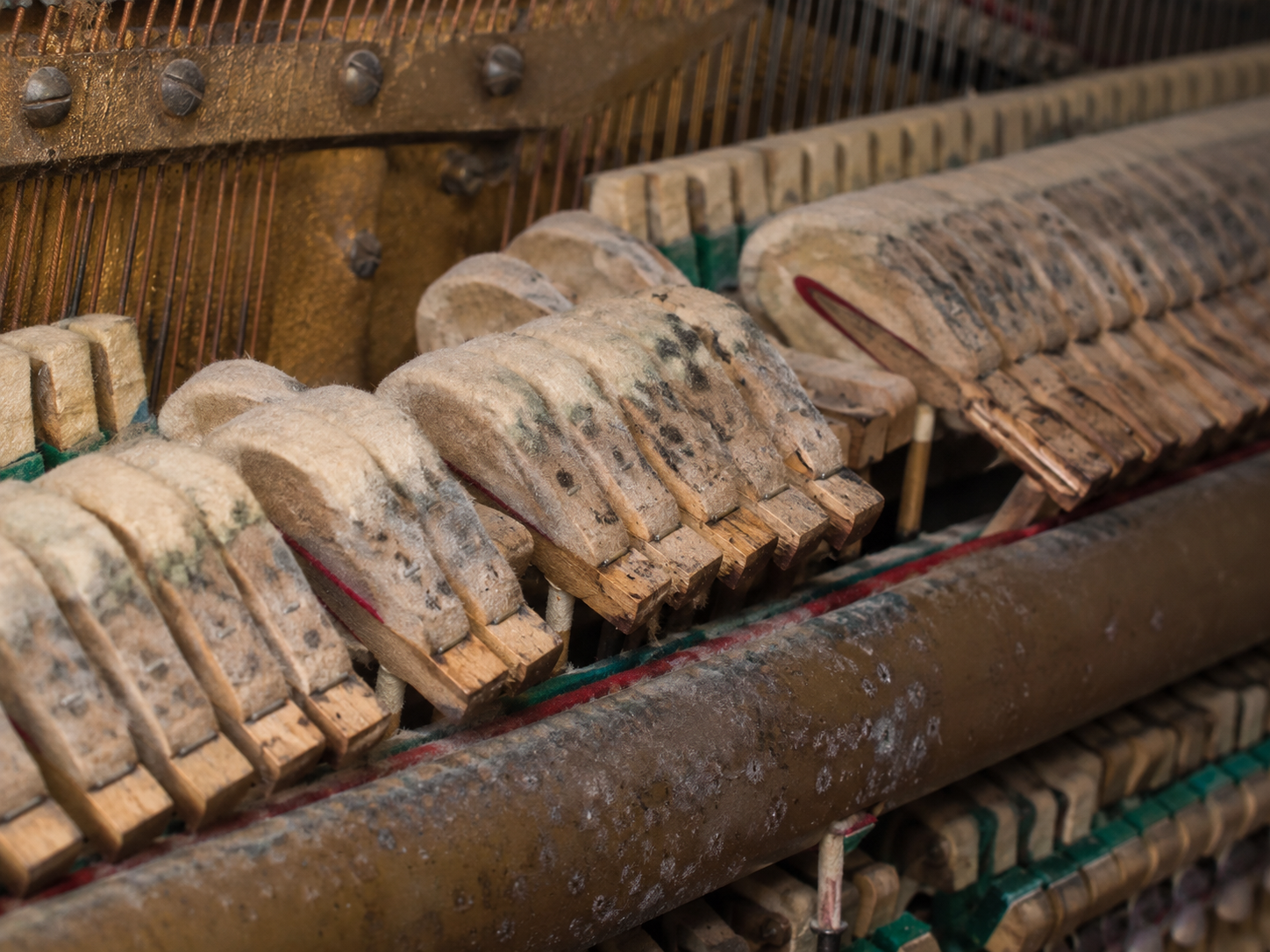
These materials can absorb moisture, leading to musty smells, mold, or changes in the dimensions and operation of the action.
Several Areas May Be Damaged at the Same Time
This is why sea-air damage is not usually a problem that can be solved by tuning alone.
Why Can Sea-Air Damage Be Difficult and Expensive to Repair?
Rust and corrosion on strings and metal components cannot always be restored easily to their original condition. If corrosion has progressed, the technician may need to replace strings or other parts, or repair and regulate several areas of the action.
The actual piano has to be inspected before the extent of the work can be determined. In some cases, the action or the entire piano may need to be taken to the workshop for repair, which can take considerably longer than routine maintenance.

Can a Closed Room and Dehumidifier Protect the Piano?
Keeping the room enclosed and maintaining stable humidity can reduce some of the risk, but it does not guarantee that salt air will not enter the room, especially when doors, windows, or balconies are regularly opened to coastal air.
For this reason, Churairat Music does not consider a dehumidifier or air-conditioned room sufficient grounds to guarantee a piano installed near the sea.
Churairat Music Policy for Locations Near the Sea
If the piano location is close to the sea and exposed to a risk from salt air, the company cannot provide a warranty for that piano because the surrounding environment and the condition of internal components cannot be controlled appropriately.
If the location is 1–10 kilometres from the sea, Churairat Music rents digital pianos only.
If the location is less than 1 kilometre from the sea, the company does not provide piano rental. For other areas outside these criteria, the team will review the location and service route before confirming availability.
If you find rust, sticking keys, a musty smell, mold, or abnormal action, contact the team so a technician can inspect the actual piano. The technician will report the findings back to the team, and the team will then explain the repair items, the recommended approach, the cost, and the expected repair time to the customer.
1–10 Kilometres Is Not a “Safe Distance” for an Acoustic Piano
The distance criteria above are used to define the company’s rental policy. They do not mean that an acoustic piano located more than 10 kilometres from the sea is automatically safe from salt air. Sea breezes, wind direction, building ventilation, and indoor humidity can all change the level of risk.
Churairat Music therefore prefers to prevent this type of damage from the beginning rather than waiting until a piano has already been seriously affected.
Supporting Information From Specialist Sources
Yamaha notes that condensation and humidity can cause piano strings and metal components to rust, while felt can absorb moisture and affect the operation of the action.
Piano Technicians Guild discussions include reports from technicians working in coastal areas where piano strings and metal components were heavily affected by salt air even when indoor humidity was being controlled. There are also reports concerning corrosion of lead weights in piano keys, which can expand and interfere with key movement.
These references are used to explain the general environmental risks. Warranty decisions, rental conditions, and repair procedures follow Churairat Music policy.
Frequently Asked Questions
Can I Buy an Acoustic Piano if My Home Is More Than 10 Kilometres From the Sea?
The team still needs to consider the actual location and the company’s warranty conditions. Distance alone cannot confirm that the room is free from the effects of coastal wind or high humidity.
If Rust Has Started to Appear or a Key Is Sticking, Can the Piano Still Be Tuned?
If there is rust or the action is sticking, a technician needs to inspect the piano first. Tuning alone will not restore normal operation if mechanical parts are affected. The technician will report the findings to the team, and the team will explain the repair approach, cost, and time involved.
If I Have a Dehumidifier, Can I Place a Piano Near the Sea?
A dehumidifier can help control indoor humidity, but it cannot guarantee that salt air will not enter the room. Churairat Music therefore still considers the actual location and environmental risk when determining sales, warranty, or rental conditions.
Can I Rent an Acoustic Piano if the Location Is 1–10 Kilometres From the Sea?
Under Churairat Music policy, locations 1–10 kilometres from the sea are eligible for digital piano rental only. If the location is less than 1 kilometre from the sea, the company does not provide piano rental.
Ask About Piano Inspection and Care
Tell the team the brand, model, and serial number if known, together with the piano location and the symptoms you have found. Photos or video can be sent if convenient, but they are not required.
For customers in the main service areas and nearby provinces — Bangkok, Chiang Mai, Phuket, and Khon Kaen — the team can check and confirm available service appointments when you contact us.
Customers outside the main service areas can contact the team so we can check travel feasibility and appointment availability. Service depends on the route and the team’s travel schedule at that time.
Related Articles and Pages
Read more about piano inspection, tuning, and care
PSI-001: How Often Should a Piano Be Tuned?
Learn about suitable tuning intervals and the factors that can make pitch drift more quickly.
PSI-002: Is Your Piano Out of Tune, or Does It Need Repair?
Learn whether the problem may be solved by tuning alone or whether repair should be considered first.
PSI-003: Why Do Piano Keys Stick, Respond Slowly, or Fail to Return?
Understand sticking keys and action problems that may be affected by humidity.
PSI-007: A Piano Has Not Been Played for Years — What Should Be Checked?
Learn what to check before using a piano again and what information to give the service team.
Piano Tuning, Repair, and Care Services
Ask about symptoms, check service information, and arrange an inspection, tuning, or repair.
Planning to Place a Piano Near the Sea, or Already Seeing Rust or Humidity Problems?
Tell the Churairat Music team where the piano is located and what symptoms you have found so we can review the usage or warranty conditions, or arrange for a technician to inspect the actual piano where appropriate.