Strange Piano Noises and Sounds in the Action: What Causes Them?
Strange Piano Noises and Sounds in the Action: What Causes Them?
Identify the type of noise so the technician can check the right spot before the problem spreads
Knocking, clunking, squeaking or rattling sounds that appear while you press a key or use a pedal can come from several parts of the piano. Don't draw conclusions from the sound alone or try to fix it yourself, because the same sound can come from the action, the keys, the pedals or different internal parts.

In short: what should you do when your piano makes a strange noise?
Start by noting whether the sound happens as you press a key, release a key, use a pedal, or only on one particular note, then call and describe the symptoms to our team. If the noise keeps coming back, a key sticks, a key stays down, or a pedal isn't working properly, a technician has to inspect the piano on site before we can say whether it needs repair before tuning.
Which sounds may come from which part of the piano?
| Type of sound | Possible source | What to tell us |
|---|---|---|
| Knocking or clunking while pressing a key | The action, the keys, or parts that need regulating | Which note makes the sound and at what point it occurs |
| Squeaking when using a pedal | Pedal parts or the internal mechanism | Whether the sound happens as you press or release the pedal |
| Knocking or rattling on certain notes | Internal parts or objects around the piano | The note, how loudly you play, and where the sound seems to come from |
| Abnormal noise together with a sticking key | The action may be stiff or parts may be out of sync | How the key behaves and whether it returns properly |
What makes the sound of a piano action change?
- 1Continuous use causes some parts to wear or work loose over time.
- 2Humidity, dust, or a piano that hasn't been played for a long time can change how the action and the felt work.
- 3Moving the piano or a change in its environment can create sounds that were never there before.
- 4Items placed on or near the piano can vibrate along with the sound and be mistaken for a noise from inside.
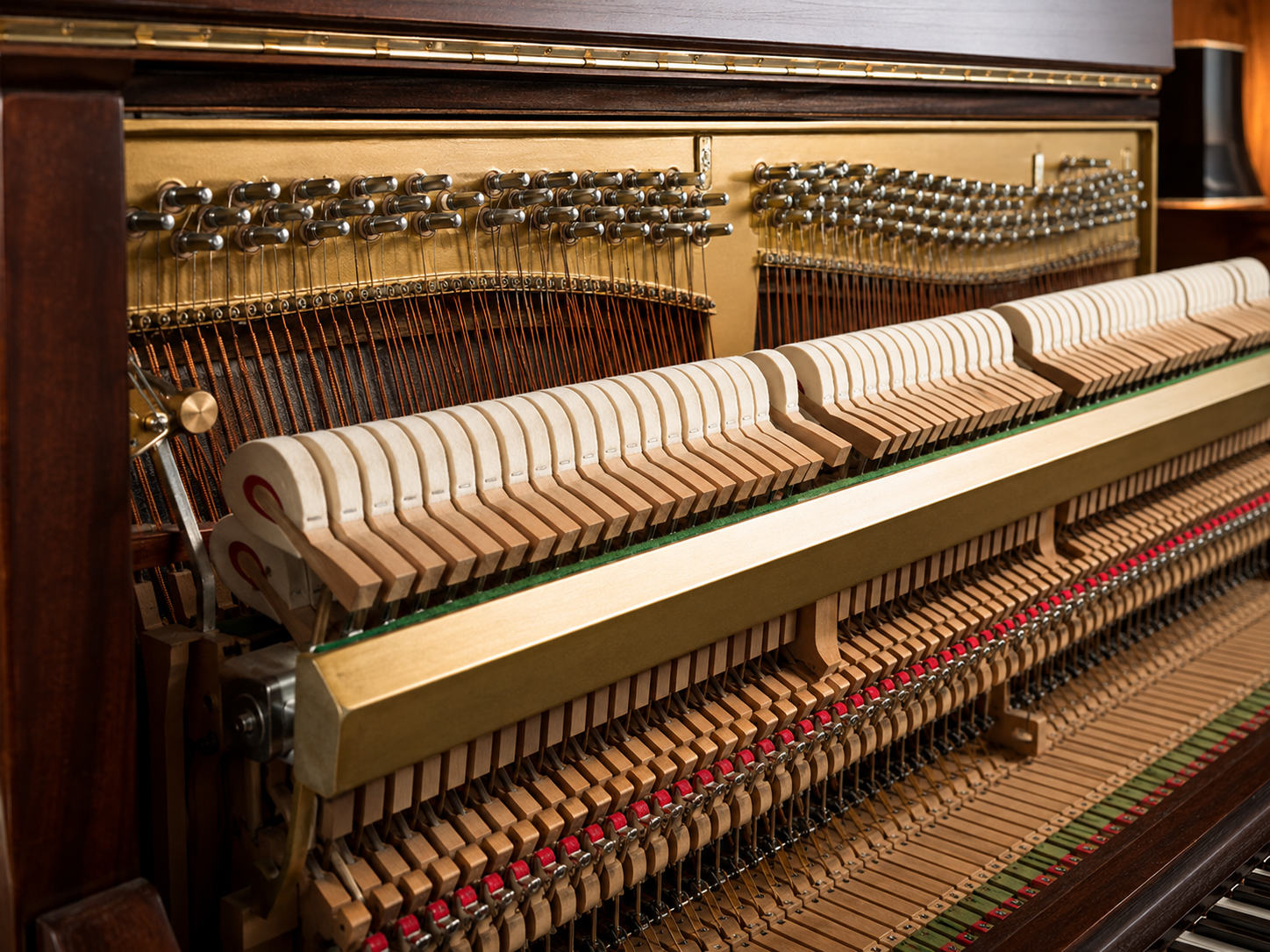
- 5Paper, pencils or small objects that fall inside around the keys can obstruct the keys or the action and cause abnormal noise.
How much can you check yourself?
- You can observe and note the symptoms, but you shouldn't remove parts, apply oil, or use lubricants yourself.
- Try playing the same key softly and at a medium touch to see whether the sound comes back, without forcing the key.
- Check items placed on the piano and around it, then move them away to see whether the sound disappears.
- If you suspect something has fallen inside around the keys, don't reach in with your hand or any tool. Contact our team so a technician can check it properly.
- If a key is stuck, the noise is very loud, or you find a loose part, stop using that section and contact our team so a technician can come and inspect it.
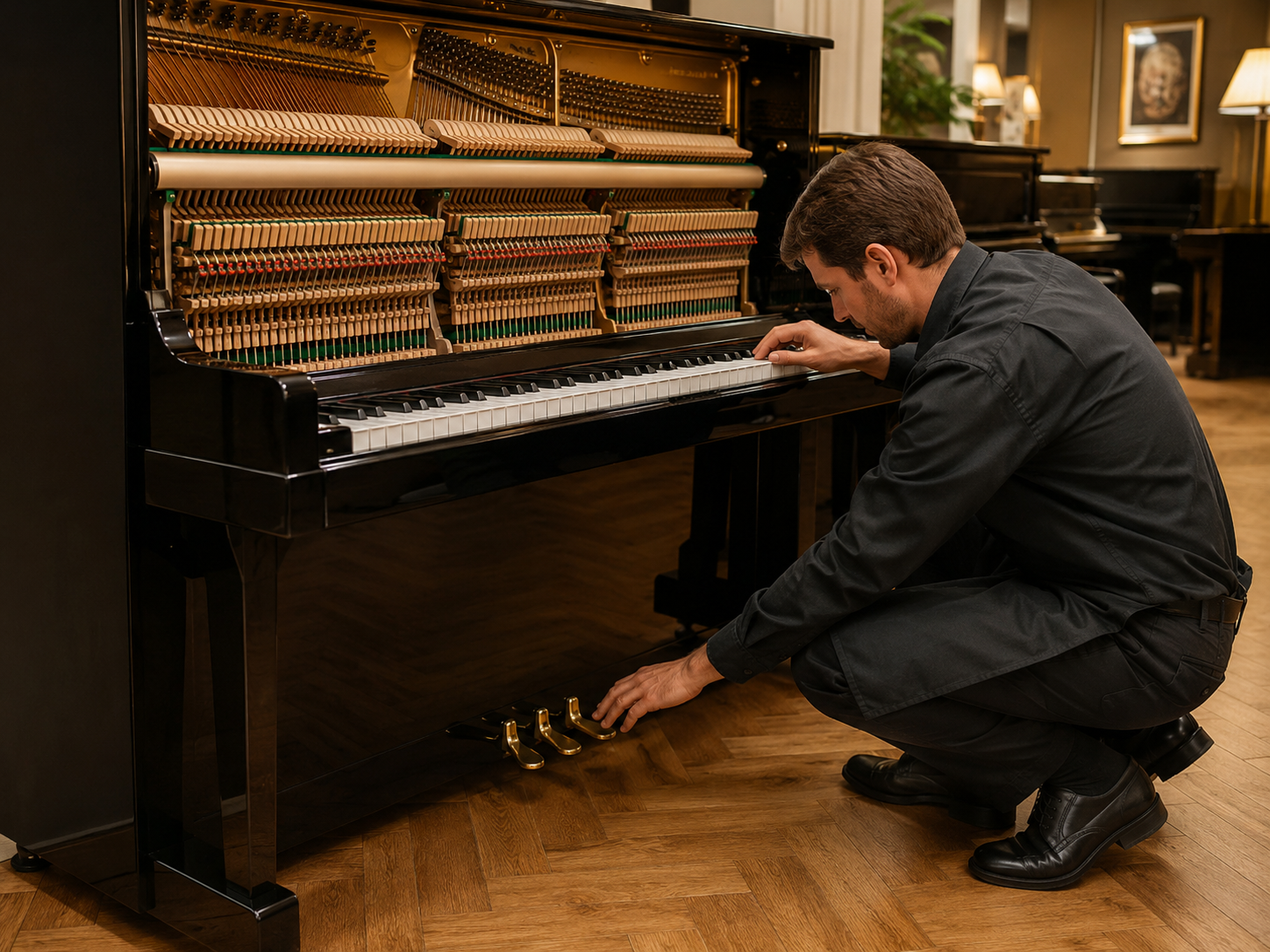
What does a technician check when a piano makes an abnormal noise?
- The keys, action, hammers, felt and any parts connected to the notes with symptoms
- The pedals and the internal mechanism, if the sound happens as you press or release a pedal
- Humidity, dust, wear, and faults in parts that can put the mechanism out of sync
- Pitch and overall condition, to separate a tuning issue from repair or regulation work
What should you tell us when your piano makes an abnormal noise?
Call and describe the symptoms, along with the brand, model and serial number of the piano if you know them, where it is placed, the note or pedal involved, and when it was last tuned. If there is also a sticking key, a musty smell, mould or damp, please mention that as well. Photos or a video are welcome if convenient, but not required, because the cause, the list of repairs, the cost and the time needed can only be confirmed once a technician inspects the piano on site.
Asking about a piano inspection and care
For customers in our main service areas and nearby provinces
That is Bangkok, Chiang Mai, Phuket and Khon Kaen. When you contact us, our team can tell you the available service slots clearly and straight away.
For areas outside our main service areas
You can ask our team to check whether travel is possible and what service slots are open first. Service depends on the team's routes and travel schedule in each period.
Abnormal noises differ from one instrument to another in cause and severity, depending on the condition of the piano, the room and any accompanying symptoms. A technician therefore has to inspect the piano itself before choosing a repair approach or deciding whether it can still be tuned.
Piano tuning, repair and care service page: churairatmusic.com/th/rent-service/piano-service
Frequently asked questions (FAQ)
My piano makes knocking or clunking sounds. Does it need tuning?
It may not be a tuning problem as such. Tell us when the sound occurs and let a technician find the cause on the piano itself first. If the action or a pedal turns out to be faulty, it has to be repaired before the piano can be tuned.
Can I use oil to stop a squeak?
We don't recommend it. Piano parts need the right materials and care methods, and using the wrong substance can create further problems.
The noise only comes from the pedal. Is it related to the keys?
It may be a separate part. Simply call and tell us the sound happens while you use the pedal. Photos or a video are welcome if convenient, but a technician has to inspect the piano itself before the cause can be separated out and a course of action confirmed.
Do I have to send the technician a video?
No. You can simply call and describe the symptoms to our team. If it's convenient, a video showing the key or pedal in use along with the sound, and a note of which note or spot is affected, is helpful — but everything can only be confirmed once a technician inspects the piano on site.
Related articles and pages
- Piano tuning, repair and care service — to describe symptoms, check service charges and book an appointment
- PSI-002: An out-of-tune piano — can it be tuned, or does it need repair?
- PSI-003: Sticking piano keys — slow response or keys that don't return
- PSI-007: A piano left unplayed for years — what to check before using it again
Hearing an unusual noise from your piano?
Tell the Churairat Music team what you're hearing, and we'll arrange for a technician to inspect the piano on site.
PSI-009 • Churairat Music